Monday, August 8, 2016

WIENER-DOG...


Wiener-Dog Movie Review

When did Todd Solondz become a parody of himself? I’ve lost track of him in  recent years, and I’ve missed him. The other day I had a chance to catch up because my local arthouse booked Wiener-Dog, his new one, into their 18-seat screening room, a spot usually reserved for festival favorites, and documentaries about foot fetishists. There it was, an actual Solondz movie, filled with the usual oddball characters and uncomfortable situations…jokes about rape and diarrhea and the world’s cold cruelty…the younger characters were hostile and pretentious, the older ones bitter, flabbergasted by the lives they’d made for themselves; the cinematography was pristine, airtight, sterile; the humor, what there was of it, was found in the occasionally blunt dialog. The whole thing reminded me of other Solondz movies, if performed by department store mannequins. 

I used to adore Todd Solondz. He came along when independent movies were drowning in a quagmire of quirkiness – there was only so much Parker Posey I could take, only so many episodes of Friends filmed in black and white and passed off as movies, as well as monthly knockoffs of Reservoir Dogs or The Big Lebowski  - and with his two masterpieces, Welcome to the Dollhouse and Happiness, which I’ll rate up there with any other movies you can name from the 1990s, he shattered the prevailing tone. His work felt brutal, as threatening and challenging as a new language. Solondz was a like a little prizefighter, wading into bigger opponents and keeping them off balance with haymakers of weirdness. Yet, no matter how disturbing his movies were, his characters were recognizably human. Then Solondz fell in love with weirdness, until it became shtick; the rest of his movies since then have felt like random ideas picked from a hat and hitched together. There was always hope, though, even if he appeared to be scrambling and lost. At least he wasn’t hurting anybody, and I was happy in the knowledge that he’d never make something like Ant-man. 

Now, Wiener-Dog is the equivalent of standing in line at the DMV surrounded by meth heads. Sure, there may be something amusing going on, but on the whole you’d be better off outdoors. The movie is made up of four short segments – fragments, really – held together by a fat little dachshund who waddles into each setting like the donkey from Au Hasard Balthazar. The second of the four scenes resurrects two characters from Dollhouse, Dawn and Brandon (played reasonably well by Greta Gerwig and Kieran Culkin), but even if Solondz’ cult of fans get a brief charge out of seeing Dawn and Brandon again, the scene isn’t particularly memorable. The other bits include Danny DeVito as a film school professor disrespected by staff and students alike, and Ellen Burstyn as an elderly woman enduring a visit from her ditzy granddaughter (Zosia Mamet). The dachshund comes into the lives of these characters, but doesn’t have any particular effect. The poor thing may as well have been a handbag. At one point she’s given to a sickly young boy (Keaton Nigel Cooke) and the two have a good time messing up some furniture. The boy is a stock Solondz character, the innocent gradually learning the world is a disgusting, heartless place, but Solondz ducks and runs without going too deep. He has the gimmick of the dachshund, and is happy to skirt the surface of scenes. Now and then someone ponders death or aging, or the vapidity of film school students, but it’s trite stuff.

Perhaps Solondz should’ve taken one of the bits and ballooned it out to 90 minutes. Instead, we get snippets, vague reveries about America being a lonely place, and bland musings on the futility of life. These are the themes of a precocious kid, not a seasoned moviemaker who once dared us to sympathize with perverts and murderers. 

Wiener-Dog is lifeless. Instead of tension and climaxes, we get tableaus of hopelessness. It doesn’t even make good existentialism, because existentialism usually has some kind of unseen horror behind it. Here, characters stare vacantly, and don’t speak their lines so much as drool them. It could only be entertaining or moving to people who are so bored with Hollywood’s current fare that they’ll mistake this for being deep and darkly comic. Sure, the performers all have their moments, and the pooch has charisma, and there were a few mildly funny parts, but I can’t get excited about a movie where the camera pans over massive piles of dog diarrhea, and then ends on a very cheap joke. Solondz may find his way out of the wilderness someday, but he’s still working over a patch of terrain he wore out years ago.


Tuesday, August 2, 2016

BOOKS: DRAMA IN THE BAHAMAS...


WHAT WE NEED IS MORE COWBELL
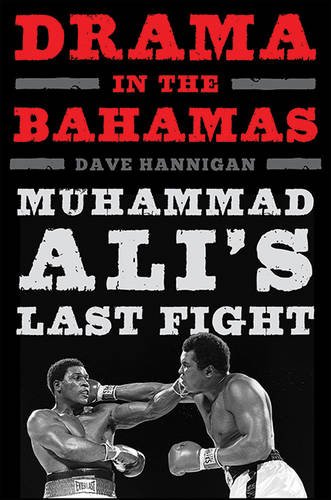
New book relives Ali's final fight
by Don Stradley

Image result for ali-berbick

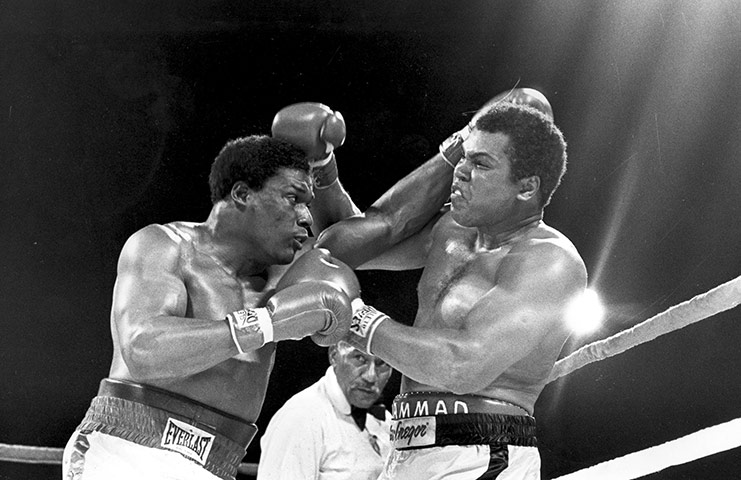
Muhammad Ali’s last fight was a disaster, epitomized by the infamous cowbell, borrowed at the last minute from a local farm because the half-wits running the show had forgotten that  boxing matches needed a bell to start and end rounds. There was the rickety stadium, erected just before the bout, as if it were 1915 and Tex Rickard was setting up shop for Jack Johnson to inflame America; and Ali, flabby and listless, struggling with Trevor Berbick, an opponent Ali would’ve thrashed in better days. I watched it at the home of a high school friend, one of the few in our grassy suburb wired for cable-television. His mother watched with us, occasionally looking up from her knitting to cackle at Ali’s pitiful effort. She was rude, but as we’re reminded in Dave Hannigan’s Drama in the Bahamas: Muhammad Ali’s Last Fight, Ali’d become a joke figure, with rumors of brain damage already a recurring topic where he was concerned – when he visited England to promote the event, his BBC radio appearances were axed because no one could understand him – yet, he was allowed to fight. Like Elvis Presley or Veronica Lake, Ali’s final professional moments were embarrassing. He was a burnt out bulb.

We’re told more than once in Drama in the Bahamas that Ali was “jealous” of younger fighters like Ray Leonard, Thomas Hearns, and Marvelous Marvin Hagler. He needn’t have worried, for all three lacked personality. Hearns never said much. Hagler? A generic tough guy. Leonard? Plastic as a beauty pageant winner. But even Ali’s persona seemed to be shutting down by the time he faced Berbick. “The genie is gone from the bottle,” wrote Hugh McIlvanney at the time, “and Ali is ready to be dumped along with the rest of boxing’s empties.” Hannigan uses McIlvanney and other journalists of the day like a cut-rate Greek chorus, each trying to outdo the other with his prophecies of Ali’s doom. Even Eddie Murphy weighed in on Saturday Night Live, portraying Ali, not yet 40, as senile.

You could call the bummer in the Bahamas a cautionary tale, but boxing people tend to ignore cautionary tales. The shopworn Ali’s battle to secure a boxing license after Nevada refused him, a promotion run by ex-cons, in a location not known for hosting boxing events, were old stories that harkened back to boxing’s earlier days. They’ve since been repeated ad nauseam by dozens of fighters. That the iconic Ali went through the paces of an ordinary broken down pug made it all seem a little weird. Still, having watched the bout recently on YouTube, Ali did better than I’d remembered. Even in his sorry condition, he won some rounds. What was bizarre was the way he’d slump on his stool between frames, his corner men praising him like a child who’d cleaned his plate. 

Berbick’s part in the Bahama drama, which was almost played by Renaldo Snipes, is well covered. In fact, Hannigan concludes with a long chapter on how Berbick became a paranoid religious zealot, eventually meeting his end thanks to a lead pipe swung by an angry nephew. But finishing on such a note gives the book an uneven texture. Harrigan teaches history at a Long Island community college, and his book feels like a history lesson: informative, but plain. One could’ve aimed machine guns at the memories of Queen Elizabeth’s Sports Centre in Nassau and fired upon those involved, especially Ali’s entourage, smiling stupidly as he sputtered through half-hearted gym sessions. Shame, too, on Ali’s parents, his wife, his cook, all as bad as the relatives of a dotty royal who indulge the old fool’s whims for  fear they’ll be cut from the will. And was Ali so divorced from reality that he didn’t realize how far he’d fallen? Even his ring walk looked odd, like the unsteady gait of a mental patient out for a stroll. Hannigan quotes Phil Berger about there being “no empiric science of analyzing the mind of a fighter,” and that’s true. But Hannigan might’ve tried, instead of harping on the damned cowbell.


Friday, July 29, 2016

BOOKS: THE BOSTON STRANGLER...


HE JUST DIDN'T KNOW WHAT CAME  OVER HIM!
Looking back at one of the most gruesome crime stories of the century
By Don Stradley


Albert DeSalvo didn’t fit the image created by investigators searching for the Boston Strangler – they’d wanted a  super criminal, a glowering brute who could talk his way into a woman’s apartment, snuff her out with his bare hands (or with a knife, or a silk stocking around the neck), and escape into the shadows like a phantom, or as the police expected, a mother-hating homosexual – but he seemed to know a lot about the 13 killings that terrified the city between 1962 and 1964. The problem was that investigators had wanted a madman who howled at the moon and slept on a bed of nails. Instead, they got a sex-crazed loser who blamed his actions on an unhappy marriage. Gerold Frank’s classic The Boston Strangler (now available as a Kindle edition) not only captured DeSalvo in his disturbed glory, but was a kind of master class in how to write a true crime story. Published in 1966, Frank’s template was just as influential on the  genre as the other great title of that year, Truman Capote's In Cold Blood. For that matter, all modern serial killers seem linked to DeSalvo in that they’re never horror movie villains, just seedy little dirtbags.

Frank nails the frenzied paranoia of the time, writing “it was not the stranglings that shook Boston so much; it was the abhorrent sexual aspect that summoned to mind in Bostonians deep lurking fears of Sodom and Gomorrah.” Indeed, the city’s buttoned-up bookstores wouldn’t carry copies of Lolita, yet the local newspapers were suddenly overloaded with grisly stories about single women found dead in their bedrooms, with hints of sickening violations, nudity, and rape. Frank sensed correctly that criminals are far more interesting than cops, so much of the book’s glowing energy comes from the various suspects. The degenerates brought in for questioning ranged from gigantic mental patients to stammering perverts; when you add in the cavalcade of old ladies convinced that one of their neighbors was the strangler, the story feels like a David Lynch movie where everybody seems guilty of something.

DeSalvo, too, was a gift for any crime writer. At times a hatchet-faced sex-maniac right out of True Detective magazine, at others a pathetic figure so desperate for attention that many thought his confession was a ruse, he was a typical small-time hood who habitually lied to make himself seem like a big shot. An entire cottage industry of books sprang up in the ensuing years, spearheaded by skeptics who didn’t buy DeSalvo as the strangler. Indeed, there are many compelling arguments that could be made in favor of other suspects, and Frank actually touched on them long before it became fashionable to disregard DeSalvo. Still, many decades after the book’s publication and DeSalvo’s death, a DNA sample put DeSalvo at the scene of the strangler’s final murder. You could almost hear him mumbling from beyond the grave, I told you it was me, but you didn’t want to believe me…

Frank, who’d been a war correspondent and contributor at The New Yorker before ghostwriting for the likes of Zsa Zsa Gabor and Diana Barrymore, is particularly strong when describing the poor victims in their final moments, how one is writing a letter to her fiancĂ©, while another listens to classical music on her record player, and another is last seen doing her laundry, each unaware that death was near. The small details we learn about each woman - one was still unpacking, as she'd just moved into the apartment where she'd be killed - create an aura of melancholy that follows the hopelessly square detectives in their Kennedy-era raincoats, stoic men skulking through drizzly old Boston, searching for an evil they can’t comprehend, taking tips from crackpot psychics and ESP specialists, hoping some useful leads would be spat from their newfangled computer system, anything that could help solve this most fiendish of puzzles.

Movie critic James Agee once wrote that D.W. Griffith’s Birth of a Nation was less about the Civil War than it was “a realization of a collective dream of what the Civil War was like..." Similarly, Gerold Frank's The Boston Strangler depicted the collective dream of a city choked by fear, which is more interesting than what we read in modern crime coverage, where goggled technicians examine pubic hairs and sperm samples, catching the devil not in a dark alley, but under the dispassionate glare of a forensics lab.


Monday, July 25, 2016

WAKE IN FRIGHT (1971)...


Wake in Fright Movie Review
 

From a certain viewpoint, the story of John Grant is one of those potboilers where a highly educated fellow is forced to confront his savage side. It’s the story of a thoughtful, intelligent man who finds himself surrounded by aggressive strangers and either has to join in their mayhem or be ground under their stomping feet. But look closer, and you’ll see that the various brutes and eccentrics in the movie aren’t merely there to torment Grant, but are there to help him find himself. In many ways it’s a standard “dark night of the soul” scenario, but with shadings of Franz Kafka and Dante Alighieri, and the vast Australian Outback as a stand-in for Hell.
      It’s not that Ted Kotcheff’s Wake in Fright (1971) is a movie of ideas. It’s that the deeper, subtler stuff seems to bleed in from the sides. Grant (Gary Bond) is a schoolteacher toiling in Tiboonda, a desolate spot which looks to be made up of a single scuzzy hotel and a one room schoolhouse. On Christmas break he leaves for Sydney to visit his girlfriend. As fate (and his itinerary) has it, he stops in Bundanyabba, a mining town known by locals as “The Yabba.” He finds himself in conversations that sound like bits from ‘Seinfeld’: “Do you like the Yabba?” “I hate the Yabba.” “How can you hate the Yabba?” The Yabba looks like an Old West settlement, some godforsaken pit out of High Plains Drifter where there’s nothing do but gamble and drink. The men guzzle beer constantly, struggling to stay hydrated in the hellish heat. Grant joins in on the gambling and drinking. He wins money. Then he loses everything. Then, to his horror, he’s stuck in the Yabba with no way out.
      The movie more or less works that way, following Grant as he tries to escape this infernal town. It’s good enough, just on that level, that it’s considered one of the defining movies of the Australian New Wave, earning Kotcheff a Golden Palm nomination at the 1971 Cannes Film Festival. But there’s something insidious going on that gets under a viewer’s skin, something unspoken, some quietly sinister atmosphere that inspired critic Rex Reed to say Wake In Fright “may be the greatest Australian film ever made.” At the time of the film’s DVD reissue in 2012 (the first time it had been available to the public in decades) Martin Scorsese described it as “a deeply -- and I mean deeply -- unsettling and disturbing movie.”
      Bond is one of the keys. In his lightweight cotton suit, with his tousled hair, he’s an unlikely hybrid of Peter O’Toole and Jon Krasinsky. He’s not quite big enough to fit in with the lugs of Bundanyabba, but he’s not cultured to the point of uselessness. He drinks a beer down in the same gulping manner as his hosts, and once he gets the hang of “Two-up,” the local betting game which involves flipping two coins in the air, he shows that he’s just as rabid and conniving as any Yabba man. Then, in a dark cantina that appears to serve nothing but burnt steaks, he meets the mysterious Doc Trydon (Donald Pleasance, in an absolutely scene-stealing performance). Doc, who wolfishly takes food left on Grant’s plate, is obviously a lot smarter than the other Yabba residents  but he’s pissing his life away, too. Doc explains that the locals look upon him as an exotic because he’s educated. “I’m a character,” he says.
      Practically everyone in the Yabba is a character. Jock Crawford (Chips Rafferty) is the sort of beer-bellied, aggressively friendly policeman we know from the crime novels of Jim Thompson, an authority figure who seems pleasant enough but might arrest you for saying the wrong thing. Crawford tells Grant that not much happens in the Yabba except the occasional suicide. Maybe, Grant says, that’s the only way to get out of town.
      The story turns a corner when the down and out Grant is invited to the home of Tim Hynes (Al Thomas). Hynes is meek, but his rowdy friends like to roughhouse. Hynes also has a daughter Janette (Sylvia Kay), who charms Grant with her aloof, distant persona. One of Hynes’ Neanderthal buddies watches Grant and Janette talking. He growls, “He’d rather talk to a woman than drink?” But when Janette lures Grant away for a sexual encounter, the drunken Grant can only vomit. He ends up at Doc’s place, where Doc explains he’s had his own dalliances with Janette, and that people shouldn’t be puritans. Perhaps, we wonder, Doc has landed in the Yabba to enjoy a sybaritic lifestyle that he couldn’t find elsewhere. His nasty little fly-blown shack is the lair of a man who has hit bottom, though he seems happy enough.
      Like many movies of this sort, from Deliverance to Straw Dogs, Wake In Fright includes a prolonged scene of shocking violence. It involves a kangaroo hunt, which lasts long into the night. Doc and company shine spotlights on the poor creatures and blast them like targets in a  shooting gallery, laughing all the way. Grant goes along, and is swept away by the freewheeling madness of the night. Kotcheff filmed an actual kangaroo hunt for authenticity;  the result is unsettling. The kangaroos only stare at the hunters, unsure of what’s going on, before being popped. As the life force leaves them, they wilt like deflated balloons. When one kangaroo sits wounded, Grant is coaxed by his bullying companions to finish the job with a knife. He does so, but the dying animal puts up a fierce battle. Later on, a playful wrestling match between Doc and Grant (acting out Grant’s struggle with the kangaroo), turns violent, then weirdly sexual. What exactly happens? We don’t know. Grant seems uncomfortable when he leaves the next morning. Doc says, “Bye.” What’s in Doc’s voice? Sweetness? Concern?
      Grant cadges a ride on a truck “heading for the city,” but only ends up back in the Yabba. “I said I was going to the city,” says the driver. “I didn’t say which city.” Grant begins to unravel. He wanders aimlessly, a man lost in the desert. He stumbles all the way back to Doc’s, and waits, a rifle on his lap, ready to shoot either Doc or himself. But we can tell from Bond’s performance that suicide or murder won’t solve whatever has driven him into this hole.
      Wake In Fight avoids the usual showdown you’d see in a lesser movie. It would be silly if Grant went toe-to-toe with one of the locals, because the movie isn’t set up that way. Instead, Kotcheff piles on more questions, more mystery, more images that haunt. The film is as enigmatic as the human mind itself.
      Grant winds up back in Tiboonda, returning to the dank hotel where he’d lived at the movie’s start. He doesn’t seem angry at not connecting with his girlfriend in Sydney. Was Grant a homosexual, needing a few nights in the Yabba to realize that part of himself? If not, how does he resume his life now?
      Some answers may be found in Doc. When they first meet, Doc chides Grant for his snobbery. Doc’s point becomes clearer as the movie goes on: the locals are ignorant, but in their own crude way they’re friendly and helpful. Later, when  Grant is badly hurt, it’s Doc who brings him to a hospital, and then to the train station back to Tiboonda. Doc may be sphinx-like, with the sexuality of a junkyard dog, but he’s not a bad bloke, all things considered. Is he Grant’s alter ego? Spirit guide? If Grant spent enough time in the Yabba, would he eventually become something like Doc, a local character living on kangaroo stew and a kind of unzipped glory?
      Maybe there’s an answer in the Outback, shot with blinding detail by cinematographer Brian West. To Americans, the massive Outback is like an endless lunar landscape designed to drive people mad, or swallow them whole. Australians must think this, too, for more than one classic Australian movie has to do with people disappearing out there. Did John Grant vanish in the Outback? And did a new John Grant return to Tiboonda? The sun-bleached bones he keeps seeing as he fumbles around in the arid heat may as well be his own, because a man like Grant doesn’t spend time in the Outback without leaving something of himself behind. And am I the only one who thinks Grant will someday return to the Yabba?


Monday, July 18, 2016

TICKLED...


Tickled Movie PosterSex fixations are big business these days. At one time they were shut away in society’s attic, considered little more than comical deviances involving whips and handcuffs, usually indulged in by straight-laced Republicans caught with their pants down in cheesy movies. Now, kinkiness is marketed and sold as easily as eyeliner or Tupperware. Very little remains underground. Somehow, I remain oblivious. Which only means sex in its simplest form offers enough challenges for me, without having to wrap myself in a rubber suit or wear a dog collar. Ditto for spanking, “sploshing,” role reversing, or bondage. I understand that most fixations are backlit by some childhood experience, and that human sexuality is as complex as a rat maze, but I couldn’t find anything erotic in Tickled, a strange, mildly amusing documentary that sets out to expose the controversial netherworld of tickling videos. But I can tell you that the movie is sort of stupidly unsettling. Like an episode of Jerry Springer or Oprah, you’ll feel dumb as you watch, but you won’t remember it long enough to call it a guilty pleasure.

Early in Tickled we meet David Farrier, a New Zealand television reporter who specializes in goofy stuff – we see him interviewing Justin Bieber, and a woman who raises donkeys. We’re supposed to like him because he covers the weird and the wacky.  He thinks he’s stumbled across his next subject when he finds a “competitive tickling” video online. To his surprise, his request for an interview is not only rebuffed, but he receives several rude emails from a representative of the tickle company, including legal threats. This inspires Farrier to investigate further (and make a documentary!). As a journalist, he’s plenty nosy and self-important, determined to reveal these bullies who wouldn’t indulge him. He’s soon in America, storming into tickle video sessions, arguing with agents from the mysterious company, and being a general nuisance. As a filmmaker, though, he’s uninspired. Having a sit-down with folks at the local comic-con must not have prepared him for the dark and grisly world of tickle torture. 

Ultimately, this is a familiar tale. The victims, in this case a bunch of dimwitted jocks who, in the tradition of every hooker or nude model who finds herself having to explain her embarrassing past, explain that they did it for the money. Rather innocently, they answered ads offering good pay to be tickled. Sure, it seemed unusual, but times were hard, ya know. Without their knowledge, these videos started turning up on the internet. One of the boys, a college football player, claims his career has been ruined because coaches don’t want to explain to the press about his background as a ticklee. What is  most striking to me is that the tickle videos look so much like regular home-made  porn scenes: in a bare bones setting, usually a mattress and nothing else, or in a chancy motel off some random U.S. highway, the participants go through the motions looking rather apathetic. I noticed one kid, probably the star of his college swim team, looking to the camera with a sheepish expression, as if to say, I can’t believe I’m tickling a dude with a feather. 

The person behind the videos turns out to be a flabby creep who has used several false identities and his family’s wealth to build his tickling empire. We learn from his step-mother that he was bullied as a child and grew up to be quite maniacal. Perhaps luring dumb jocks into taking part in humiliating videos is his vengeance on the kids who used to stuff him into lockers. Farrier is warned by various people to stay away. And that’s about it. No one, as the heavy-handed promotion made me wonder, is tickled to death, and the man behind it all is not exactly Hannibal Lecter. He’s just a fat old pervert who threatens people with lawsuits. 

Farrier is diligent, but I kept wishing the movie had been made by Louis Theroux as part of his old ‘Weird Weekend’ series.  Theroux could’ve taken this same material and made it a lot more interesting. Farrier wanted to create something heavy, but it’s just not in him. There are occasional pans to crowd scenes in Los Angeles,  where so many of us peculiar Americans seem to be dressed as Spiderman or Chewbacca. There could’ve been something here about people and their love of false identities, how such things can turn malevolent, how fixations keep our real selves out of our sexual experiences and, in their own way, serve as a kind of disguise,  but Farrier, and co-director Dylan Reeve, aren’t especially deep thinkers. They prefer close-ups of some meathead’s dirty fingers jabbing into another guy’s armpit, because at heart Farrier is just a TV reporter, as cheap and cheerful as Justin Bieber and the donkey lady.


Tuesday, July 12, 2016

DE PALMA...


De Palma Movie Review

You must wade through a pile of female corpses to glimpse Brian De Palma’s special grace. Since dazzling moviegoers in the 1970s with Carrie, he’s often been derided as a chronicler of violence, especially against women, and badgered for being too worshipful of Alfred Hitchcock, as if wearing his influences so boldly only blinded viewers to the many subtleties and secrets found in his art. 

Brian De Palma’s career defies easy categorization. It’s convenient to forget that, along with his many homages to Vertigo and Psycho, he’s made gangster films, sci-fi, war movies, and comedies. He no more relies on violence against women than Spike Lee relies on racism, or John Ford relied on Arizona. 

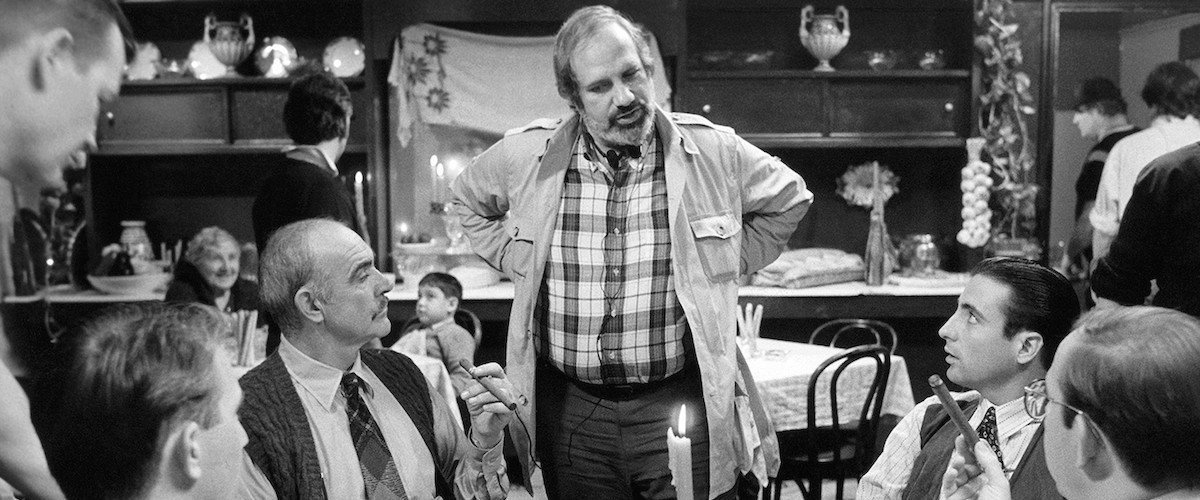
Settling into De Palma, a tasty, intelligent tribute from Noah Baumbach and Jake Paltrow, we can’t help but appreciate De Palma’s career for the marvelous thing that it is: not a bunch of senselessly gory movies where women are eviscerated, but a vibrant roadmap through a half century of American culture – from ‘60’s anti-war comedies, to ‘70s horror and glitter, to 80’s excess (any director responsible for Scarface, The Untouchables, and Bruce Springsteen’s ‘Dancing in the Dark’ video would be worthy of the canonization that eludes De Palma), to the 1990s, when a piece of fluff like Mission Impossible became his biggest hit – that should be studied and appreciated by every director, would-be director, and lover of movies. By simply aiming a camera at him and letting him talk, Baumbach and Paltrow have created a strangely moving portrait of a man who knows his best work may be behind him, not because he’s no longer interested or capable, but because the movie business no longer has room for him. Our loss.

As a raconteur, he’s fair. He’s humble about his successes, saying only that everything worked out well in those cases. Of more interest is the way he reacts to his failures, cackling like a man who gambled away his home and remains impressed by his own audacity. But this master of intricate plots is, at heart, a man of few words. His favorite expression, dropped a half dozen times during De Palma, is “Holy mackerel.”  He doesn’t share much behind the scenes gossip, though we get the impression that writers, studio heads, and feminists, are a pain in his ass. Other than Sean Penn teasing Michael J. Fox about being a television actor, we don’t learn much about De Palma’s actors. The Hitchcock question comes up, and he fields it smoothly, saying that he admired Hitchcock’s style and proudly carries on the tradition. He’s Tony Bennet to Hitchcock’s Frank Sinatra. 

A member of 1970s “Young Hollywood,” when his circle of friends included Steven Spielberg, George Lucas, and Martin Scorsese, De Palma doesn’t rhapsodize about the good ol’ days, saying only that such a time is unlikely to happen again. Of his overstated reputation for depicting violence against women, he maintains that the scenes in question seemed right for the movies he was making at the time. Then we’re treated to a clip of Angie Dickinson being butchered in an elevator.

His comments on moviemaking sound like the words of a journeyman. He suggests that a director can’t control his career, but can only do his best with the opportunities that come up. Still, the clips of Casualties of War, Carrie, Dressed to Kill, Phantom of the Paradise, and Blow Out have more cinematic verve than any dozen movies you’ll find in any cinemaplex today, reminding us again that few can match De Palma in terms of sheer eye candy. Another treat: the alternate ending of Snake Eyes, where a tidal wave of Biblical heft wipes out a Las Vegas casino. The scene recalls something from the silent era, a D.W. Griffith storm where evil is vanquished. 

A few tidbits about his teenage years are fascinating, such as following his father with a camera when he suspected the old man was having an affair. Though this feels like a scene from one of his movies, De Palma isn’t much for connecting the dots between his childhood and, say, Body Double.  The closest he comes to a big-time revelation is when he mentions that his career is probably behind his three failed marriages, and that it can’t be fun to be with a man who says, “My movie is my wife, not you.”

Brian De Palma was at his best when he showed characters, whether a rough Cuban gangster, or a teenage girl with telekinetic powers, or a sound engineer who thinks he's on to a crime, coming out of their isolation into a kind of dream world, a stylized, expressionistic version of America, one that is grotesquely beautiful but loaded with traps. He should be ranked among the best directors, but he isn’t. He’s simply De Palma, the Hollywood equivalent of the homerun slugger who either smashes the ball or goes down swinging. A reassessment is in order, for De Palma’s versatility recalls the great directors of Hollywood’s golden age. This documentary is a start. But even Baumbach and Paltrow present a slightly skewed message. After giving the man a chance to explain himself,  they end their movie with a posed photo of De Palma standing over what looks like a female corpse, one apparently split apart by power tools. He has the slightly bored but formal look of an office worker, neither apologetic nor triumphant.


Tuesday, July 5, 2016

BOOK REVIEW: Diane Arbus: Portrait of a Photographer...

FREAKS AND GEEKS
Would you dance in the dark with Diane Arbus?
by Don Stradley


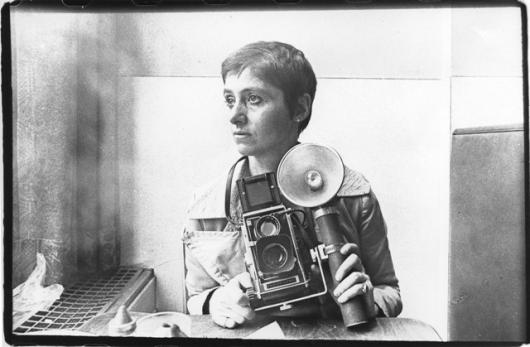
Reading about Diane Arbus in Arthur Lubow's meticulous new biography put me in mind of the characters Liza Minnelli used to play, those twitchy, giggly neurotics from The Sterile Cuckoo and Cabaret, young women who were bright and talkative, but concealing a deep hurt. Like Arbus, rather than reveal themselves entirely, those characters preferred to act coy and play games, manipulating the effete men around them, even as their inner lives crumbled. In Diane Arbus: Portrait of a Photographer, Lubow gives us an Arbus who is every inch the Minnelli characters, minus the perkiness. And in place of the Minnelli melancholy is Arbus' Herculean despair. You might tolerate the Minnelli character, maybe even buy her a sandwich. But Diane Arbus? Run. Run away.

Arbus could be the third corner of a triangle that would include Anne Sexton and Sylvia Plath - fragile, doomed, supremely creative but horribly unhappy women fighting to be heard in the male-centric aftermath of WWII - and not just because they all took their own lives. It's also because, like Sexton and Plath, Arbus' reputation precedes her. You may think you know something about Arbus even if you don't, but you'd be guessing right if her name conjured up images of weird people in odd poses, subjects ranging from circus folk to transvestites to the mentally disabled. Arbus' life and work has invited more psychoanalytic interpretations than most in her field, largely because she enjoyed talking about herself, and though she didn't much care for psychiatrists, armchair Freudians can't help but whack away at someone who spreads her mind apart for inspection. No matter how you ring her up, the unsettling imagery in Arbus' work seemed to create a shadow map of her darker self, a side neither she nor her most valiant observers could quite put into words. Like the Phantom of the Opera or certain sea creatures, she wallowed in darkness.

She made regular people and celebrities look hideous, while her beloved "freaks" and oddballs took on an otherworldly, strangely sexual veneer. "Giving a camera to Diane," said Norman Mailer, photographed by Arbus for Esquire, "is like putting a grenade in the hands of a child." One senses Arbus was getting even for something, some slight in her privileged childhood as the daughter of a well-to-do owner of a New York department store, or her years as a fashion photographer, years spent shooting vapid children and their families in the newest styles. She despised those assignments, taking them only for money; what made her eyes twinkle was the thought of photographing bearded ladies from Coney Island, or transsexuals disrobing in their dingy apartments. Still, the relationship between Arbus and her freaks was muddy. She took pride in capturing "things that nobody would see unless I photographed them." Yet, she often added that her subjects weren't her friends, and that she "didn't want to kiss them." Arbus even expressed to one of her mentors, Lisette Model, a concern that she was photographing "evil."

It's also the familiar tale of the pre-liberation woman trying to escape the long reach of her male dominated family - the wealthy daddy, the brilliant brother - only to run into the arms of a nurturing but ineffectual husband, affairs with married men, and then into the male dominated profession of picture taking, where she'd curry favor with magazine editors and museum curators who were usually male; that she found a favorite subject in female impersonators makes sense - she probably liked the idea of men turning into women. And powerful, confident men like Mailer were posed to look like trolls. "I mean reality is reality," Arbus said, "but if you scrutinize reality closely enough...or if in some way you really, really get to it, it seems to me like it's fantastic." Her own reality, thwarted by depression and a hollow personal life, ended when she slit her wrists in a bathtub. At age 48.

Lubow is very strong when writing about photography, how certain of Arbus' photographs "vibrate like painful memories retrieved through a numbing gauze." Ironically, his best writing comes when depicting the photographers who influenced Arbus, including Model, August Sander, and even Weegee, the mysterious NY street photographer whose crime scenes distilled American life into a noirish tableau. With Arbus, however, Lubow unfurls each key moment of her existence for thorough scrutiny, and the result can be stupefyingly dull. Lubow's less enchanted with other photographers, so he rockets through their life stories; his writing about Richard Avedon, for instance, becomes tight, energetic, as if Lubow were a racehorse that had stumbled out of the gate and realized he had to make up ground. But then it's back to Arbus, and the chapters drag by in slow motion. Each of her photos is examined in great, often insightful detail, but by the fifth time Lubow has described Arbus' shooting style as some sort of sexual conquest, with her subjects meeting her gaze in a kind of diabolical exchange of energy, you'll hope to never again see another dwarf or set of identical twins.

The reason for this may be that Lubow, in the act of writing her biography, fell in love with Arbus. He ponders the minutiae of her life - a bald patch, changes in her menstrual flow, hints of lesbianism - not only to give us as full a picture as possible, but because he doesn't want to let her go. We can feel him coveting her, fondling her frail nerves with his fingertips. He's just another of her many men, doting on her, telling us (and her) how wonderful and unique she is, from the way she, as a young girl, would often reach into a man's pants and grab his penis, to the clumsy way the teenage Arbus smoked a cigarette, "awkwardly endearing and strangely disarming." 

Unfortunately, Lubow's love for his subject doesn't translate completely; it's leaden, cloying, pawing, the sort given by men of low self-esteem to actresses they'll never meet, by fan club presidents who have poured over every detail of a star's life, and are convinced that they, and only they, understand their idol's inner being. Yet, despite the book's massive length of 612 pages, there's a stinginess about Lubow. He doesn't see fit to mention that Arbus' husband Allan actually achieved his own kind of fame, starring as Dr. Sidney Friedman on several episodes of M.A.S.H., or that Eddie Carmel, the "Jewish Giant" from one of Arbus' most memorable photos, appeared as a monster in the cult film, The Brain That Wouldn't Die. Such omissions are small, but any other author would find room for them. Not Lubow. He's too busy building a shrine.

In the end, Lubow is probably the right sort of biographer for Arbus. He's respectful and intelligent, and he cares about photography as an art form. His pedigree from The New York Times and The New Yorker helps him step around the usual National Enquirer type of coverage given to the subject. This couldn't have been easy, what with Arbus' big dollops of promiscuity, incest, grubby orgies, and suicide.