Saturday, October 11, 2014

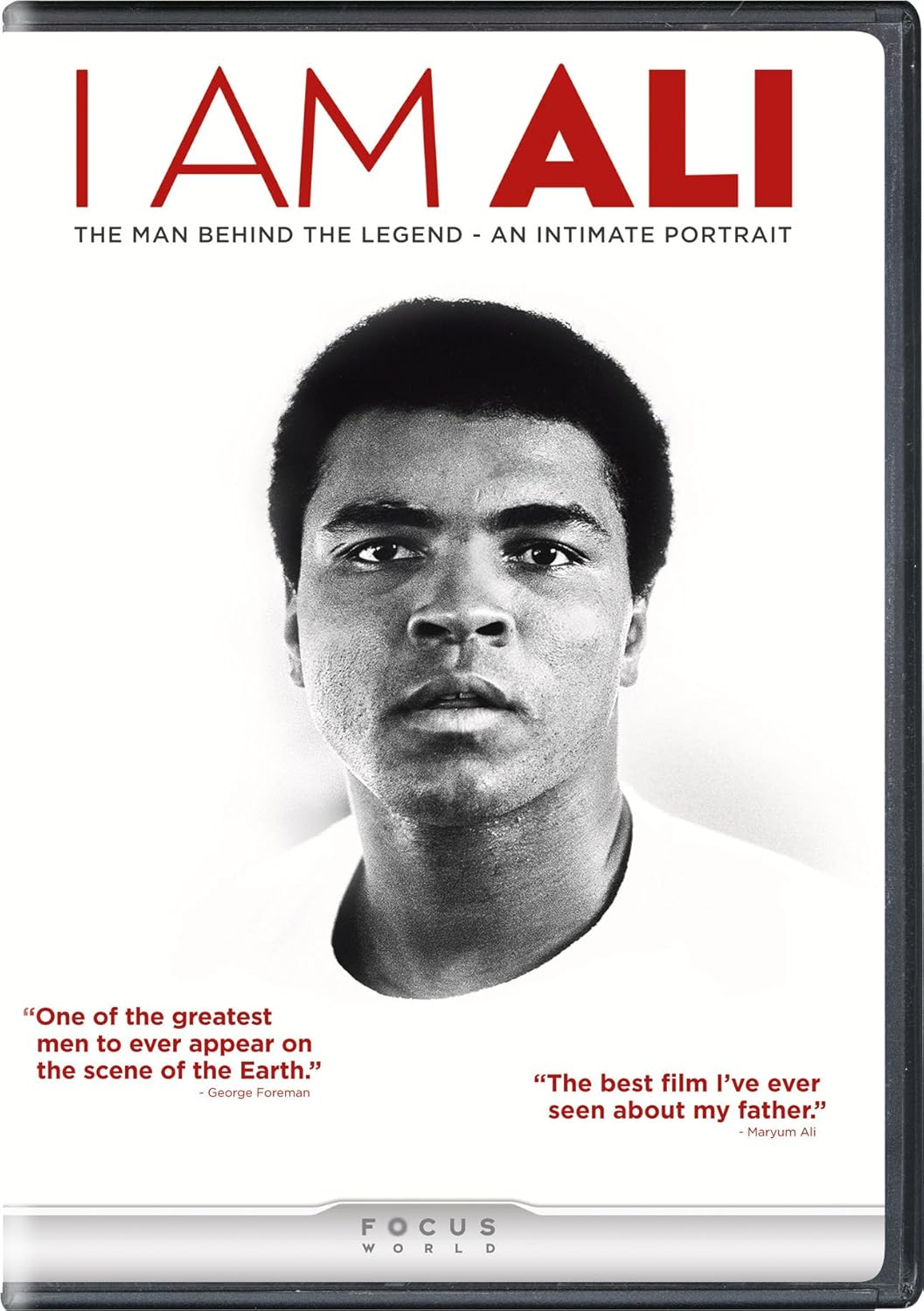
New Doc. I AM ALI...


NEW ALI DOCUMENTARY ISN'T PERFECT, BUT HE STILL FASCINATES...

By Don Stradley

I used to have a recurring dream about Muhammad Ali. In the dream, he'd come out of retirement to box again at age 50 or 60. Apparently, some scientist had invented a drug that would cure his Parkinson's Syndrome for an hour or so, just enough time for him to get in the ring and win a close decision over some non-descript fighter. He'd win, but as he was being lead out of the ring, the miracle drug would begin to wear off, and he'd return to his sickly self. It was a strange dream, eerie but uplifting. I must have had it five or six times. Maybe more. Such was my fascination with Ali.


I was lucky enough to write for The Ring magazine during the 2000s, when it was still under the leadership of Nigel Collins. During those years I learned to stop thinking of fighters as iconic figures and to see them in more realistic terms. As one famous trainer once told me on the sly, "Fighters aren't heroic. They just do what they're trained to do, like race horses." I knew what he meant. I once saw a fighter spit out a mouthful of blood the size of a ping pong ball in the middle of the ring. He didn't seem too concerned, any more than an animal would be concerned. Boxing, it turned out, was not just a show to watch on television. It was brutal. I met some nice people in the sport, but in equal numbers there were people you wouldn't want to sit next to on the subway.

When I heard about I Am Ali, a new documentary by Clare Lewins, I was skeptical. Though my eyes were opened to the vulgarity of the business, I retained a bit of my interest in Ali, and a good doc on "The Greatest" might be entertaining. One could probably take a random collection of Ali clips, throw them in a hat, pluck them out and link them together in absolutely no order, and it would still be an amusing 90 minutes. Still, there'd been so many documentaries and movies about this man, including the excellent When We Were Kings, and the not so excellent Michael Mann biopic starring Will Smith, that I wondered what more could be said. I felt that so many cameras had been trained on Ali since the 1960s that the life had been drained from his story, and that the farther removed we are by time, the less weight his story carries. 


Lewins' unhurried, almost sleepy movie is a mixed bag. She's a BBC filmmaker, and has previously directed films about Audrey Hepburn, Mick Jagger, and Steve McQueen. She approaches Ali as another larger than life icon. She's not particularly interested in boxing, and I Am Ali features only a smattering of boxing clips. The legendary moments - fighting while half blind in the fifth round against Sonny Liston, the torn glove against Henry Cooper, the broken jaw battle with Ken Norton - are not mentioned. Maybe that's just as well, because we've heard those tales. She has other things in mind, namely, a look into Ali's family life.

Ali's ex-wife Veronica, his brother Rachman, and some of Ali's nine children, all appear in the movie.  They offer some mildly amusing anecdotes, and we get the message: Ali was a nice guy, a big-hearted teddy bear, a practical joker, with lots of love to give. The best part of the movie is a series of tape recorded conversations between Ali and his children when they were very young. There's a sweetness in these conversations, and you get the impression that Ali loved his children and was vastly entertained by their comments. But there's also an uncomfortable aspect to them - Ali claimed to record everything for historical purposes, but I also wonder if it because he was a largely absentee father. These recordings may have been a kind of stand-in for him. 

His children grew up to be very nice, charming people. There's a suggestion in the movie that the spotlight was so harsh on their dad that they all went out of their way to stay out of it, pursuing lives far under the radar. One taped conversation involves one of his daughters saying that kids pick on her at school because of her famous father. Ali sounds genuinely sad when he hears of this. Ali's son, Muhammad Jr, is in the movie, and he can barely contain his disgust at remembering how other boys wanted to fight him. It wasn't easy to have a father as famous as Ali, and while the children tell stories of visiting him at his training camp and having fun, there's a sense that Ali was never entirely there for them, and that this created a small psychic wound that has never completely healed. Ali belonged not his family, but to the world. Even his brother, Rachman, refers to Ali as "Ali," as if talking about a distant celebrity. 

The irony is that once Ali's boxing career ended, he was taken from his family again, this time by his illness. I've always found it sad that Ali didn't get to experience middle age. He went from being a relatively young man of 40 to being an old, unhealthy man, and has remained in that sickly limbo for 30 years. I Am Ali doesn't get too maudlin about Ali's health. Instead, the movie seems to wind down in a series of clichés, with Ali's family and friends saying that he was one of a kind, that he loved everybody, and there'd never be another like him. The movie's end borders on being sickly-sweet, which is a shame.

I almost met Ali a few years back. I was in Madison Square Garden, sitting in the press row. Ali's daughter Laila, whose own boxing career was akin to Lisa Marie Presley's singing career, was fighting on the undercard against some opponent I couldn't recall if you put a gun to my head. Ali was ushered into the arena almost secretly, and plopped down into a third row seat. A slight round of respectful applause filled the Garden, sounding like gentle rain. I was close enough to go over and say something, but he looked tired. He actually fell asleep during Laila's fight. When it ended, he was ushered out again, like tired old royalty.

I guess that's why documentaries about Ali, even a leisurely one like I Am Ali, are still useful. They remind us that there was once a man capable of floating like a butterfly and stinging like a bee, and was so famous that he even appeared in our dreams. 

Monday, October 6, 2014

A GOOD MARRIAGE...


A Good Marriage tells the tale of Bob and Darcy Anderson (Anthony LaPaglia and Joan Allen), a nice New Hampshire couple where the husband has a not so nice secret life. The Andersons seem so ordinary, even dull. Bob's an accountant who collects rare pennies. Darcy is the wife of an accountant who collects rare pennies.

The couple has an easy familiarity with each other. Life is good. Their biggest concern is their daughter's upcoming wedding. True, Bob is often away on business trips - he's the ace accountant of his company so he's often sent out on assignments - but Bob and Darcy have one of those comfortable relationships where a few days apart is fine.

They seem to enjoy a nice arrangement in the bedroom, too. He calls her his "bad girl," she calls him "her naughty boy." They probably don't have sex often, but things are sufficiently saucy. Their quiet existence comes to an end one day when Darcy is nosing around in the garage and finds the IDs of 12 local women who have been murdered by a serial killer. Why does Bob have them?

She's heard about a killer terrorizing the area, a monster known as "Beadie," who tortures his victims. None of this is shown, it's merely alluded to on news reports. She also finds bondage magazines in hubby's hideout, and recalls that Beadie ties his victims up before he rapes and kills them. It seems her husband is not just a killer, but someone who enjoys the pain and suffering of others.

So here's what she does. She cries. When Bob returns from his latest road trip, as Ricky Ricardo used to say, he'll have a lot of 'splainin' to do.

The problem is that Bob is perfectly willing to explain himself. Rather than deny his crimes, he sadly confesses about his sideline as the Ted Bundy of the New Hampshire suburbs. He tells her how he'd always wanted kill a woman, ever since a pair of snooty girls turned him and his buddy down for a date back in high school. So he tried it. And liked it. He confesses casually, like someone describing their first cigarette. She looks at him with unbelieving eyes as he tells his story, and then she goes to sleep. We begin to realize that the movie is going to be slightly different than what we'd imagined it would be.

She has nightmares, as we knew she would. He wants forgiveness, and a chance to keep the marriage intact. They try to keep things together, maybe for the sake of the children. In a way, they act as if he's simply had an affair and they're trying to sweep it under the rug and forget about it. He walks around with a hangdog expression, like a husband caught doing something naughty. Naughty, indeed. But can he really stop killing women, now that he's had a taste?

A Good Marriage is a lightweight movie, held together by a simple question: Can they stay together after Bob admits he's a murderer of several women? Yet, even though it feels simple, and even a bit lifeless as some critics have pointed out, it worked pretty well for me. Director Peter Askin creates a mild sense of suspense here, not of the Hitchcock kind, but of a more contemporary, made-for-TV variety. "This isn't like one of those movies where the crazy husband chases the wife around the house," Bob says at one point. He's perhaps referencing The Shining, but he could also be talking about one of those clunkers on the Lifetime network.

The movie was written by Stephen King based on one of his shorter pieces, and while it's not up to his best work, there are some familiar King tropes on display, namely the husband who has done something bad. The fact that the only violence we see for most of the movie is when Darcy has her TV on to a violent movie, and a character is torturing a woman. The torture of females, King seems to be telling us, has become just another form of entertainment. But what does it mean when it all comes home, and your penny collecting hubby is as bad as the psychopaths on the telly?

A lot of the credit goes to Allen and LaPaglia, who do seem like a suburban married couple. I really did feel that they care for each other. LaPaglia is particularly good, showing just the right amount of menace mixed in with pathos. I believed he wanted to keep his marriage going. I also believed he could choke somebody.

I remember seeing Joan Allen many years ago in an off-Broadway show opposite John Malkovich. I always felt they would both become big stars. They've done well, but frankly, I've always felt they were too good, and too unique, for Hollywood. It was good to see Allen here, showing a lot of heart and intelligence. Some critics have said she is too cold in this movie, but I think she was playing a character who had no choice but to shut herself off. After all, she's sleeping with a serial killer.

There's a third act involving an old retired cop who suspects Bob is the killer, but that part of the movie feels tacked on. King has always had a weakness for burned out authority figures, old cops and the like. But while this part of the movie doesn't amount to much, it doesn't hurt, either.

There could be an excellent movie made about a serial killer who is actually a loving family man. It so happens that many of them are. They aren't all living alone in cabins. Some, like Bob Anderson, are reasonably normal men. Yes, an excellent movie could be made. A Good Marriage may not be that movie, but it will do for now. It's thought provoking, well acted, and is better than fifty percent of the movies I've seen this year.

It's because of Allen and LaPaglia, actors who can rise above middling material.

A Good Marriage isn't perfect, but there's not a moment when Bob and Darcy stop being real, and believable.


Tuesday, September 30, 2014

GONE GIRL... (thoughts before the movie)


There is no hero of Gone Girl, Gillian Flynn's popular potboiler from last year that is soon to be released as a movie. The two main characters are Nick and Amy Dunne. He's a handsome wimp. She's a conniving psychopath. They deserve each other. I'm not sure I deserved to sit with them for 550 pages.

In the opening chapters of Gone Girl, Flynn makes it clear that these two are a couple of navel gazing, self-absorbed yuppie leftovers from the 1980s. He was a magazine writer, she was the daughter of a pair of psychologist turned authors, so that gives Flynn the readymade excuse to have this pair over analyze their personal lives and writing their thoughts down for...who? For us? Flynn's gimmick is to have one chapter written by Nick, usually in a thoughtful, slightly cynical voice, and the next by Amy, chipper, nervy, and full of herself. We sense the marriage is troubled.  They've left her beloved New York to live in his old Missouri hometown where he opens a bar, has an affair, and generally sits around hating himself. Amy hates him, too. They hate each other. Eventually, Amy disappears,  and Nick looks mighty suspicious.

By the middle of the story you're feeling for Nick. He's innocent, but the police and the media think he's got something to hide. Things look bad for him. Part of the problem is that he just doesn't know how to behave while the cameras are on him. He feels as if he's trapped in a bad television crime show, the sort where the handsome husband turns out to be creep. He's definitely stuck in a sort of Lifetime network vortex, possibly because Flynn is a former Entertainment Weekly writer who has probably watched her share of Lifetime dramas.

Full disclosure:  I love supermarket books. I don't need Amazon, or the clerks at my local book seller to suggest titles. The bookrack at my local supermarket is where I buy most of my fiction. That's the heartbeat of America, right there near the checkout line  as I'm paying for my frozen dinners and Sunkist diet soda. I won't hesitate to chuck in a fat, stupid paperback novel  with my groceries. More often than not, they're pretty good.  Even the ones I don't like, such as Gone Girl, are quite readable.  That shows you how far gone I am; maybe the chemicals in the frozen dinners have rotted my brain. In a way, Gone Girl is the ultimate supermarket novel.

The story gets cooking when Nick grows desperate to clear himself. Flynn throws in a few red herrings, such as a bunch of homeless drug addicts who have moved into an abandoned shopping mall. They seem pretty seedy, and likely to have abducted a young woman. There's also Nick's dad, a woman hating brute who sits in a nursing home, rattled by Alzheimer's, occasionally escaping to lurk around Nick's house and shout obscenities at imaginary women. Amy also had some friends from the past who seemed to stalk her, just like one of those poor women from the Lifetime channel.    
                          
Nevertheless,   what really happens isn't quite as interesting as the possibilities Flynn uses to distract us.    She teases us that the book could be a heady reflection on the economic downturn, where people actually disappear into the growing hole at the center of the country.  Instead, she creates a turgid essay about marriage, and the phoniness that serves as the glue that binds most relationships.    

                   
From the middle of the book on, we are subjected to a highly implausible tale of frame ups, bumbling cops,   and the tiresome switching of narrators for every chapter.   There is no payoff. There is no climax. Within 20 minutes of finishing, I had forgotten how it ended.  My guess is that the ending is weak because there had also been no beginning or middle of which to speak, just a series of twists and turns, cleverness being the substitute for a real story.                     
                          
What the novel boils down to, I think, is less about crime and punishment and more about  a married couple bitching about each other. It's about as compelling as those TV shows where couples sit and insult each other in front of a studio audience.   

And yet, like Nick finding himself yearning for Amy even though she's a harpy, one continues reading despite knowing the book is junk.  Flynn's characters are one dimensional, her ideas are rehashed from other, better novels, and her comments about police investigations and media coverage are  routine. Yet, there's a liveliness, an enthusiasm in Flynn's writing that is hard to resist. She's like a feisty kid showing you that drawing of a pony she did at school, and you can't help but share in her excitement.

The main problem with the story, though, is Nick and Amy. I never quite believed Nick was a male. Flynn describes him as a hunk, but imbues him with decidedly female traits. At various times we read about him crying in a bathtub, and he's constantly commenting on décor; he's less a full-bodied male, than a kind of lumbering older sister figure in the guise of a man. The story could've been about two sisters, but I suppose Flynn had some thoughts on marriage that that she wanted to hammer out.  Besides, lifting the veil on a marriage, even a false one in a tedious novel, sells.   As a villain, Amy is the sort of over-the-top character that novelists of cheap fiction create because they're easy.   I never once thought she was a real person, just a stick figure fitted with a garden variety psycho mask.  
      
Still, if the story is stripped down, I think it could be an entertaining movie. David Fincher is directing, and the trailer looks intense. Some of the dialog that wasn't particularly funny in the book might pass for a kind of dark comedy in the movie. I also think Fincher can  take Flynn's schoolgirl vision of violence and turn it into something truly nasty.  Fifty years ago, Nick would be played by Robert Wagner.  Now he'll be played by Ben Affleck. By directing a trio of fine films, Affleck has proven himself to be more than big-chinned doofus, but he still looks strange to me, like a grown man who still has his baby teeth.  He's not a particularly supple, or subtle actor; he always looks stiff and a little dumb onscreen. Then again,  that might work for the role of Nick. 
      
Ultimately, I hope the movie is a hit. I want something to click in Hollywood that doesn't involve comic book heroes.                    

If Fincher's Gone Girl can change the tide of idiotic movies, even temporarily, I'll buy all of Gillian Flynn's future books. Provided, of course, they're carried in supermarkets.


Sunday, September 21, 2014

BOOK REVIEW: THE TROOP...


Eaten from within by worms? People who grow so ravenously hungry that they'll chew their own fingers off? THE TROOP, written by a supposedly veteran author going by the pseudonym "Nick Cutter," sounded like my cup of meat. I've been yearning for some throwback horror fiction, something to make me forget the dreary vampire melodramas of recent years. This one, I thought, with all of its wormy splendor, would convince me that good horror novels were not a dried up thing of the past.

It took a while, but I was right. Mr. "Cutter," whose style owes so much to Stephen King that there should be a split of the royalties, eases into this story like someone who has some bad news to share, but isn't in a hurry. We know early on that something is wrong because a bedraggled character known to the locals as "Starvin' Marvin" is running amok, barging into diners and eating everything in sight (including napkins), stealing trucks, and generally being a nuisance. We eventually learn that he's been infested by worms that are chewing away at him from the inside, the result of a bio-engineering experiment gone horribly wrong. It's gotten so bad for Starvin' Marvin that he's become a babbling, borderline cannibalistic idiot. To thicken the plot, there's a troop of boy scouts camped out on a nearby island. We just know that this hungry moron from the mainland is going to cross paths with the boys and cause some trouble.

Along the way we hear about a mad scientist who thinks killer worms are the answer to America's obesity problem, and the military leaders who think worms might make a good weapon during a war. Mr. Cutter succeeds in making worms into this year's most nightmarish terror, and has 1,001 ways to describe these slimy critters. "It emerged incredibly fast," he writes of one worm, "its whiteness stretching to a milky translucence. Tim and Max shielded their faces instinctively, petrified it would explode, splattering them with the contents of its alien body - what could possibly be inside such a thing?"

The descriptions of the worms and the horror that befalls anyone infested with them are among the best parts of the story. What stalls the book a bit is the boy scout troop, for Mr. Cutter is so indebted to King's influence that he shamelessly apes the tone of the boys in King's old story, "The Body," which was the basis for the film Stand By Me. The boys in Cutter's book sound like no kids I've ever known. They're simply dull replicas of the Stand By Me cast. There's a nerd, and a bully, and a troubled kid, and another kid who turns out to be a stone cold psycho. On their own, the boys don't stand out, not even when Mr. Cutter gives each of them a chapter to explain their quirks and backgrounds. It's only when the crazy man with the worms invades their turf that the story kicks into full-blown mayhem. We can tell this is where Cutter's heart as a writer lies because the scouts become far more interesting once the danger erupts.

Cutter's masterstroke is that the horror of his tale works on two levels. Those infested by worms go full-tilt crazy. The worms are hungry, so you are hungry, but no matter how much you consume, you end up starved, skeletal, as one victim is described as having "skin shrink-wrapped around the radius and ulna bones, giving his elbows the appearance of knots in a rope." The other level has to do with the worms themselves, mindless killing machines, quickly draining people from within, and hungrily looking for more, even when the person has been whittled down to the bone. There's an underlying fear on each page that these creatures, were they to really exist, could take over the world and suck every living thing dry. It's a nasty idea.

There's a mesmerizing scene told from old lab reports of a monkey being used for a worm experiment. The scene unfolds slowly, as the monkey loses his mind, chews at his own fur, and wanders around his cage in agony as his internal organs are torn apart, until finally collapsing in a bloody, emaciated heap. It's brutal, yet it's eerily hypnotic the way Mr. Cutter describes it.

Why did I love this book so much? Partly it's the ruthlessness of Mr. Cutter's technique. He writes well, using words to paint ghastly pictures, particularly when it comes to describing the horrible smells emanating from the worm-riddled victims. We find ourselves thinking no one is safe, and that the worms are going to conquer us all. I half-imagined Charlton Heston waking in the middle of the night to scream to his fellow citizens, "The worms! The worms!"

Another reason for the story's surprising power is that Mr. Cutter does away with the superfluous material that most horror authors feel compelled to include. There's not much love here, no adoring wives or girlfriends waiting at home, no sense of normalcy that has been disrupted. The scoutmaster is an interesting character, drunk and misanthropic, just the sort of guy who might redeem himself by rescuing the troop from the wormy danger, but he's done away with violently and early. No, Mr. Cutter is concerned with the havoc worms can wreak, and in creating a sense of doom.
 
The setting of the story is off of Prince Edward Island, north of Nova Scotia, where the weather is harsh and "the moon is a bone fishhook in the clear October sky." The very atmosphere of the troop's journey into the wilderness is hard and cold, broken up only by their occasional arguments over whether a zombie is tougher than a shark, or whether a certain kind of candy is better than another. Cutter keeps the weather churning ominously, with the wind causing the boy's cabin to groan, "a melancholy note like the hull of an old Spanish galleon buffeted by ocean waves."

Who is Cutter? I imagine he's a baby boomer, rather than a younger man, based on the book's use of old-timey terms like "hold your horses." Who says that anymore? And who would actually put the phrase in a book? But that could be another reason I enjoyed The Troop, for it seems like Prince Edward Island is cut off from society, with no mentions here of such mundane modern tropes as social media or reality television. Boy Scouts, too, those bastions of loyalty and honor, seem like relics of another era. One of the book's most moving moments is when the nerdiest of the boys, losing his own battle with the worms, dons his sash of merit badges, hoping to look good for his potential rescuers.

Though the book is fatalistic as hell, with Cutter knocking off most of our favorite characters, there are several memorable scenes of unexpected heart and beauty, such as when two of the scouts try to kill a sea turtle for dinner, and then regret their actions when the animal puts up a fierce fight to survive. It's during these scenes when you realize you're in the grip of a real writer, one who deserves a following. 

Saturday, September 20, 2014

ZERO THEOREM...


My mind began to wander as Zero Theorem was reaching its conclusion. The hero was running around smashing things, realizing that his life's work had been a sham, but I couldn't have cared less.


But hadn't I enjoyed it up until then? Hadn't Christoph Waltz as Qohen Leth been sufficiently alienated and brooding, a surefire heir to whatever title Max Von Sydow once held?  And hadn't the visuals been fascinating, as they usually are in movies directed by Terry Gilliam? Yes, yes, and yes.

Sometimes, though, one can enjoys parts of a movie without really enjoying the movie. At its best moments, Zero Theorem is about how technology is destroying our souls, and taking a toll on our society that may never be repaid. Those moments are rare for two reasons: the movie is bursting at the seams with Gilliam's usual grungy futuristic imagery, to the point of oversaturation, and the characters, although well-acted by a strong cast, are simply too stock.

From the start we're stranded in Gilliam's world with no way out.  We see Qohen, a working stiff on his way to a strange job where he robotically crunches data for some mysterious  firm. As he walks down the street, an advertisement projected on a wall seems to follow him, talking to him, beseeching him to buy some product. Gradually, we're introduced to his daily rituals, which are mind-numbingly dull, but perhaps no worse than what you and I do on a daily basis.

We meet his co-workers, all grinning idiots who seem frightened of management; we see walls of computers and screens and numbers and data,  all bloated and meaningless. The city is a combination of medieval architecture and modern advertising. It's neither the current era or the future. The city looks like the futuristic LA of Blade Runner,  but without the edge of danger.  People still wear sneakers and eat pizza, teenagers are still annoying, and Qohen still speaks on an old fashioned phone and uses heavy locks and chains to secure the doors of his home, which seems to be as large as a cathedral. Perhaps this was Gilliam's way of saying that for all of our technological advances, we're still frightened little drones with primitive, un-evolving inner lives.  Could be, yes, I'd agree.

And finally, we meet David Thewlis as Joby, Qohen's boss.   He's the sort of sniveling British character that we know from other Gilliam movies, even from his old days on Monty Python's Flying Circus - I kept thinking how much Thewlis reminded me of Michael Palin - and it seems the film is moving into a comical direction.  Thewlis, cocky one moment and frightened the next, gave me several moments of smile producing recognition.


But unfortunately, everyone in the movie is presented not as a person but as an object of ridicule. When Qohen, who fears he is  dying, seeks the advice of a trio of doctors, the doctors all have funny haircuts or wear turbans or speak in a strange manner.  It's as if Gilliam doesn't trust that the characters are interesting, and thinks he has to dress them up goofily before he can put them onscreen.  In a way, it becomes a herky-jerky slide show of Gilliam's other movies. You watch and think, This guy could be in Brazil, or that guy could be in Time Bandits.  Gilliam may have something against technology, but he still thinks a dwarf makes a pretty good sight gag. Like an aging uncle who still thinks a fake nose and glasses is the epitome of comedy, Gilliam will still trot out a little person for a laugh.

Of course, it feels like a kind of sacrilege to pick on Gilliam, for much of Zero Theorem is worth watching, it's well-made, and does achieve moments of genuine beauty. The problem is that what horrifies Gilliam doesn't seem all that bad. We're drowning in a sea of advertising and technology? Big whoop.

The movie's story is barely worth recounting. Qorem gets to work at home, working on a project that will somehow show him the meaning of life.  He's bothered constantly by intruders, and never gets his work done. A young woman he meets at an office party (Melanie Thierry) introduces him to a virtual sex game. She turns out to be a hired escort paid by management to distract him. Or something like that.  But she professes to really love him. Does she really?

Gilliam creates some exquisite scenes between Waltz and Thierry - she's the real joy of the movie, a strange hybrid of Uma Thurman and Lauren Hutton -  and the sundrenched paradise they play in during their virtual playtime is breathtaking. But so much of the movie feels not only bland, but criminally hokey, such as Thewlis' inability to remember Qohen's name, or the snotty young computer wiz played by Lucas Hedge.  There's a tired quality here - even at his worst, Gilliam's movies always have the energy of a swashbuckling child. This one feels heavy, like it's moving on lead legs.

At times, though, the movie threatens to turn great. I liked how Thewlis' character admitted to having no friends, and how he seemed to crave Qohen's company, and Thierry has enough old-fashioned star power to light up an entire futuristic neighborhood. But the occasional great moments are quickly squashed by another round of visuals, until Zero Theorem starts to feel less like a movie and more like one of the annoying advertisements of which Gilliam is so critical.


Friday, September 19, 2014

FRANK...


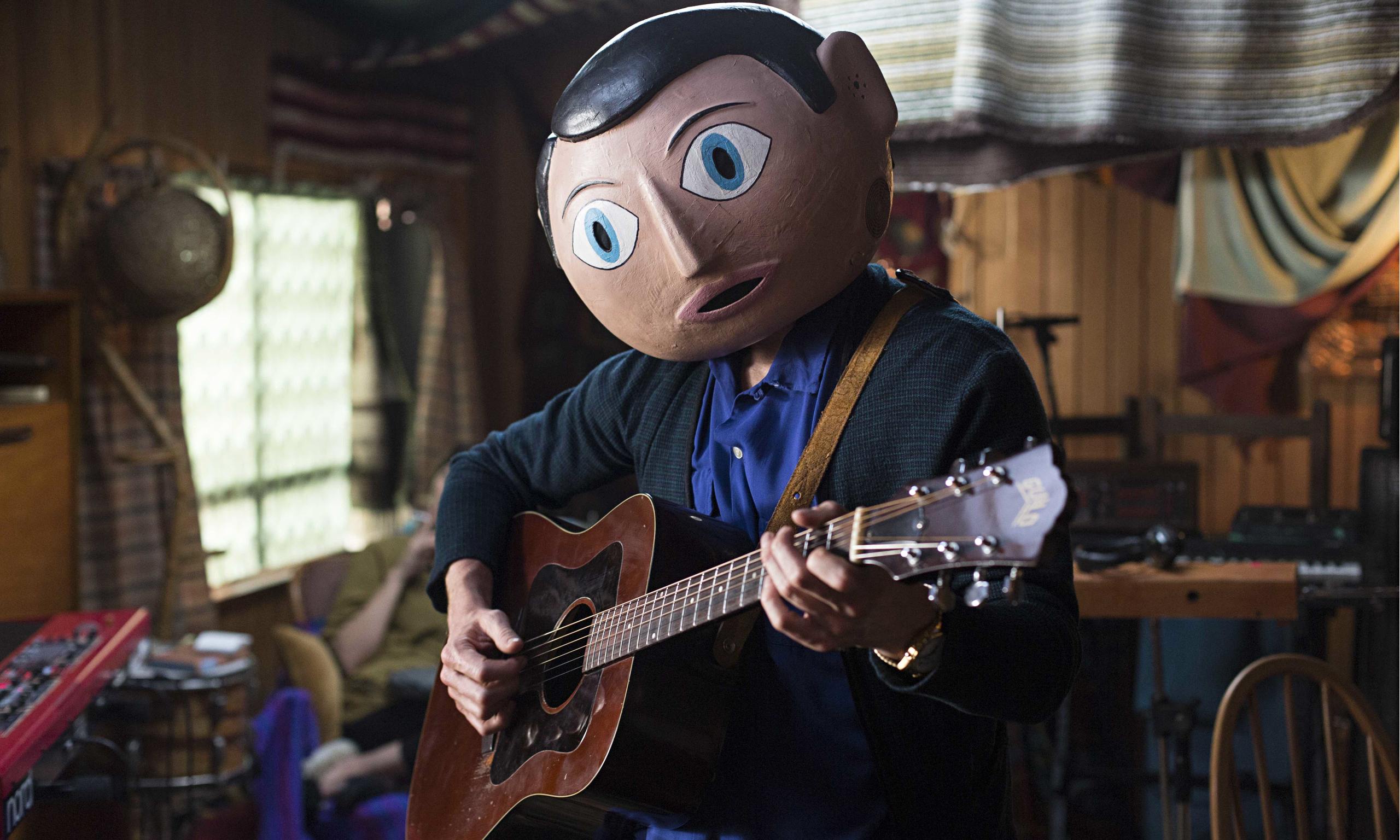
If an aspiring musician were plucked from obscurity to play in a band, he'd probably behave somewhat like Jon, the protagonist of Frank. Jon happens to be on the beach one day when he notices a man trying to commit suicide by drowning. When Jon overhears that the man plays keyboards for a band, he casually mentions that he, too, plays keyboards. "Can you play C, F, and A?" someone asks. When Jon responds to the affirmative, he's drafted to be the man's replacement. Prior to this we'd seen him struggling to write songs - he has no talent - so this new arrangement appears to be a godsend. 

Certainly the band looks and sounds unique. Jon doesn't hear their music until their first gig, and isn't intimidated by the off-key screeches that pass for the group's sound. He isn't even put off by Frank, the  mysterious singer who happens to be a former mental patient and refuses to go anywhere without wearing an oversized paper mache head. Eccentricity and suffering, Jon figures, is part of being an artist. Plus, he's just glad to be in a group.

Michael Fassbender plays Frank, and brings to the role exactly what is required, a slightly goofy, but  talented performer who is still suffering from some mental imbalances. That Fassbender can create a wholly nuanced character from within the giant mask is quite a feat. I also liked his singing - he reminded me of Ian Curtis from Joy Division. The band follows Frank blindly, even when he insists they spend a year living in the wilderness to prepare for their next album. "There's only one Frank," says one of the band members, a sadsack who is also a former mental patient.  "And I wish I could be him." There seemed to be a message here about being true to yourself, and not hiding behind masks, but fortunately, there isn't a lot of heavyhanded muck about the fine line between creativity and insanity.  The analogy is there if you want it, but the movie can be enjoyed without digging around for themes. The band itself could give you fits if you're inclined to look for symbols - one member speaks only French, the keyboard players all have death wishes, and another member, played by Maggie Gyllenhaal, is openly hostile towards Jon for being relatively normal in comparison to the rest. "You need to be punched in the face," she says at one point. Eventually, she punches him. And stabs him.

Jon puts up with the aggravation because he thinks the band can be a success. He puts clips of their rehearsals on YouTube, and the group is eventually invited to play a gig at the South By Southwest music festival in Dallas.   But this drive towards normalcy is the band's undoing. By gig time, only Jon and Frank remain to carry on. Can a mediocre musician and an ex-mental patient make it? No, but it's fascinating to watch them try.
 
There's been a lot of hubbub about Frank being inspired by the life of English comedian/musician Chris Sievey, who created a character named Frank Sidebottom. The movie, although based on the memoirs of a former band member of Sievey's, isn't to be taken as a biography of any kind. It works extremely well, though, as a sort of fractured fairy tale. I like how director LarryAbrahamson shows these people behaving in ways that go beyond societal norms, yet we believe that's how how things would go down in their world. He directed another excellent movie a few years ago, an Irish production known simply as Garage.  It was another fable of sorts about a man with mental issues. He's also made films about drug addicts, and troubled teens. I like him, although I wasn't sure if I liked what Maggie Gyllanhaal was doing in this movie. She's played so many grotesques that it's becoming rather old hat for her.  Still, I keep remembering the orgasmic look on her face when she played her keyboard.  I guess that's why she gets these parts.

Wednesday, September 10, 2014

THE GOODER LIFE...


Sketch comedy isn't dead. True, it's not as vital as it used to be, but "The Gooder Life...With Dr. Jesse" (available on the You Tubes) is a timely reminder that some people still want to wear wigs and act crazy.  If nothing else, it should serve as a nice palliative for the recent wave of fashionably ironic comedy currently airing on IFC.

The series is the pet project of Jesse Christensen, a dervish of funny accents and costumes who writes, directs, and stars in each segment. As Jerry Lewis might say, he knows from funny. Or as I might say, he's funny. 

In some ways, "The Gooder Life" is cheerily digging up old ground,  inspired by "The Kids In The Hall" and the Chris Farley, Adam Sandler era of SNL. Christensen hits all of the usual targets, including old movies, late night infomercials,  family values, has-been singers, and of course, lots of gross humor, usually involving a male character being sexually degraded.  Christensen doesn't try to be cute or hip, and I get the impression he couldn't care less about politics.  Basically, he  watched a lot of "Ren & Stimpy" as a kid, and he's still happily riding that influence.


Half Dr J:1:2 Jesse


What separates "The Gooder Life" from most sketch comedy is Christensen's attention to detail. There's always something going on in a corner of the screen, some splash of color,  an unexpected backdrop, that makes "The Gooder Life" one of the most visually appealing DIY projects on the Internet. My favorite bit was a sketch called "Mein Koffee,"  which is not only a tornado of funny German accents, but is as visually stimulating as an old Yardbirds album cover.
 
The sketches aren't always perfect - some go on too long, not all of the performers are playing the game at Christensen's speed, and while I admire Christensen's willingness to use everything in the attic for a laugh, there's an overreliance on the grotesque. Still,  Christensen is onto something. Underneath his maliciously crooked grin and his penchant for dancing naked is a talent for directing and editing, and an ear for the non-sequitur.  


KISS-THE TINGLE


Will comedy fans catch the nuances of "The Gooder Life?" Or will they be too overwhelmed by the belches, farts, and wigs to even notice? It's hard to say. As for Dr. Jesse, the demented self-help expert who introduces most of the sketches like HBO's old Crypt Keeper, he's one of Christensen's most inspired creations.  I'd like to know more about him. I'd also like to know why he wears a neck brace and carries a puppet.


Christensen's comedy tends to have a weird, boomerang effect. There were some bits that didn't strike me as particularly funny on the first viewing, but within a day or so I'd start remembering   certain lines and marveling at their cleverness. And that's what keeps me watching these sketches, paying attention to what lurks in the corners, listening to the punch-lines within punch-lines.
 
In other words, if the devil is in the details,  the devil's laughter can be heard throughout "The Gooder Life."