Tuesday, March 21, 2017

POLYTECHNIQUE


Polytechnique (2009) is one of those movies that wallows in violence, but wants us to appreciate the artiness of it all.

There's a major mass shooting every so often - they seem to be yearly happenings now - and there's usually a movie or a documentary to follow. Some are good; some merely exploit sad events. Some, like this one, spread the blood around like Jackson Pollock dripping paint on  a canvas.

The problem with these movies is the same one that happens in anti-war films. In order to have something to react against, you must show the violence. And violence, in war movies and in stories about mass shooters, is compelling. It's no surprise that the earliest movies made by Thomas Edison featured boxing; violence captivates a viewer, and taps into our basic predatory instincts. We're supposed to be rooting against the very thing that is enticing us.

That the murders are being exploited is not the real issue, though. The problem is the movie's lofty tone.

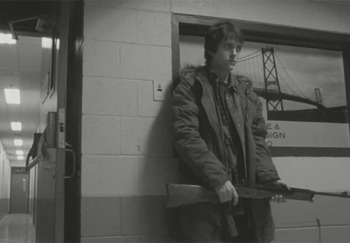
A young man with a vendetta against women strolled through a school in Montreal in 1989, armed with a rifle and shooting at "the feminists who have ruined my life." We learn about his hatred of feminists from a hastily written note he composes at the movie's start. We know nothing else about him; we see him staring out the window of his small apartment in a daze; he washes the breakfast plates and then writes his note. Off he goes to his killing spree, and damned if the movie doesn't perk up like a race horse. He scowls, he reloads, he shoots; the halls of the school are soon awash in the blood of feminists.

The plight of the poor women being shot at by a testosterone charged bogeyman is supposed to move us to tears. It almost does, except the director keeps butting in. There's a ridiculous moment where, in the middle of the chaos, the camera stops on a poster of Pablo Picasso's Guernica - a lead-footed attempt to compare the murder of the women to a sort of civil war. The female students, of course, are shown as sweet, hardworking, brilliant young things of lamb-like delicacy. When not studying, they shave their legs for job interviews, only to have their aspirations frowned upon by unattractive middle-aged geezers. At least the women have names. The shooter isn't identified in the movie's credits; he's just "the killer."

The man wasn't born hating women. What happened to him? The director doesn't care; he wants only to show us something terrible. The shooter's name in real life was Marc Lepine; he killed 14 women and wounded many more before killing himself. The movie depicts some of the actual events that came to be known as the "Montreal Massacre," but also throws in some fictional characters. It's nearly as deadpan as Gus Van Sant's Elephant, which was about the Columbine shootings, but there's an underlying theme in Polytechnique that is a bit of a turn off.  Namely, that the real tragedy is that the victims weren't merely housewives or store clerks, but were, in fact, educated young women going for their engineering degrees. I'm not certain that an educated person's life is more valuable than, say, someone who doesn't want to design airplanes.

If Polytechinque is too self-important to be a first rate movie, it does have some merits. It's filmed in a murky black and white, and the brewing snowstorm outside gives the school a melancholy, snow globe effect; when frightened students escape out the windows into the snowy dark, they seem to disappear, as if the usually safe confines of the school protected them from nebulous dangers outside. Director Denis Villeneuve surprises us with some Tarantino-esque time play, moving back and forth between events, and Maxim Gaudette is properly grim as the shooter. Karine Vanasse does her best with the heavy-handed role of Val, a survivor of the attack. 

On the whole, though, there's something preachy going on. Val has a line near the end when she says, "If I have a son, I will teach him to love. If I have a daughter, I will teach her that the world is hers." This sort of fluff seems scraped from the Oprah channel, or pinched from a pregnant woman's Facebook page.

That leaves the question about exploitation, I guess. One of the first mass shooters, Charles Whitman, who shot and killed 14 people from a tower at the University of Texas in 1966, was portrayed in a movie just a few years later by Kurt Russell. Mass shooters have remained a favorite subject of filmmakers ever since then, and the movies always include dour announcements at the beginning or ending about how this sort of savagery has to end. Of course, in between these announcements, we get 90 minutes of movie mayhem.

The same thing goes on here. The shooter picks off victims, and they drop in ways both artful and horrifying. Because the movie is in black and white, the blood spreads on the floor and the walls like a black oil slick. At the end, the closing credits include the names of the  women killed in the actual Montreal shooting. But rather than feel sad, I was struck by how the names looked like a list of bestselling authors, or the high scorers in an old game of Donkey Kong. 


Sunday, March 19, 2017

COMPUTER CHESS

Computer Chess Movie Review


I've never been anything but indifferent to computers. As for new streaming services where we can watch movies and listen to music, well, I still find myself struggling with internet connections, and  any number of imperfections. I don't feel we've advanced that much since the days when my father would smack the side of our old Zenith television to fix the vertical hold, or when we'd wrap the antenna in tin foil to improve reception.

But there's a loud majority out there convinced that the invention of the computer is the most important thing since the invention of language. Sorry if I don't buy into it.

My grousing is prompted by a 2013 film that was a minor smash on the festival circuit and is now available on Fandor, an excellent movie streaming platform that only shits the bed  once in a while. The title, simple enough, is Computer Chess, and in its best moments it is about the weirdness felt by those early programmers who were there at the beginning, the paranoia they may have felt, the loneliness they experienced late at night when the rest of the world was dancing and partying, while they stared into screens trying to solve problems of artificial intelligence, among the most pressing being the question of whether a computer could beat a human at chess.

It takes place at a convention for such would be adventurers - a host actually uses the term "adventure," and that seems apt for these types of people, who don't look as if they've ever journeyed beyond their zip code - where rivals compete to see who has designed the best chess program.

We get the  usual types - the greasy haired nerd, the chubby guy wearing a shirt that doesn't fit, the cryptic loner, the angry dude who is too smart for the room, the one female who has an interest in computers, the British guy, and a potpourri of middle-aged professors who moan on and on about "their work," and how much they sacrifice. 

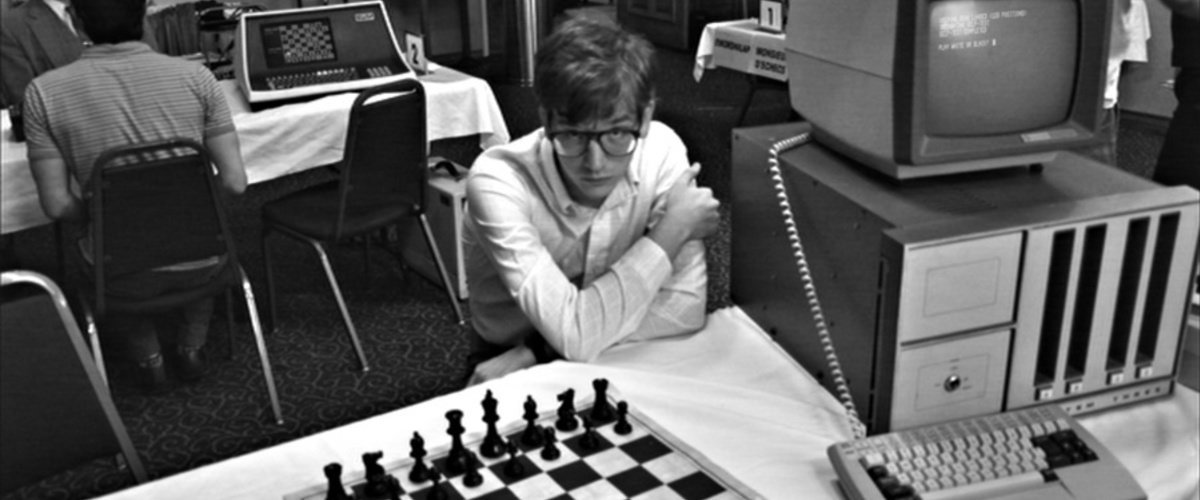
Writer-director  Andrew Bujalski took a lot of care with casting; he finds a lot of regular looking people, pear-shaped and spotty complexioned, and he dresses them in ways that remind us of old high school yearbooks, or photo albums from the 1970s.  He takes the same care with the computers in the movie, big, honking desk models with the glowing screens. Some are so big they need two people to move them. Shot on black and white videotape, it's a great movie to look at; it looks, at times, like a documentary, and you won't be blamed if it takes you several minutes to realize it's not one.

Unfortunately, the movie doesn't want to take any great leaps. It sets up what could be an awesome and rarely tapped premise - the early days of computer programing - but instead settles for some cheap, and not very funny jokes. Apparently, the hotel hosting the computer chess tournament is also hosting a gathering of swingers, and a hippie-dippy self-help group. It doesn't take long for the computer nerds to start mingling with the swingers and the self-helpers, with predictable results.
And after a while, we can't tell one nerd from another; they all look the same.

If this sounds like a knock, it is. But the movie is watchable even when it loses its pulse. It has a fleeting resemblance to early Jim Jarmusch, and even a couple of flourishes that are downright Godard-like. 

There are multiple stories going on at the hotel. There's an angry fellow who can't seem to get a reservation, and he wanders around in a state of mild rage until he finally winds up with the self-help group, reenacting his birth. There's a kid who thinks the computers actually take pleasure in competing against humans, and an older professor who tells a story of a computer that made him question the very existence of his soul.

Bujalski weaves the episodes together nicely, but if some of the movie hearkens back to Jarmusch's minimalism, some of it also feels like Westworld. The mix of tones isn't a complete success. 

To his credit, Bujalski doesn't play up the obvious discomfort of the one woman in the computer group, and he doesn't turn her into a feminist powerhouse. She does, though, have a compelling scene where she imagines the people at the hotel all seem to be moving like chess pieces. 

In a way, the movie reminded me of certain Robert Altman films where a crowd gathers for a concert, or a wedding; they interact, learn nothing, and move on. And we can almost imagine what Altman could've done with this, using actors like Bud Cort and Donald Sutherland as the hotshot computer techies. We know Altman would've focused on the human aspect. By moving away from the humanity of the characters and trying to make things weird, Bujalski just muddles it.

Worse, the characters are perfectly dressed, but not especially memorable. At the end of the weekend, when awards are being passed out, it means nothing because we don't know what these people were really all about, and we couldn't care less who wins or loses. 

"Take something mediocre and turbocharge it," says one character, complaining abut the shoddy convention. This movie, though probably deserving of the many festival accolades it received a few years back, could've used some turbocharging. 


Saturday, March 18, 2017

ED WOOD'S LOST LOVE: FINAL CURTAIN

Image result for night of the ghouls


Ed Wood Jr. directed Final Curtain as a pilot for a proposed television series to be called Portraits in Terror. In it, an apparently disturbed actor recounts the strange happenings in what appears to be a haunted theater.

The pilot was thought to be lost for decades and maintained a fascination for Wood's cult of admirers. What sort of television show, they wondered, would come from the director of Plan 9 From Outer Space?  


Made in 1957, Final Curtain wouldn't resurface until a copy was found by the great-nephew of Paul Marco, an actor in the Ed Wood stock company. It was given a premiere of sorts at the Slamdance Festival in 2012, and has since faded back into oblivion. Still, there's much about it to be admired. It's not the oddball curio for which Wood's fans may have hoped, but it shows a different side of Wood. The pilot also has a lot of folklore behind it, which may have superseded its arrival.

Wood had written the script as a possible vehicle for his friend Bela Lugosi. According to legend, it was the script Lugosi was reading when he died. The irony was tasty for fans of the Wood/Lugosi team, and for all we know, it's a true story. If it's not true, it should be.


According to Wood biographer Rudolph Grey, Final Curtain was one of Wood's favorite projects. Grey doesn't provide any specific incident where Wood said as much, but if there's reason to believe Wood was fond of this pilot, it probably had to do with the subject of haunted theaters. As Wood's third wife Cathy said in Grey's Nightmare of Ecstasy:

"He told me he went to Northwestern University (in Chicago) after he got out of the Marine Corps. I'm pretty sure he took up acting, and I think writing. And that's when he told me he lived in an abandoned theater, or a theater that was dark most of the time, and that's where he got the inspiration for Final Curtain. He felt the vibes, as we say."


 The story, what there is of it, concerns an actor wandering around in the theater where his show has closed. We hear his thoughts in a voice-over narrative read by Dudley Manlove (known to Wood fans as Eros in Plan 9 From Outer Space) and it's pure, over-the-top Wood, with a lot of hokum about "the witching hour," and and how spirits come out to cavort in the darkness, "to die, and re-die, to live and relive..." 

If it seems a bit much, consider that Wood was probably trying to recreate some of his favorite radio shows from his childhood. Place Manlove's exaggerated delivery next to say, The Shadow or Inner Sanctum, and it's not so outrageous. You could give Wood credit for trying to create radio on film. Or you could say he was silly to try. It's your call. 

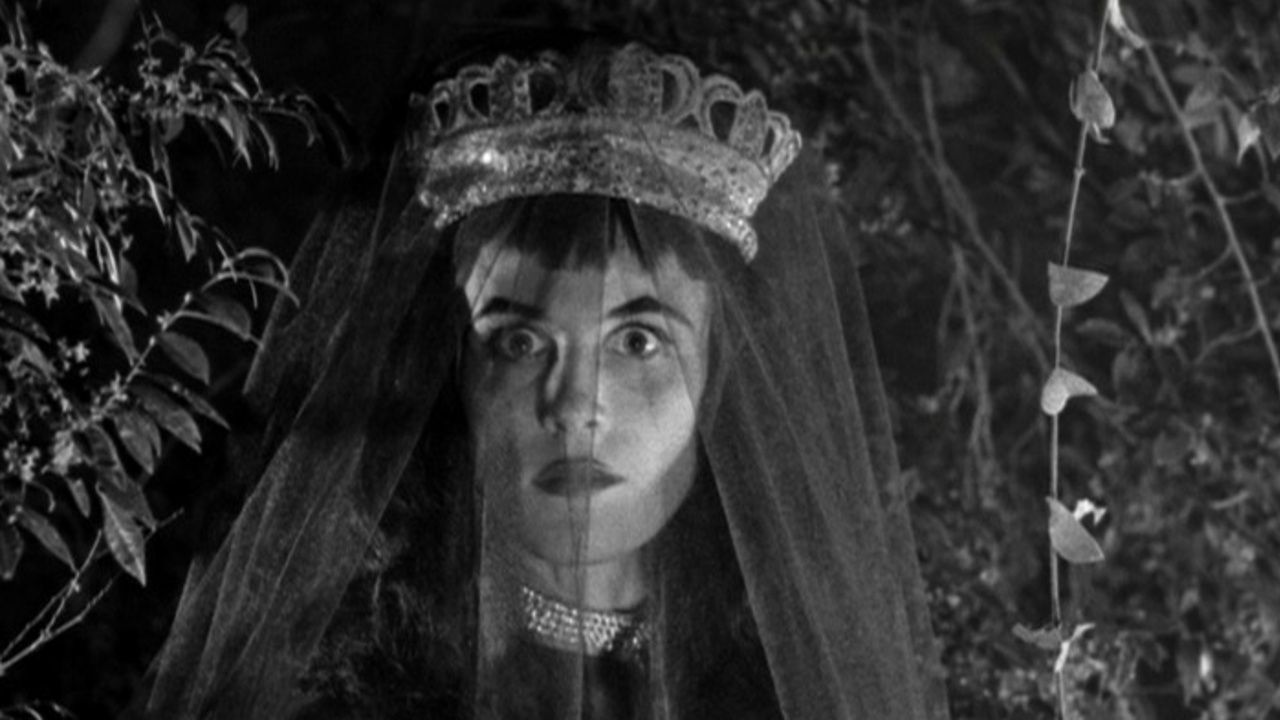
Eventually the actor (played by Duke Moore, who would appear in several Wood projects) is lured to a storage room where he discovers a strange mannequin in a closet. She comes to life, and beckons him to join her. She's one of Wood's great creations, her long fingernails reminiscent of Vampira's. Say what you will about him, but Wood could create a striking tableau. Tor Johnson coming out of the grave in Plan 9,  for example, is comparable to anything from the Poverty Row horrors of Wood's youth; this mannequin, played by Jenny Stevens, is equally unforgettable. Sure, we can see her arm moving slightly, so we know she's a human and not a doll, but she's creepy. The actor flees, and eventually comes to his own morbid end. It's like Tales from the Crypt, without the sexy stuff.

If we need proof of Wood's fondness for this 20-minute episode, consider the ways he recycled it. First, he took the great scene of Jenny Stevens' alluring mannequin and inserted it into one of his next films, Night of the Ghouls (1959). In 1963 Wood was still tinkering with the omnibus idea, proposing a film version of Portraits in Terror that would include Final Curtain along with another of his short films, The Night the Banshee Cried. When Wood wrote the novelization of his own Crypt of the Dead (1965) he incorporated much of the Final Curtain story. In his 1975 paperback collection, Tales for a Sexy Night Vol. 2, he included a prose version of Final Curtain. Finally, some of the verbiage in Final Curtain sounds suspiciously like material from Plan 9. It was undoubtedly a story Wood wanted us to know.

One reason Wood should  have been proud of Final Curtain is its look, which is a few shades better than most of Wood's movies. Filmed in an actual theater at Ocean Park Pier in Santa Monica, it doesn't distract you with cheap sets and makeshift scenery. Wood and his longtime cinematographer Bill Thompson (who made his debut in 1914, filming King Baggot in Absinthe) lurk around the theater, filming backstage and along the lonely corridors; they knew where the spooks were hidden. They also get some great shadowy shots of Moore on a spiral staircase, as if Wood had been spending his free time watching Fritz Lang movies.

Looking slightly overstuffed in his tuxedo, Moore is a credible stand-in for Lugosi. Would Lugosi, Wood's original choice, be any better? Perhaps for camp value. Moore, to his credit, takes the role seriously, peering around the corners of the dark theater as if fearing what he might see. By '57, Lugosi was too dissipated; Moore looks robust, and we can believe he was some sort of theatrical idol. With Wood directing him as if he's in a silent movie, Moore is gallant. 

Where Wood disconnects from some viewers is that he was irretrievably stuck in the 1930s. The B movies, the Saturday matinee serials, The Mummy and Dracula, the comic books and radio shows he'd loved as a kid, had such a profound impact on Wood that his strongest desire was to recreate them. His detractors like to say that if he'd had bigger budgets, he'd still make a cheap, tasteless product. That may or may not be true. Besides, if you gave Ed Wood a million dollars, he'd probably give most of it to Lugosi, just to keep the old guy out of trouble. 


Unfortunately, if you can't get past Wood's penchant for angora sweaters, or the Johnnie Depp movie, or Wood's reputation as the worst director of all time - a title that certainly doesn't fit him considering the dross that plays in our cinemas and on cable every week - you're missing out on the work of an idiosyncratic artist who, against odds that would cripple most of us, practically willed his ideas into existence. Worst of all time? Sometimes I think Ed Wood is nothing less than a hero. 


Watch Final Curtain on The Film Detective's classic movie app, available on Roku, Apple TV, and Amazon Fire TV.
 

Thursday, March 16, 2017

BOOKS: A STRAY CAT STRUTS


JUST A KID FROM MASSAPEQUA WITH A MODEL AT HIS SIDE
Slim Jim Phantom and his Quest for Cool
by Don Stradley

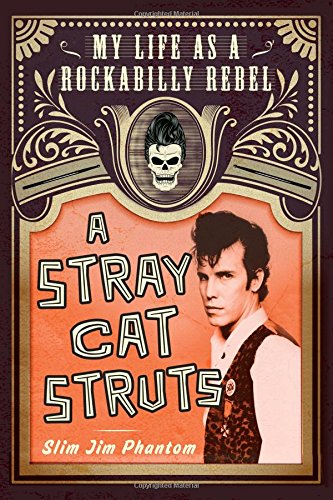
The Stray Cats were one of the stranger pop culture stories to come out of the early 1980s. Three young guys from Long Island, dressed up as rockabilly dudes, ripping it up alongside The Clash and  Duran Duran. It made no sense then, and after reading Slim Jim Phantom's quaint A Stray Cat Struts: My Life as a Rockabilly Rebel,  I'm still not sure how to explain it. Of course, the Cats were a fine  band and they fired off a handful of memorable tunes, and Brian Setzer's guitar licks were supple and bright, and the band's image was indelible, and one of my favorite CDs is a live set they recorded in 2004 called Rumble in Brixton; but since when does talent get anyone to the top? I'll always think of the Stray Cats as an anomaly, an accident, something that slipped through the cracks, like an alley cat that sneaked into a restaurant and ended up being the chef's favorite. What lesson can we learn from the Stray Cats? That hard work and chutzpah is rewarded? That enthusiasm pays off? Like the Bermuda Triangle and the pyramids at Giza, the Cats' success mystifies. We didn't know we needed them until we saw them.

Barely out of the litter box, the band became a favorite mascot of the Rolling Stones, all fans of the 1950s rock 'n roll style being aped by these Long Island boys. Phantom, who wrote the book without help from a ghost writer (which deserves kudos, because I'm sick of barely literate slobs hiring pros to make them sound like Hunter S. Thompson) describes his  early encounters with Mick Jagger in the way you'd expect from a New York kid. "The whole scene was a kind of summoning to a mythic figure," he writes about a visit to Jagger's office. "He was holding an antique hand mirror with a big pile of coke on it." The style never veers; it's endless awe and gratitude for the situation that has dropped into Phantom's lap, including friendships with such diverse characters as Lemmy and Harry Dean Stanton, plus a surplus of gorgeous women that us non-rockers never meet. He doesn't kiss and tell; he's actually rather gentlemanly. "We are still together,"  he says of the current woman in his life, "and she's my girl." Sweet, eh?

There's a smattering of backstage stuff, but it's all rather tame. Jerry Lee Lewis comes off as eccentric; Keith Richards as earthy; George Harrison as eccentric and earthy; Johnny Ramone as a bit of a control freak; Setzer as egocentric; none of it makes for a galvanizing memoir. Phantom falls too easily into the "Aw shucks, I'm just a drummer," role, but once in a while he cuts loose with something that penetrates, like his observation that "the cast of the Grand Old Opry had as much sex, drugs, and rock and roll as Led Zeppelin, the main difference being the volume of the drums on the records." Or when Lemmy offers him a special concoction off the blade of a buck knife: "It felt like someone had shot an orange flavored metal arrow up my nose and through the top of my head. I was frozen. I couldn't talk. I couldn't even blink." And like all rockers of a certain age, Phantom offers tributes to his dead pals, and a sense of Gee, how lucky am I to still be here?!

Phantom refrains from anything that might counter his nice guy image, to the point where we wonder if he's holding back. He certainly doesn't say much about the Stray Cats. Their early days were a whirl of  kismet, and he's still flabbergasted by how hugely famous they were for a while, but he offers little about on his band mates, except to say the trio simply grew apart in the way successful bands often do. Early on he describes a chat with Stones bassist Bill Wyman, who wasn't especially forthcoming with info on Mick or Keith. "I myself have been in that conversation a thousand times," Phantom writes, "being on the receiving end of the 'What's your lead singer really like?' question." From that, we can gather, Phantom will take Wyman's tip and not divulge much regarding the Cats. We'll learn about his first wife Britt Ekland being a sweetheart, and John Candy stumbling drunk outside an L.A. club, and the trials of running the Cat Club on Sunset Boulevard, and Phantom falling from a stage and breaking his arm, but it's all just enough to keep the line moving, like he's entertaining fans with quick stories at an autograph signing. What he's learned over the years is how to keep us at a safe distance, to give us enough tidbits to make us forget we're outsiders.


Sunday, March 12, 2017

BOOKS: THE MIDNIGHT EXAMINER


HOW BELLY DANCING SAVED MY MARRIAGE
I find the darnedest things at my local swap shop
by Don Stradley


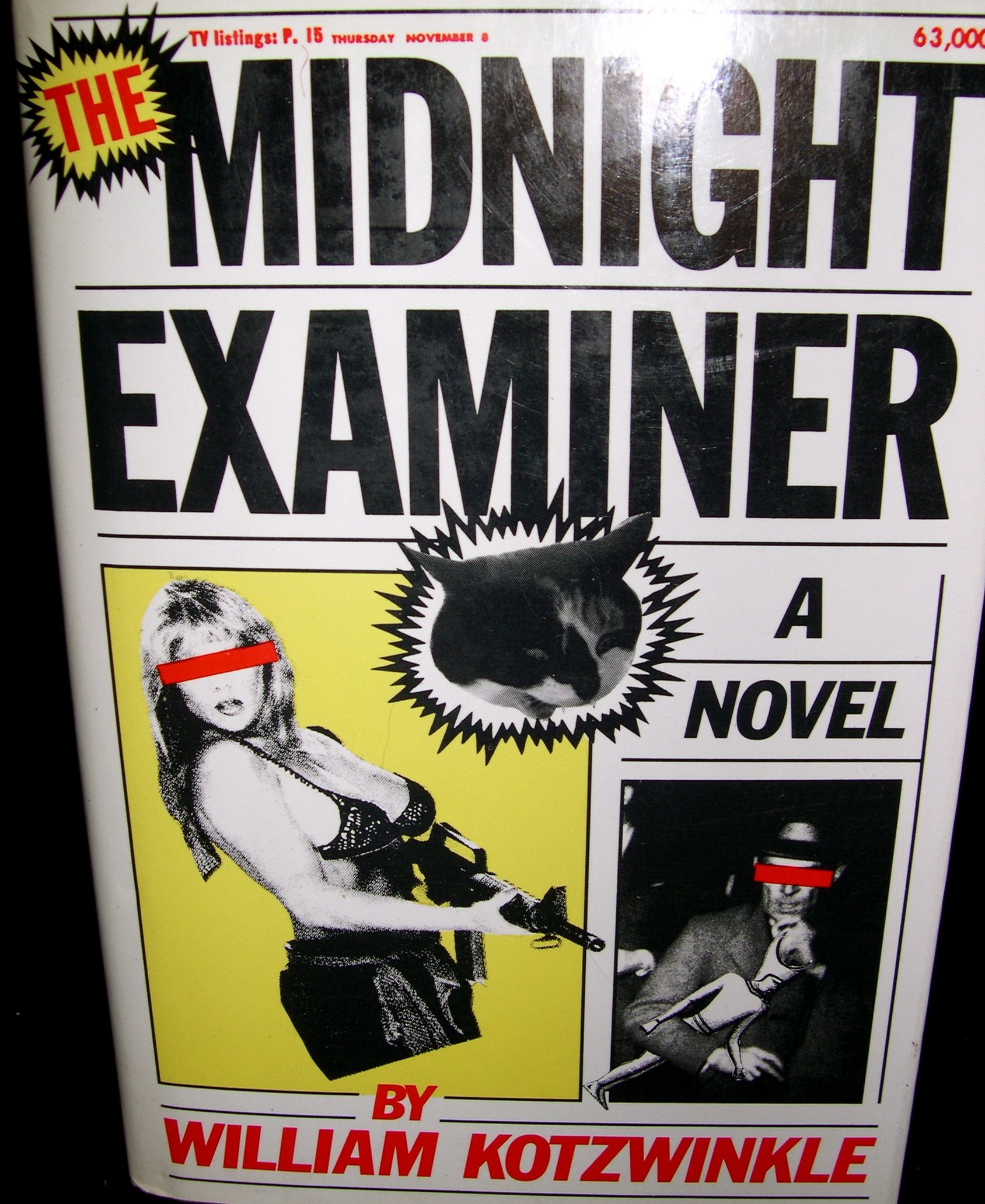
William Kotzwinkle is one of those writers - as quaint and precious as a scented candle, a name that meant a lot to college kids during the 1970s and '80s, a kind of less threatening Kurt Vonnegut, utterly convinced that satire was some kind of thorny cudgel - that I never quite got. He's in good company, because I never got Saul Bellow or Theodore Dreiser, either. I once crapped out in the middle of a John Le Carre novel because there were too many characters in it. Yet, I was always touched by the people who loved Kotzwinkle. He was their dry-witted avenger, their cuddly, slightly skewed hippie uncle figure who won awards and, shock of all shocks, was hired to write the novelization of ET, The Extraterrestrial, which for a writer whose name rhymed with "twinkle," as in "Twinkle twinkle little star," seemed beautifully appropriate.  I recently found a copy of The Midnight Examiner, Kotzwinkle's 1989 send up of the supermarket tabloid industry, and though I still don't quite get him, I like him a bit more. Like the neighbor who annoys you with his opera music, he's not so bad if you get to know him.

It takes no time at all for us to understand the lightly cynical world of The Midnight Examiner. The worn out hacks at Chameleon Publications, a New York group responsible for a line of magazines with names like Macho Man and Knockers, churn out stories about plastic surgery gone awry, dead people being eaten by their cats, and my favorite, a little girl who has a UFO stuck in her uterus. The staff dreams of L.A., where "the face lift hospitals have valet parking," but despite assembling portfolios for more highbrow magazines, they know they're not getting out of their world of alien hookers. The style here is newsroom farce, His Girl Friday if Cary Grant and Rosalind Russell were bitter, hopeless alcoholics, with Kotzwinkle spinning out the dialogue as if he'd just seen a late night showing of Room Service, or worse, an episode of M.A.S.H. where Alan Alda does his Groucho act. The hybrid of newsroom razzle with tabloid schlock must've been tempting, but wading through it becomes a chore.

There's also a funny bit where a story about an exploding vibrator is squashed because one of Chameleon's chief advertisers is a company that manufactures vibrators. And there's a guy who gets a job as an editor based on his once writing a series of prank letters to the Village Voice. There's an inspired moment where a writer talks proudly about meeting a reader who truly loves the stories from Chameleon Publications, describing them as something like aspirin. When a co-worker questions if so many aspirins are good for a person, the writer responds, "If you've got a headache that won't quit, they are." And of course, the senior members of the staff fear aging. "I'm never going to look at my old movie magazines again," says one. "It's a shock to the system, seeing June Allyson as a young girl." But Kotzwinkle is actually better when he puts his humor aside and focuses on the story's underlying theme: the vanishing of New York.

The Manhattan of the 1980s was an unpleasant place, and The Midnight Examiner is bursting with mobsters, crackheads, voodoo queens, and delusional war veterans. Still, the memory of better days days lingered. "If you turn and look back in the twilit hour," Kotzwinkle writes, "you can see the old ghosts of Manhattan pulling up in their horse drawn carriages." Nowadays, I suppose you have to grind your way through the annoying tourists, with hopes of seeing the ghosts of old crackheads. Ultimately, Kotzwinkle has little to say about the milieu of cheapo magazines and the people who make them. Now and then, though, he hits a perfect note, like when the staff goes to lunch in Chinatown. "We turned on Twenty eighth, past windows full of jade turtles, ivory unicorns, and turquoise horses whose bridles  sparkled with little gem stones. Fate had cut us off from the prestige and perks of the regular corporate world, but as a kind of compensation we, like these supernatural creatures, lived in an arcade of dreams, turning out fairy tales for the modern reader." This says more than Kotzwinkle's tired slapstick, as does a character quietly grousing that Chameleon magazines are never in the reception area of his psychiatrist's office.


Saturday, March 4, 2017

BOOKS: LONELY BOY - Tales from a Sex Pistol...

SEX AND DYSFUNCTION AND ROCK 'N ROLL
A punk rocker tells his tale
By Don Stradley


I always figured the Sex Pistols could've made it in America based solely on Steve Jones' guitar. John Lydon's caterwauling vocals and Sid Vicious' goofy presence aside, it was Jones who might crack through America's thick, clannish wall. No one in the U.S. would care much about the band's reputation in England - we don't really get the whole business with the queen and the royals, and the whole punk fashion thing seemed silly to most of us who were still listening to Frampton, or our older brother's Zappa albums - but Jones' guitar could grab anybody by the ear. Though he was once planted at #99 on Rolling Stone's list of the top 100 rock guitar players of all time, he remains a largely unappreciated musician. I loved his style - it was raw, but smart - and his best riffs on Never Mind The Bollocks… have the feel of a man escaping down a clear road on a motorcycle, making hairpin turns and nearly cracking up. Listen to the crashing chord that introduces "Holidays in the Sun." A hundred guitarists using the same equipment in the same studio could hit the same chord, but none would sound like Jones. His way sounded like a call to arms, a warning shot announcing a street rumble where bones would be broken and souls trampled under jackboots.

Aside from his occasional reunions with the Sex Pistols, Jones has seemed content to forget those old riffs  in favor of a variety of sounds, working with his own bands like The Professionals and Chequered Past, and serving as a gun for hire for everyone from Siousxie and the Banshees to Iggy Pop. For a while Jones wore his hair like Fabio and seemed to be deliberately removing himself from the Sex Pistols legacy. Still, when the band reunited in 1996 and sporadically during the 2000s, it was Jones' guitar that brought back the old chills. Are there really 98 guitar players better than Jones? There may be some technical wizards out there, some with a greater library of classic riffs, but I'll be damned if there are 98 who can make the hair on my neck stand up the way it does when I hear Jones, especially if I haven't heard him for a while.

There's always talk that The Sex Pistols could've been enormously successful had they stayed together beyond one album and one half-assed tour of America, that the success that came to U2 or The Police could've been theirs, but this isn't necessarily so. They were probably too abrasive for America, too strange, too unwilling to play the game. Plus, Jones didn't much care for Lydon's company. And if they'd managed to stay together and get rich, a heavy drug user like Jones might've followed Vicious into an early grave. Though kismet seemed to put them together - all were young guys hanging out at Malcolm McLaren's clothing shop when he was thinking about managing a rock group - you can't say luck was ever on their side. On their last tour in 2008, they came to the end without a profit, thanks to the economic crash. Lucky for Jones he's been able to pay the bills courtesy of his popular L.A. radio show, Jonesy's Jukebox. That particular job has kept him out of trouble for years. He interviews his friends, brings on musicians he admires, plays his favorite songs, and plays his guitar a bit, too. It was an unlikely, but safe, place for him to land.

These days he meditates. He took spin classes until he hurt his back. He makes amusing cameo appearances on shows like Portlandia - there he was on Craig Ferguson's farewell show, too, playing his scratchy power chords as Ferguson bellowed the lyrics of "Keep Banging On Your Drum" - but what's most interesting, along with the fact hat he can still play that damned guitar, is the way he looks now. He used to be such a boyish little guy - McLaren had originally thought of calling the band "Kutie Jones and his Sex Pistols," as if Jones was going to be the Shaun Cassidy of punk - but these days Jones is carrying some extra weight and looks like he could be a hitman in an old Michael Caine movie. No one would've guessed that this was what punk would look like in middle age. Then again, Jones is the first to tell you that he wasn't a punk, that he'd never really dressed the part and didn't have the hair for it. He's always been on his own, unpredictable path. To quote Chrissie Hynde, "no one could've predicted Jonesy."

Nor could anyone predict that his new memoir, Lonely Boy: Tales from a Sex Pistol (Da Capo Press), would be such a frank confessional. Jones' book, which has its share of humor and rock 'n' roll moments, is a surprisingly insightful record of what can happen to a boy when he's victimized by sexual predators, as Jones was as a kid.

Throughout the memoir, Jones refers to himself as "damaged goods." At various times he's been an alcoholic, a junkie, a peeping Tom, a sex addict; he can't have normal relationships with women. Sex, which he begrudgingly accepts was one of his many addictions - though anyone reading the book could see it was obviously so - was just a distraction from his inner turmoil. He was a screwed up adult, and it's not surprising. He experienced some childhood incidents that would leave most people fairly well-scarred.

For a barely educated bloke, he's actually quite good at examining his behavior, especially his years as a kleptomaniac. There was nothing Jones wouldn't steal. Hell, he once stole a coat from Ron Wood, a guitar tuner from Roxy Music, and some sound equipment from David Bowie, including a microphone “that still had a smudge of Bowie’s lipstick on it.” The sense of excitement thrilled him, especially when his thefts made the news. In a rather brilliant aside, he says his thieving days help him understand mass murderers and arsonists.

“It’s that level of narcissism where you get excited because you’ve made your mark on the world and no one knows it’s you,” he says. “You’re so alienated from humanity that you don’t care how much damage you have to do to get that feeling.”

By turns cynical and self-deprecating, blunt and wickedly funny, Jones keeps the tale moving briskly. He tells it as he remembers it. Granted, he doesn’t always remember things vividly – he was too busy shagging birds in an alley while high on one drug or another – but since he was always the mystery man of the Sex Pistols, any small detail feels like a gold nugget. He admits to asking his friend and former Pistol Paul Cook for help with some of the blind spots in his memory, but he doesn’t seem too hell-bent on accuracy. He addresses a few misconceptions, and actually does a lot to restore the reputation of McLaren, long thought to be the devil incarnate who ruined the Pistols, and unleashes some telling snapshots of his old band mate, Lydon.

But Lonely Boy, written with an assist from Ben Thompson, is less a showbiz memoir than the story of a troubled man who happened to move in showbiz circles. It’s like a session of binge drinking with a jolly old uncle who tells a lot of risqué stories, and then shocks you with some intimate bits that you hadn’t expected to hear. Ultimately, it’s a moving story, told with as much candor as we can expect from a man who has spent a career relinquishing the spotlight to others.

Die-hard Pistols fans, however, will relish the discussions of Sid Vicious joining the band, and Lydon’s bizarre audition, and how the Pistols' sound was born. They may be shocked when Jones says he wishes he’d been in The Clash, or that he was secretly a fan of bands like Boston and Journey. But the story will be of interest even if you’ve never heard a single note of the Sex Pistols. It’s that well told.

If Jones’ guitar playing was deceptively complex, so is his style of storytelling. He sounds like he’s being matter of fact and humorous about everything, but there’s always a pinch of estrangement in each chapter. His joking manner is a kind of shorthand, but Jones, now 61, is still harboring hurts and insecurities.

He learned the guitar on his own, holed up in his childhood home in West London, scarfing pills to help his focus. It was a nice break from the perverts who stalked him under bridges, and the general sense of decay and corruption that made up the background of his life. “There were building sites and debris everywhere,” he writes. “It was like the whole place was falling down around us.” But he credits his atrocious childhood with the advent of the Pistols, adding, “It was my shit upbringing that got the ball rolling. That’s not me showing off, it’s just a fact.”

In this book we see Jones revealing different facets of his being. There’s the kid who loved nice clothes and shoes, the terrible student, the petty thief. He refers to himself at various times as a phantom, a werewolf, a daring burglar with a cloak of invisibility, and compares himself more than once to Alex of A Clockwork Orange.  (Jones uses so much Brit slang in the book that you may think you're reading A Clockwork Orange!) Most winning of all, though, is the thieving kid who found unexpected comfort in music, loving everything from Rod Stewart to Jimi Hendrix, to Elvis, to prog rock. Hearing “Purple Haze” coming from a neighbor’s window was a special moment:

“There was a catchiness about it as well as the power, and I loved the syncopation, the way Hendrix’ guitar would kind of go ‘clunk’ and then ‘weeeoh!’”

And then later, the boy who never really had a proper mentor finds one in the most unlikely of people: Malcolm McLaren.

"He had his fucking issues, same as we all do, but I couldn't help but like him, and I got a lot out of our friendship - probably more than he knew."

Jones tells the story of the Sex Pistols and their crazy ride to fame like he’s describing a party gone dangerously out of control. It started out in a fun way, with him nicking equipment so the unpolished players would at least look professional, and the time spent songwriting and in the studio yielded magnificent results, even though the negative quickly outweighed the good: the absurdity of the U.K. media circus; the attacks in the street on Cook and Lydon; the rise and fall of Vicious; the phenomenon of fans spitting and hurling beer bottles.

Of the insidious presence of heroin in his life, Jones recalls that he never felt like he was the worst of junkies, though he once overdosed in a toilet stall at a sushi restaurant. He never took part in “shooting galleries,” which struck him as unclean. He was always sure to bring his own syringe, though he describes this as akin to bringing his own cue to a snooker hall. He maintains that he was an alcoholic who merely stumbled into heroin use. His addictive personality had a lot of moving parts, and heroin was just one aspect. Wandering through New York’s infamous Alphabet City in the 1980s hoping to score was one of the low points of his drug years. “It was scary, but I knew I had to do it. The thought of getting high was all that was keeping me going…being a junkie felt like a necessity after the Pistols ended.”

If the band had given him a sense of belonging, he never quite became friends with Lydon, AKA Johnny Rotten. Lydon comes off as a whining, immature character surrounded by yes-men. But, Jones reckons, Lydon’s snotty attitude, “was exactly what the Sex Pistols needed.”

He does praise Lydon for his vocals, and he’s particularly fond of Lydon for turning down the Sex Pistols’ induction into the Rock and Roll Hall of Fame. Still, there is likely to always be friction between them. By the end of the 1996 reunion tour, Jones writes, “we were every bit as fucking sick of each other as we had been when the band first split up.”

Jones is equally direct with his impressions of other people in the music biz, including many that he’s met through his radio show. Brian Wilson, for instance, was “a complete cunt. Just because he’s supposedly a bit nuts, that’s no fucking excuse to not be a nice person.”

In the course of Lonely Boy, Jones discusses his tough years in 12-step programs, his difficulties in taking responsibility for his life, dealing with one of his childhood abusers, a sketchy relationship with his mother, and not learning how to read and write until he was grown. A meeting with his biological father goes reasonably well, but he knows going in that a real relationship with the guy, an ex-boxer named Don Jarvis, isn't likely. He just seems glad to finally meet him and learn he’s not a jerk. Music, though, remains a constant companion,  if no one else will.

Jones manages to portray himself as a serious musician, not just a meathead who turned the volume up. There’s even gentleness in the way he discusses the guitar, like it’s a loyal dog he can always count on. Even during his darkest days, he was able to play, and be proud of what he did as a guitarist and a Sex Pistol. He’s never sentimental, though. “The Sex Pistols were born to crash and burn, and that’s exactly what they did.”

Yet, there are clues throughout the book that the band's sudden demise was something from which Jones never quite recovered. Bands are like marriages, and the breakup of a band, especially when it's the first time a guy feels like he's part of something, can be as devastating as any divorce. How can we read Jones' recollection of an early gig at St. Martin’s art college and think otherwise?

“I was thinking, ‘This, right now, is the best thing in the world.’ He (Lydon) was the singer and I loved playing in the band with him and the whole thing felt fucking great. Sadly, that feeling wouldn’t return too many times," Jones says. "But at least I’d always have the memory.” 


Monday, February 20, 2017

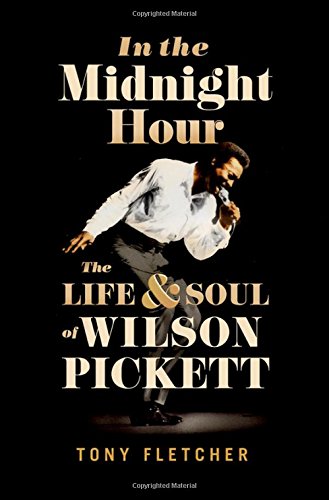
BOOKS: IN THE MIDNIGHT HOUR


UP ALL NIGHT WITH THE REAL MIDNIGHT RAMBLER
Wilson Picket; stop and kick it
by Don Stradley

https://images-na.ssl-images-amazon.com/images/I/41Io-DVK%2BLL.jpg
Though author Tony Fletcher's description of Wilson Pickett as "a man who turned screaming into an art form," is spot on, a few other soul singers and rock 'n' rollers could lay claim to doing the same. Little Richard, for sure. James Brown, who competed with Pickett on many levels, could certainly fit the same description. So could Brit rockers Robert Plant and Roger Daltrey. And don't forget Janis Joplin. Still, if you were to design the perfect soul singer and wanted to be sure his scream could kill man at 50 paces, you could do a lot worse than fitting him with the vocal cords of Pickett. But as we learn in Fletcher's rich new biography, you might leave Pickett's personal life aside for some re-tuning. 

Fletcher's telling of the Pickett story is as detailed and evenhanded as a reader could want, but even though Pickett is depicted as a genuine artist and a key figure of sixties soul, it's hard to disassociate the man onstage with the vile person he was at home. Fletcher points out that some of the stories about Pickett are exaggerations, but there are enough living people from Pickett's circle who will attest that he never met a promoter he couldn't berate, or a woman he couldn't turn into a punching bag.

Pickett's penchant for violence (he once attacked a female companion with a metal folding chair and beat her senseless) seemed embedded in his psyche from an early age. His mother, Lena, was especially vicious; she once responded to Pickett's refusal to do his chores by breaking his arm with a log. Pickett's brother Maxwell puts a forgiving spin on such brutal child-rearing when he tells Fletcher that black families in the South "were under so much stress...it would just release, in fits of rage and anger."

In between whippings, Pickett discovered a love for gospel music. He sang regularly at Jericho Baptist in his hometown of Prattville, Alabama,  astonishing congregations with his already well-developed lung power. At the age of 15 Pickett  joined the Great Migration of southern blacks, landing in Detroit to live with his father and new step-mother. Pickett soon had his own wife and child to support (and whoop on). Fortunately, the music business was thriving in Detroit, and young Pickett figured singing for money was better than going back to Alabama to pick cotton. "Wilson was so aggressive," said Eddy Floyd, whose group the Falcons soon hired Pickett, "he wasn't gonna be denied."

He jumped from group to group, from  city to city, sticking with one combo for a while but always sneaking out to do solo gigs on the side. He was creating a unique style, which cut through the do-wop and Elvis imitators of the period, by blending his gospel background with some heated up rhythm and blues. He was no balladeer, and he didn't  give a whack about being the next Nat King Cole. He was out to make his name, and he wanted to crush anyone in his path. His screaming style was a way of challenging any pretenders to what he imagined was his throne. The 1960s saw the hits pouring out of him like lava: "In The Midnight Hour," "Land of 1,000 Dances," "Funky Broadway," "Mustang Sally," and even a volcanic cover of The Beatles' "Hey Jude" with Duane Allman on guitar. His touch was so sure that he could even cover the Archies' "Sugar Sugar" and make it sound like a dangerous piece of funk. Still, the guy was never satisfied. By the 1980s he was known more for his alcohol and cocaine binges, not to mention his ever present handgun, than his string of unforgettable soul hits.

Fletcher, who has written some very fine biographies, shows us the good, the bad, and the hideous. When Picket wasn't beating up the women in his life - a practice he continued until he was too old and sickly to make a fist - he was boiling over with drug-induced paranoia, and waving his gun around like a lunatic. Of course, various people remember him as a sweetheart and a musical genius, a handsome man with perfect teeth, but it's telling that one of the best parts of the book is when  bassist  Kevin Walker grows tired of Pickett's bullying and hits him in the face with a metal towel rack, sending "Wicked Pickett" to the hospital with permanent eye damage. You may cheer for Walker to hit Pickett again.

Pickett had a bit of a comeback - these stories always feature the return from the ashes  - and was occasionally featured in a documentary, or on Late Night with David Letterman, or would be called upon by Dan Aykroyd for some sort of Blues Brothers revival. He got a little boost when an actor portrayed him in Alan Parker's excellent 1991 film, The Commitments, but when his Grammy nominated 2000 album It's Harder Now  lost to a Barry White collection, he sabotaged what could've been a career resurgence by sulking and going into seclusion.

Pickett's main problem was drug addiction. Despite some jail terms and time in rehab, he never completely straightened out. He tempered his drinking to a degree, but  missed his own induction into the Rock 'n' Roll Hall of Fame because he was too loaded to show up, denying Bruce Springsteen the chance of a duet on "Mustang Sally." 

Fletcher rolls out the whole story, and even stops to tell us about seemingly every musician and recording engineer Pickett ever knew. Granted, a lot of Pickett's sidemen went on to have great careers and cut some interesting singles -  some, including guitarist Charles "Skip" Pitts, played on the Isley Brothers' epic funk anthem, "It's Your Thing"- but Fletcher occasionally overdoes it.

"Who are you writing about?" Pickett might ask, holding a gun to Fletcher's ear.  "Me, or a bunch of keyboard players?"

Fletcher, a UK writer whose book on Keith Moon is one of the great rock biographies of the past 30 years, seems a little too eager to prove himself a completist. Blow by blow breakdowns of every Pickett album become tiresome, especially when the quotes he uses from Pickett are so succinct and on target. "Baby, I am a mean motherfucker," Pickett said to an interviewer in 1981. "Don't be writing nothing nice, 'cause you be jivin' people."

Fletcher is at his best when he's writing about the high-water moments in Pickett's career, such as the memorable trip to Africa where frenzied concertgoers in Lagos "stared upward at Wilson Pickett as if in the presence of a deity." Or when he recreates the studio session where Pickett recorded "In The Midnight Hour," a song that 50 years later "remains impervious to the thought of improvement." Or when he describes Allman's "intensely pitched licks that exploded like musical firecrackers."

Even so, it's the Wicked Pickett himself who hits the bulls-eye every time, like in the diatribe about disco that he gave to UK writer Nick Kent in 1979: "It's a wretched, puny form of music, but it's the contemporary sound, dig?"

I was intrigued when In The Midnight Hour: The Life & Soul of Wilson Pickett landed on my desk. My first instinct was Cool, I like him, he died in a plane crash, sang "Sittin' on the Dock of the Bay," and all that. But one page into it I realized I was actually thinking of Otis Redding. Still, the two were linked in that Pickett followed Redding's example and headed south to Muscles Shoals to record with a bunch of white musicians who loved soul music. By doing that, Pickett created the songs that still sound riveting today, and sent a message to his audience that white people had soul, too.

Pickett never comes off as likeable in Fletcher's book, but he was one of the first soul stars to play with an integrated band. As he toured the South and introduced black audiences to white musicians, at a time when concert halls were often segregated by seating blacks on one side and whites on the other, he was doing something important. He deserves a biography and a man like Fletcher to write it.