Sunday, February 1, 2015

PULP: A Film about Life, Death and Supermarkets...

Pulp: a Film About Life, Death & Supermarkets Movie Poster


LIMP DOCUMENTARY WON'T HELP AMERICAN FANS UNDERSTAND PULP'S POPULARITY IN THE UK;  If The Band is Really Done, Do We Care?


by Don Stradley


The overwelming impression throughout Pulp: A Film About Life, Death and Supermarkets,  is one of dull contemplation. Watching it is like watching a person of only modest intelligence stroking his chin and pausing for dramatic effect.  And it's not the sort of navel gazing we associate with certain artsy rock bands; it's the kind of empty introspection we associate with aging actresses who decide to write self-help books. We're in a golden era for rock documentaries, but it's rare to see one where there is so little visceral impact, with a story so void of drama. The movie is about the final concert of Pulp, a U.K. band that never made a dent in America, but became quite a phenomenon in England, largely because of the nerdy swagger and smarty-pants lyrics of lead singer Jarvis Cocker.  Like David Byrne or Moby, the key to Cocker's success could be that he's an anti-rock star; he seems more like a dorky math teacher doing the funky chicken at a wedding.  

Given all the adoration that Cocker's Brit fans heap on him - and we meet several of these loyal fans during the course of the movie - it's hard to justify the strangely gyrating geek onstage with the undying fandom. We don't hear tons of music in the movie, though the band's big hit 'Common People' gets a pretty good workout, including a version by a group of older ladies who harmonize pretty well. 'Common People' is a good song, crazily infectious. The others we hear are a mixed bag.  They drone on, while Cocker writhes around on the stage. He puts his hand over his face like an old silent screen star feigning panic, or does a sort of porno star burlesque. His bandmates say he's become more of an exhibitionist in recent years. Maybe it's good that the band is done, because I wouldn't want to see him continue to evolve.


The music doesn't get a fair shake, though.  One song sounds like it might be good, but it's sung by an old, bearded troubadour, not Cocker. Why doesn't director Florian Habicht let the band perform their songs? We hear choral groups, and buskers, and old women, and librarians, but not Pulp.  This is the only time I've seen a rock documentary and can't tell you if the musicians are any good or not. They seem likeable enough, but there isn't much delight in their playing. If this   homecoming show in Sheffield is truly their final gig, they don't seem too bothered by the idea.

The movie isn't much to look at. Habicht presents the Sheffield show like a typical rock concert. There's some smoke, and lights, and Cocker prances about in the shadows. The concert footage is broken up by long stretches of Sheffield scenery, and from what we can tell there's not much going on in the town where Pulp was born.  We see Cocker riding a bicycle, and visiting an old fish shop where he worked as a kid. We also meet some Sheffield locals. They seem nice enough, but they also seem to think Sheffield is the only place where people go shopping or drink beer.  They all know about Jarvis Cocker, and they're proud of him, even if some are under the wrong impression that he's related to Joe Cocker.  There's an androgynous kid named Bomar who likes living in Sheffield because he once lived in London and was mugged; in Sheffield, Bomar says, the town is so small that you probably know the guy mugging you, and you can tease him about it later.  What a great slogan that would be for the tourist trade: "Come to Sheffield, where the muggers are your pals!"

Cocker is reputed to be a charismatic speaker, but aside from a quick mumble about how he's afraid of dying, and how he worries that his brain is shutting down, he says nothing memorable here.   Judging from this movie, he's not the most interesting rock star around. Hell, he's not even the most interesting person in Pulp. That distinction goes to Candida Doyle, the keyboardist who has struggled with arthritis since her teen years, as well as panic attacks. She hadn't wanted to come out of retirement to rejoin Pulp on this farewell tour, but she did. Such a trooper deserves a movie.




Saturday, January 31, 2015

AMIRA & SAM...

Amira & Sam Movie Review


Amira & Sam isn't perfect, but Martin Starr and Dina Shihabi are damned close to it...

 by Don Stradley

There is something tantalizing about falling in love with someone from another country, someone whose mind has yet to be saturated by our American bullshit.  How fun it must be to meet someone who doesn't care about our nonsense, our TV shows, our vanity, our arrogance, or our silly customs like the Super Bowl. 


I thought about this while I was watching Sean Mullin's Amira & Sam, a lovely, uneven, occasionally transcendent little romance about a former Green Beret who is back in America and falling for an Iraqi woman.  He's Sam, a decent, serious-minded man who is slowly adjusting to life in America. We first see him working  as a security guard in a Manhattan high rise, where he stoically abides a dreary, unforgiving shift. From there, he becomes a reluctant partner at his cousin's hedge fund firm. 

Sam's cousin wants him around to help woo former military men as investors. Sam also wants to try stand-up comedy - he has a sense of humor, but the one time we see him at an open mike night he bombs terribly. In a way, he's too smart for the audience, and too smart for his own jokes. Sam is played by Martin Starr, a former member of the Freaks & Geeks cast who has made a career out of playing small roles as misanthropic nerds and techies. He's very fine as Sam, walking a fine line between pathos and anger.  He's at his best when he's poking fun at Amira, a young Iraqi woman he's looking after as a favor for an old army buddy. She hates him at first, for she hates all soldiers, but gradually they warm up to each other. They pull off some of the best movie flirting I've seen in years, partly because Sam is shy, and Amira's suspicious. But they are both smart, funny people, and we know they are meant to be together.


Alas, Mullin isn't content to create what could have been an offbeat romance for the ages  He also wants to make a movie about America's corrupt ideals. Hence, he creates a secondary plot where Sam's Wall Street cousin turns out to be a fishy character, and Sam goes through guilt at taking part in his cousin's shady business plans. This is where the casting gets odd, for while Star looks like a working class mensch, he apparently comes from a privileged background of WASP snobs.  This allows Mullin to set up some easy conflicts, for the snobby family makes dumb cracks about Sam's new Iraqi girlfriend, which sets up a big fight scene, and the ultimate event that sets in motion Amira's deportation.  Amira, an undocumented immigrant, was already in trouble for resisting arrest when a cop pulled her in for selling DVD bootlegs in Times Square.  

Amira & Sam doesn't quite succeed on all levels, but it has many pleasurable moments. Starr feels like a new discovery, even though he's been around for years.  Dina Shihabi, as Amira, is as beautiful as a clear sky, and has a scrappy personality that makes her even more endearing. I wouldn't mind a sequel to this movie, just to see more of Amira and Sam. Mullin's ambition to make a multi-layered film backfired, for the plot about Wall Street, though it provided Starr with some good scenes, really gets in the way of Amira and Sam's romance.  I loved how they sit under the Brooklyn bridge, aping the famous tableau  from Woody Allen's Manhattan.  But instead of arguing about classical composers and novelists, they banter about the merits of Facebook. New York has changed since Woody's prime. In this film, wealthy people urinate on the sidewalk and treat security guards shabbily. The city is still standing, but it feels propped up, its magic gone. For that reason,  I'm glad Amira and Sam found each other.


Thursday, January 29, 2015

MANNY: The Untold Story..

Manny Movie Review
Classy documentary doesn't tell us much that is new, but the story of Manny Pacquiao still fascinates...

by Don Stradley


Manny: The Untold Story is not the best way to appreciate Manny Pacquiao.

I don't mean this in a bad way. For most of this documentary's 86 minutes, it's fun to see the Manny Pacquiao story presented in a classy, respectful way, just as it was enjoyable to see Muhammad Ali in When We Were Kings, and Emile Griffith in Ring of Fire. Even Mike Tyson's story was enjoyable in James Toback's overwrought Tyson, which had Tyson strolling along the beach, ruminating on his past like a guest on Oprah.

These are good movies, and in the case of When We Were Kings, even great. But what leaves them in the dust is the real thing. When it comes to Pacquiao, the real thing can be compressed into a single fight, for no matter how many corny ballads he records, or how many bills he passes as a Filipino congressman, it's his work in the boxing ring that has made him the most compelling, and electrifying character in boxing since the Tyson era.

The fight I mention took place more than 11 years ago, November 2003. That's when Pacquiao stepped into a San Antonio boxing ring and took the featherweight championship from Marco Antonio Barrera. A future Hall of Famer, Barrera had a reputation for destroying young upstarts. Prince Hamed, a screwy left-hander known for putting opponents on their asses, had been humiliated by Barrera. Most expected Pacquiao to go the same route.

But Pacquiao had come to the States from the Philippines determined to do something big. He'd grown up rough, "in the shadow of war" as narrator Liam Neeson informs us, living in a village where he once saw the decapitated head of a rebel soldier in his front yard. He left home at 12 to make money fighting, battling other kids for two-dollar purses. By the time he fought Barrera he was a sort of cult figure among boxing fans, known as a bubbly youngster with a hammer for a left-hand. He'd aligned himself with trainer Freddie Roach, another cultish figure who runs a Hollywood boxing gym where people like Mickey Rourke hang out and absorb the tough vibes. Roach tamed some of Pacquiao's wilder instincts, taught him that it wasn't a crime to block a punch with something besides your face.

Pacquiao, who had spent his teen years fighting in venues that looked like tents erected for cock fights, seemed strengthened by the bright lights of America. The boy who used to sell donuts on the streets of General Santos City stepped into the ring to face Barrera like a grinning boy on Christmas morning. "I was surprised he lasted so long," Pacquiao said of Barrera at the time. "Because I knew very early that I was going to knock him out." Pacquiao was on fire from the opening gong, coming at Barrera from unexpected angles, his feet never quite in perfect union with his slashing fists. Barrera was a Mexican icon who was only troubled by the very best, but he couldn't find shelter from this blizzard in front of him. Barrera's corner stopped the fight in the 11th, their man bleeding and on the verge of collapse.

How to describe it? If Ali was the absolute zenith of physical perfection in motion, and Tyson was the embodiment of the hate-filled urban jungle, Pacquiao was a blend of optimism, spirituality, and hurricane force. It's a shame there are no writers working today to give Pacquiao's story the proper mythical slant. Co-director Leon Gast was also at the helm of When We Were Kings, and for that movie was able to bring in the likes of Norman Mailer and George Plimpton. Manny: The Untold Story relies on bores like Mark Wahlberg and Jeremy Piven. Not surprisingly, the second-rate celebrities who hang around Roach's gym offer no valuable insights; their presence in the movie is almost embarrassing. 

The Barrera fight is given only a small amount of coverage in the movie, but it looms large in the story, and certainly sticks in my mind as Pacquiao's key achievment. It was the first time that many American boxing fans saw Pacquiao, who was installed as an 8-1 underdog. Like all of Pacquiao's best fights, it was a high-wire act, and there was always the feeling that he was simply too raw, too unorthodox, to win. Yet over and over again, Pacquiao flew into Barrera, battered him around the ring, and then returned to his corner between rounds where he listened to Roach like an eager Boy Scout. The only visual hint of Pacquiao’s inner fire was the occasional darkening of his eyes, as if he were imagining the danger he held in his hands.

When he's not boxing, there's an almost holy quality to Pacquiao. There are plenty of scenes in the movie where he's in a church, or leading a group in prayer, or telling his "flock" not to be sad after one of his losses, assuring them that God has a bigger plan than we do. Though he has stepped into politics in recent years, there’s an interesting clip in the movie of Pacquiao giving a Bible sermon at a large cathedral, where he commands the stage like a pint-sized, Filipino Joel Osteen. Pacquiao's future could very well be as the Billy Graham of the Pacific Rim.

Still, my mind keeps returning to the bout against Barrera, when Pacquiao was not quite a living legend. This was 2003, and Pacquiao was not yet yoked to strength coaches who would bulk him up to 147 pounds where he can't quite punch his weight. He wasn't yet in love with the finer points of boxing - in his more recent bouts he's been as slick as Willie Pep - and wasn't far removed from the recklessly aggressive flyweight who fought in the Philippines. It was refreshing. Sports Illustrated and The New York Times didn’t bother covering the bout, but Nigel Collins, reporting on the event for The Ring magazine, wrote glowingly about the new Phillipino sensation. "The gleeful way he goes about his brutal trade is contagious," Collins wrote, "and it's easy to fall in love with the way he goes for the knockout every time out. There's no half-stepping for Pac-Man, a distinction conspicuously lacking among many of today's top fighters."

Fighters are conspicuously absent from the documentary, though we do see a few clips of Floyd Mayweather, a petulant hothead who seems offended by Pacquiao's mere existence. Gast and his co-director cram in some bits about Mayweather, some bits about Pacquiao's managerial problems, and the long rivalry with Juan Manual Marquez, but that side of the movie seems rushed. The filmmakers are better at chronicling Pacquiao's rise, where his story resembles something from boxing's antediluvian era; he lied about his age so he could turn pro, and put rocks in his pockets so he could make the minimum weight requirement. So poor were his surroundings that the first boxing gloves Pacquiao wore look like tattered, oversized pillows, something from the days of Harry Greb.

By all means, see Manny: The Untold Story. True, it's not much better than some of the HBO 24/7 stuff we've seen, and Neeson's narrative is a bit dull ("Boxing is a cruel sport..."). But it's a good place to start. Then look for the Barrera fight, which is on YouTube. The bouts that came later helped Pacquiao become a superstar, but his career path started to feel orchestrated and commercialized. He became a product, no different than the fried chicken he endorses in the Philippines. The night he whipped Barrera, though, felt like a bolt of lightning had struck the sport.

I once sat near Pacquiao at an awards dinner in New York. What caught my eye was that his sizable entourage included a sort of hoodoo man, a chubby little guy who walked alongside Pacquiao, waving what looked like a gourd filled with sand to ward off evil spirits. I also learned that when Pacquiao is on the road, he often sleeps with several people at the foot of his bed, their purpose being to absorb evil spirits before they can get to Pacquiao, their meal ticket. Manny: The Untold Story doesn’t touch on this stuff. I wish it did. I think there's more to Pacquiao than we'll ever know.


Manny: The Untold Story is playing in select theaters, and availble on various streaming services, such as On Demand.

Monday, January 26, 2015

THE HUMBLING...STILL LIFE...

TWO NEW MOVIES ABOUT MEN CUT OFF FROM LIFE...GOOD PERFORMANCES ALMOST MAKE UP FOR WEAK PREMISES AND FLAWED ENDINGS...

By Don Stradley

Creators of movies like  The Humbling and Birdman must have declared open season  on stage actors. They've come to the conclusion that stage actors are ripe with anger and vulnerability, and also are prone to hallucinating and losing their grip on reality. In other words, stage actors are serving the same purpose for filmmakers in 2015 as divorced women once served in the 1970s.  I suppose The Humbling is to Birdman what An Unmarried Woman was to Alice Doesn't Live Here Anymore.

Al Pacino plays Simon Axler, a once famous actor who has lost his nerve, lost his talent, lost his desire. One night, after a horrible nightmare in his dressing room, he takes a deliberate swan dive off the stage during a performance of Shakespeare's As You Like It. When he's  rushed to the nearest hospital,  he asks a nurse if his howls of pain sound convincing. 
 
The Humbling is basically a one-man show, with Pacino doing a convincing job as a man slowly losing his grip on all that he once held dear.  As he recovers from his fall, he attracts a coterie of weirdoes into his life, the main one being Pegeen (Greta Gerwig), the feisty daughter of an old friend. Pegeen is a lesbian, or used to be, but now she wants Simon.  She casually tells him that she's been having inappropriate thoughts about him since she was eight. Simon lets her move into his rented home, but two of her ex-girlfriends, including a transsexual, begin showing up on the property, warning Simon that Pegeen is nothing but trouble. Pegeen's parents are disgusted when they learn she's taken up with nearly 70-year-old Simon Axler.  There's also a woman Simon met in rehab who wants him to murder her husband. 


Through all of this, Pacino growls and shambles. He hobbles around his property like Richard the Third, but not so desperate for a horse. Much of the time he looks exasperated, his hair sticking up like Albert Einstein with a dye job, as the mercurial Pegeen runs him through the emotional ringer.  He knows that letting her into his life was a mistake, but tells his analyst via Skype, "So what?  Three quarters of our lives are mistakes."


Barry Levinson, a director with a half-dozen great movies to his credit, gives the story of Simon Axler a subdued treatment, quietly sneaking his camera around Pacino as if he doesn't dare disturb the great man's space.  This isn't the brash Levinson of Diner, or Rain Man. It is the work of a director walking on his tip-toes.


Yet the soft touch applied by Levinson fits. Simon Axler is fading from this life, and he is doing so not by raging against the dying of the light, but by looking inward, and being puzzled by what he sees. He's in a desperate position. He's dumped the one love of his life - acting - but he can't fathom what might replace it. He thought he might write his memoirs, but publishers aren't interested. He's a man without a Plan B.

The screenplay was co-written by Buck Henry, based on a novel by Phillip Roth. The concept of an actor losing touch with reality is hackneyed, but it's interesting to see Pacino play with it. He's good enough to make the idea seem plausible, and we see him nursing it, pondering it. Still, much of the humor in the movie is stale, like the generic gags about vibrators and sex toys, and wondering which bathroom is used by a transsexual. A cast that includes such stalwarts as Charles Grodin, Dianne Wiest, Dan Hadaya, and Kyra Sedgewick, deserved better. They have little to do but leaving us to wonder which of them have had plastic surgery.

Another man with no Plan B is John May in Uberto Pasolini's Still Life.  May is a UK government worker who tends to those unfortunate souls who die in anonymity, those with no next of kin. May (Eddie Marsan) oversees their funerals, and tries to contact a relative of the deceased.  When he does happen to contact someone, he's usually rebuffed. "I understand you're busy," we hear him say over the phone to an uninterested family member.  May often attends the funerals by himself, just so the dear departed have a witness to their burying.
 
He's  stunned when he learns his department is being downsized. He's suddenly unemployed, but his supervisor allows him finish his last assignment. Then sadsack John is off, working his last case.

Pasolini directs his movie with a dainty, almost precious approach.  We see numerous scenes of May standing alone at a bus stop, or in a crowd, unnoticed, as if he is the 'still life' of the title. He's a lonely man, awkward around people.  When he goes through the belongings of one of his dead clients, he often keeps the photographs he finds and puts them in his own scrap book.
 
Marsan is one of England's great character actors these days, and he makes John May watchable. We understand that May is isolated, probably of his own doing, but Marsan never makes him seem pathetic or pitiable.  He's simply a man doing his job. Nothing else in his life has ever interested him as much as his work.
 
I liked this movie.  I liked the side characters that are brought together as a result of May's research into his final case. I liked it, that is, right up until it's silly ending. In the final minute, we get a double dose of irony followed by sentimentality that doesn't amount to much.  We liked John May. When a female character played by Joanne Froggatt invites him out for tea, we want him to go and have a good time. But Pasolini doesn't want happiness for his characters. He wants, instead, to be ironic and fatalistic.  Some viewers may be moved by the ending. I wasn't.

Friday, January 23, 2015

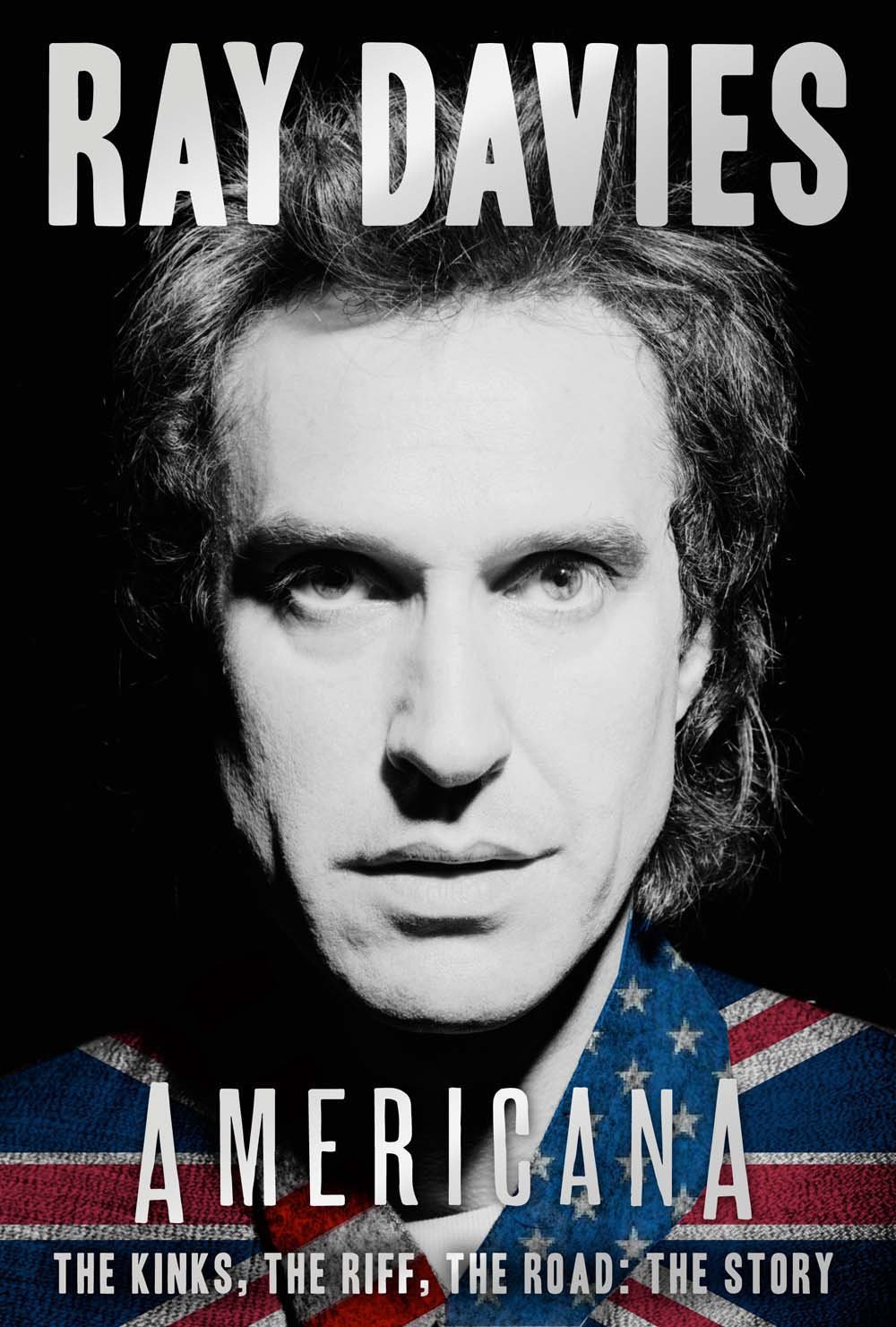
BOOK REVIEW: AMERICANA by Ray Davies

ENTERTAINING MEMOIR BY LEADER OF THE KINKS IS A GREAT READ; in an era of when many classic rock idols are writing autobiographies, Ray Davies heads to the front of the pack...

by Don Stradley
 
The story of the Kinks is one of tenacity. As part of the mid-60s British invasion, they reached the top early but were then knocked clear off the mountain, when their bad behavior,  bad luck, and youthful ignorance got them banned in America.  There followed a 15 year climb back, and not only did they regain their foothold as popular recording artists, they did so at a time when punk rock, new wave, disco, and a burgeoning heavy metal scene made the path to success much narrower. The band, with songwriter and frontman Ray Davies acting as jester and tribal chief, enjoyed perhaps the greatest comeback in rock and roll history.

The tale gets an interesting workout in Davies' recent book, Americana, though there are times when the band’s torrid history serves as a mere backdrop for Davies to ponder his life, his love of songwriting, his failed relationships, and his lifelong fascination with the United States.  He's more than an aging Brit rocker talking about the wild old days. He's a wandering soul,  and to borrow a bit from one of his songs, he doesn't want to live his life in a rock and roll fantasy.

 
Davies was the least likely of rock stars. Not only is he more thoughtful and literary than most, he’s also been plagued with physical problems dating back his teen years, and a dodgy heart that started troubling him in his 40s.  By his own admission, “women don’t clamor to be with me,” and while he shares a few raunchy episodes of life on the road, they usually happened to someone else.  Judging by the tales he tells on himself, he was leery of groupies, and seemed too busy with his career to fully appreciate his various wives and companions. 

In many ways he tells a familiar story of growing up in England but falling under the sway of American movies and music.  Davies doesn’t tell us much about his childhood, though some of his best writing comes when he reminisces about his dad “dancing in an uncoordinated way, yet with the natural rhythmic elegance of a Watusi warrior…he was more rock and roll than I was or could ever be.”  Davies soaked up various musical styles, from jazz to early rock to old-timey tunes heard in British music halls.  He had to look no farther than his brother Dave to find a guitarist whose bone-crushing riffs would become staples of FM radio.  

The Kinks dabbled in rock operas, theatrics, and concept albums,  but were never given their due for being inventive. Instead, they spent a big chunk of the 1970s playing in small venues, occasionally hired as the opening act for bands like Hall & Oates (ugh!). It wasn’t until they earned the support of Clive Davis at Arista records that the Kinks flourished.  Like musclemen kicking sand in the faces of their competition, the Kinks promptly released Sleepwalker, Low Budget, and Misfits,  plus a live album, One for the Road, where the riffs sounded harder than ever, as if the band was reclaiming the heavy metal music they’d inspired. MTV came along, and the Kinks rode that wave, too. At a time when their peers were showing their age, the Kinks were at the height of their powers. Again, I repeat, the greatest…comeback…in rock and roll history.

Davies writes this memoir with a light touch and doesn’t dwell on any particular point for too long.  You get barely a taste of how it felt to conquer the American charts in 1965, and just a vague flavor of his legendary battles with brother Dave.  Davies spends more time describing the time he nearly drove his car off a cliff than he does, say, more personal subjects, such as his marriage to singer Chrissie Hynde.  Despite his love of all things American, Davies is very British in his reluctance to spill his guts.

It could be that Davies is more willing to explore his triumphs than events that might embarrass him.  For instance, he writes quite a lot about a quarrel  with San Francisco promoter Bill Graham, and I imagine he favors this story because he won the argument and got what he wanted.  We celebrate along with Davies as he shuts down the bellicose Graham, just as we do when a dance club crowd bursts into spontaneous applause after the debut of ‘(I Wish I could Fly Like) Superman’.  Davies works so hard for his victories that we’re happy when something goes right.

The band’s success brought on new problems.  By the late 1980s they were swept into the arms of MCA and then Sony, the West Coast corporate juggernaut.  I almost felt sorry for Davies as he witnessed firsthand “the bizarre and unnerving efficiency of corporate Americana in operation.”  Worst of all, the dimwits in Los Angeles didn’t appreciate Davies. His jokes at meetings were met with “glazed expressions tinged with confusion.”  It’s to his credit that he found a way out of Sony’s dull mindset and enjoyed a more comfortable arrangement with a smaller label. He also embarked on a barebones style of touring that helped create the VH1 series, ‘Storytellers.’

Davies structures his story so that it bounces back and forth in time. In fact, most of the book is about his time in New Orleans during the 2000s, when he moved there hoping to find inspiration, only to be shot by a mugger.   The shooting and his recovery sound horrific, but Davies lightens the mood by jumping  back to the 1970s, as the Kinks battled back to regain their standing.  Then we’re at a Sony meeting, then back in the emergency room in New Orleans, then sympathizing with Davies as he struggles to walk after being shot, then back to New York after 9/11, where the "gaping, floodlit hole downtown made it look like a giant tooth had been extracted from the mouth of New York City.”  Around and around we go.  The effect is interesting, although it quashes some of the drama. 

Davies is not as surefooted with his autobiography as he is with song lyrics. A visit to Ireland, for instance, triggers his worst instincts as a writer: “Grim lipped laughter sends a message of cautious optimism tinged with the smile of bitter expectation that folly sometimes brings.” Yikes.  But Davies can also be spot on with an observation, such as when he visits  Alex Chilton and notices a dent in  the reclusive singer’s couch, “an imprint of Alex’s body where he must have  sat – and probably slept – day after day.”

Just as his songs are best when he sings about a character, Davies’ book connects when he supplies little portraits of people, especially those roadies and assistants who have died.  I loved the bit about a former Kinks manager who was allegedly buried with his cell-phone, and as Davies walks away from the grave, he swears he can hear the phone buzzing.  

Even so, it’s Davies himself who subtly works his way into your mind, revealing himself to be a slightly neurotic but decent bloke, a fellow who loved his band more than anything else, and was both amused and proud of the power he could unleash through his songs. I particularly loved when he recalled a moment  from an outdoor concert that felt as if “the whole desert had erupted, echoing the fury in our performance and sending more of the dust beneath the audience’s feet rising into the night air.”  But there’s a sense of melancholy, too, particularly in a scene where Davies and Chilton watch an old western on television, feeling that they, too, are a couple of timeworn cowboys, waiting for the last roundup.  That Chilton died shortly before the book’s publication adds to the sad vibe.

Though he learned to love Thanksgiving and lonesome train whistles, Davies never quite fulfills his wish to become an American by osmosis.  His North London upbringing is impossible to shed, as is his traditional spirituality.  One of the most touching moments in the book is when Davies realizes one of his wives is leaving him. Without wasting a minute, he brings their infant daughter to a church and prays that she’ll be alright.  He reveals more of himself in that little scene  than most of the rock star/memoirists have done in recent years, including those lengthy but empty offerings from Keith Richards and Pete Townshend.

I’ve always liked the Kinks.  But it’s a relief to know that, after reading Americana,  I like Ray Davies, too.
 

Americana: The Kinks, the Riff, the Road: The Story, is available in paperback.

Tuesday, January 20, 2015

BIRDMAN...


Birdman Movie Poster


Heralded as Michael Keaton's comeback, this bunch of hot air isn't as good as you may have heard;  fancy camera work can't entirely hide a hackneyed script...


by Don Stradley


Just as Black Swan used the ballet as a backdrop for a heavy-handed story about a performer having a nervous breakdown, Birdman uses the theater. The movie exists in a time and place that seems vaguely like our own, but its characters rarely leave a dank series of backstage dressing rooms, and when they do, it's to a local bar where a NY Times theater critics sits menacingly in a corner booth. The few times we see anything else, it's usually a shot of a frighteningly enormous crowd of tourists milling around in Times Square, or a bum shouting lines from Faulkner at the top of his lungs. Young characters talk about Twitter; older characters drink a lot.

The hero of Birdman is Riggan Thompson (Michael Keaton), a burned out actor who once played a popular superhero called The Birdman. Desperate to resurrect his career and be taken seriously, he mounts a Broadway production based on the rather bleak stories of Raymond Carver. The movie doesn't touch on the fact that  Broadway producers would never touch Carver, but  that's a story for another time. As opening night approaches, Riggan has a sort of meltdown; he hears a voice in his head that tells him he's a loser, and he shows signs that he may actually have superhero powers, including the ability to move things by pointing his finger at them. He's had a hard life, was not the best husband or father, and has put too much pressure on himself to succeed in this production. Cracks are beginning to show.

His production is breaking down, too. One of the actors is taken out by a falling Leko light, and the replacement is troublesome Mike Shiner (Edward Norton), an annoying method actor who challenges Riggan, accuses him of being a phony. When the Times interviews Shiner during press week, Shiner uses a story told by Riggan as his own. As Riggan's life becomes easy fodder for others, there's nothing left for him, except his old Birdman character who begins to appear in his hallucinations.

He's also trying to patch things up with his druggie daughter (Emma Stone), and his ex-wife (Amy Ryan), and he wants to keep his current girlfriend happy, too. It's all a bit much, for him and us.

The movie feels like a throwback to films like Being John Malcovich, or some of the early work of Terry Gilliam, and it shares the same strategy of throwing in unexpected plot twists, never letting the audience feel comfortable. It's the three card monte school of movie making.

The difference between those other films and this one created by director Alejandro Gonzalez Inarritu, is that those earlier titles were content to  be weird and amusing. The Birdman screenplay, written by Inarritu and three others, tries for depth. The movie is lousy with dialog about art versus celebrity, and artists versus critics, and there are plenty of half-baked comments about our society's fascination with social media. There's even a scene where Emma Stone, looking anorexic and bug-eyed, berates her father for not having a Facebook page. As I listened to her tirade, I wasn't sure whose side I was supposed to be on, or if the scene was supposed to be funny.

I also couldn't figure out why it took four people to write the story, unless each writer had to be replaced once he ran out of hot air.

Keaton, looking weather beaten and vulnerable, gives the sort of performance that may win him some awards. This is partly because his own career included a turn as a comic book hero, and some people love that cutesy-poo meta shit. Mostly, it's because he's willing to work without a wig. Norton is good here, too, maybe even better than Keaton. Norton has to make sense of lines like, "I'd like to pull your eyes out of your head and put them in my head so I can see the world the way I did when I was your age." The line stinks of freshman year writers' workshop nonsense, but he managed to spit it out like a pro.

Ultimately, the good performances, the dizzying camera work, incessant drum soundtrack, and characters grousing about art versus commerce isn't enough to hide the banal script. This sophomoric screenplay actually includes a scene where two characters play a game of 'truth or dare', and that's how we learn about them. Such a goofy scene wouldn't even make the cut on the Lifetime network. Or for that matter, a comic book.


Monday, January 19, 2015

CINEMA RETRO UPDATE

Glad to see my story on Pam Grier is on this month's cover!  Here's a press release form the publishers.