Thursday, August 23, 2012

Bernstein show - Ordinary Book, Extraordinary Music


Cambridge MA: Samuel J. Bernstein is a gentlemanly 73-year-old professor of English at Northeastern University, but lurking inside him is a feisty soul that likes to knock theatrical tradition on the head.

“That’s a fair thing to say,” Bernstein said after a workshop performance of his latest show, The Untitled Musical Revue: A Strangely Structured Musical Revue. The piece concerned four actors in a nameless revue who sing their way through various romantic troubles. It wasn't as bold as some of his other efforts, such as the play he co-authored that featured an African-American actress as Adolph Hitler, or Bernstein's musical version of The Hairy Ape, but it was offbeat enough to confirm Bernstein’s reputation as a non-traditionalist. "In the arts," said Bernstein, "there is always room for experimentation."

Nonetheless, as the characters in “Untitled” offered bromides about the mystery of love, it was the music that stood out above the Pirandello plot. Thanks particularly to the neat piano work of musical director Stephanie Tham, the jazzy flourishes made one think Bernstein is, at heart, a misplaced Tin Pan Alley figure. One hears a bit of everything in Bernstein’s music, from torch song angst, to standard Broadway panache. Bernstein’s melodic touch may be inborn: his father was a mandolin virtuoso, his mother a pianist.

Stepping away from a cast party at the Cambridge Center for the Performing Arts, Bernstein explained the music of his childhood, and how "music was part of my life, every single day." 

Bernstein’s father was a member of the Mandolin Orchestra of New York and was known for playing a variety of styles. It wasn't unusual for young Bernstein to hear his father playing classical, show tunes, or ethnic music, all in the space of an evening.

"Those notes,” Bernstein said, “made their way into my consciousness more powerfully than words.”

Singer Lisa Yves included nine songs from Bernstein’s oeuvre in a recent concert performance at The Bickford Theater in Morristown, New Jersey. Her set was called “Love & Dreams,” and also featured songs by George Gershwin and Cole Porter. The startling power of the Yves/Bernstein collaboration can be heard on a YouTube clip of Yves singing Bernstein’s “Hand in Hand.” 

“Sam's songs have a classic flavor to them,” Yves said via email, describing Bernstein’s music as “reminiscent of an earlier era.”

Although Bernstein felt a strong kinship with Yves, he admitted he was a bit anxious at having his songs interpreted along with such heavyweights as Gershwin and Porter.

“I was concerned,” he said, “ although I noticed in rehearsals she made my songs sound better than they've ever sounded. She’s good enough, in my opinion, to go into New York and become a star. Still, I was somewhat intimidated, because those are two major figures in American music. But the audience was very kind, and seemed to like what she did. It was a memorable experience for me.

“It is my profound hope that Lisa will honor me by continuing to perform my songs, because I consider us a kind of artistic team. We are meant for each other.”

Working with Yves was just one of a series of career highs Bernstein has enjoyed lately. Many of his plays are being produced or given staged readings, including one epic that producers have told him would cost around $14-million to mount in New York. He doubts the current economy could support such a production, but he remains exhilarated by all that is happening for him. He has more plays in development and is beginning his 52nd year as a teacher.

“I’m able to do all of this because of my wife. We've been married 46 years. To have someone so dedicated to my welfare, to have someone so intelligent and so perceptive as part of my life, is the key to everything I do,” Bernstein said.

When told of her husband’s tribute to her, Arlene Bernstein shrugged.

“That’s nice,” she said. “But I told him he has to stop for a while.”

Bernstein didn't hear her. He was back in the lobby serving cake to the cast.


- Don Stradley

Sunday, February 5, 2012

Nazi Trial Film Finally Shown in America

 
Nuremberg: Its Lesson for Today, a 1948 documentary,  was once deemed by Universal Studios as “too gruesome” for the American public. Now, thanks to the director's daughter, this remarkable film is finally being shown in American theaters.

Originally commissioned by the U.S. War Department’s Civil Affairs Division, Nuremberg was directed by Stuart Schulberg, younger brother of Budd Schulberg. The brothers were part of the Office of Strategic Services, a forerunner of the CIA. Budd, who would later author such Hollywood classics as On The Waterfront, supervised two film compilations to be used by the U.S. prosecution team. Stuart artfully weaved sections from those films into the courtroom footage, creating Nuremberg.

The film played in Germany before being shelved for various political reasons, including a fear that it might permanently ruin Germany’s image in America. A decision by the Truman administration further quashed efforts to show it in this country.
 
In 2003, Stuart Schulberg’s daughter Sandra and partner Josh Waletzky undertook a five year mission to restore the 78-minute film. With a painstakingly reconstructed soundtrack using original sound from the trial, a new recording of the original music score, and narration by Liev Schreiber (the voice of most HBO documentaries), the restored film is stunning.

Nuremberg shows how the international prosecutors built their case by using the Nazis’ own films and records. The familiar images of mass graves are even more startling here, with the victims seemingly stacked liked kindling, along with mountainous piles of shoes, gold teeth, and personal items taken from death camp victims. A shot of confiscated shaving brushes seems especially poignant, as if the Nazi’s first step in destroying a person’s humanity was to take their vanity.

As critic Roger Ebert said of Shoah, the nine-hour documentary which also has resurfaced in recent months, films like this are important in that they allow one generation to tell the next what it has learned.

Nuremberg also shows, as the defendants deny culpability, what evil looks like when it's backed into a corner.
 
Nuremberg: Its Lesson for Today has been well received since its New York premiere in September 2009, much to the relief of Sandra Schulberg.

“I had wondered how much of this was going to be new,” Schulberg said. “Some of the images have been recycled countless times, but to my enormous surprise and relief, many of the experts who screened it were very impressed; some of the footage has never been seen before, and even the footage that is familiar has a new impact when it is viewed within the context of the trial.”

A two disc DVD edition of Nuremburg is being planned for next year, which will include the two films supervised by Budd Schulberg: The Nazi Plan, which consists of the German Reich’s own films, and Nazi Concentration Camps, which used footage shot by Allied forces. The DVD will also include interviews with Nuremberg prosecutors, Budd Schulberg, and the restoration team.

Stuart Schulberg died years ago, but Budd died in 2009. He was aware of his niece’s efforts.

“He was thrilled,” said Schulberg, acknowledging that the film’s release is bittersweet without her uncle being here to see it.

Schulberg plans to make Nuremberg available to human rights groups and secondary schools. A Spanish language version of Nuremberg had great impact recently in Guatemala, where human rights issues have surfaced since the Guatemalan Civil War. It’s a sign, perhaps, that the film's life will extend beyond its current theatrical run.

“Personally,” said Schulberg, “I hope it lasts another 60 years, to make up for the 60 years it was buried.”

- Don L. Stradley


Here Comes Howie! by Don Stradley

 
Fans who know Howie Mandel only from Deal or No Deal or America's Got Talent might be in for a surprise when he comes to the Lynn Auditorium on May 20.

You see, Mandel may be notoriously afraid of germs, but he doesn't mind if the jokes are a little dirty.

"There is some adult fare," Mandel has said of his act, which involves a lot of back-and-forth chatter with the audience. "I wouldn't suggest bringing the kids."

It's no surprise that Mandel's stage work is not quite family friendly. After all, his stand-up comedy career extends back to the drug-fueled  1970s, just as American comedians were taking a turn for the weird.

Perhaps inspired by the end of the Vietnam War, or fallout from the 1960s underground culture, the comedians of the late '70s were moving away from political monologues and towards silly new extremes. Gallagher was smashing watermelons with hammers; Andy Kaufman was inviting women onstage to wrestle; and Bruce Baum, a contemporary of Mandel's, appeared onstage wearing a diaper.

Mandel waded into the business like a feisty little brother determined to prove he belonged. Spastic, manic, and infantile, his favorite gag in those days was to place a latex glove over his head and inflate it with his nose. A 1979 performance at the infamous Comedy Store in Los Angeles landed Mandel his first big break, a job on the syndicated game show, Make Me Laugh.

Despite successes that include NBC's St. Elsewhere, the animated series Bobby's World, and  Deal or No Deal,  Mandel has never abandoned his stand-up roots. Along with yearly comedy tours, he's a regular attraction at the MGM Grand in Las Vegas.  Don't look for the latex glove, though. Sinus problems put an end to that particular stunt.

While Mandel won't temper his act for his new audience, he appreciates the ongoing interest in him. His hot streak continues with his latest show, Mobbed, which drew 10-million viewers for its March debut and was picked up by FOX for eight additional episodes. 

Mandel, 55, told Canadian news site CANOE, "At this point in my career, specifically this time in my life, I have some perspective on what this means, and how lucky this is.”

Comedy fans in Lynn are also lucky, for Mandel is making a rare area appearance.

Just don't bring the kids.


Howie Mandel appears at the Lynn Auditorium on May 20. For ticket information call 781-598-4000.


Fun Facts About Howie Mandel….

- He was the voice of Gizmo in Gremlins and Gremlins II.

- Before he was a comedian, Mandel worked in a Toronto suburb as a carpet salesman.

- Mandel has been married since 1980 and has three children.

- In 1990 Mandel was considered to replace Howard Hesseman as the lead in ABC's Head of The Class. The role eventually went to Scottish comic Billy Connolly. (Mandel ended up on Good Grief, a FOX comedy about a wisecracking mortician. The show bombed.)

- Mandel was ranked #82 on Comedy Central's 2004 list of the 100 greatest comics of all time.

- While fellow America’s Got Talent  judge Piers Morgan tries to nap in his trailer, Mandel likes to stand outside with a bullhorn, shouting at passersby, "Quiet, please. Mr. Morgan is trying to sleep!"

Monday, August 22, 2011

Ray's New Book; A Game Effort

 
"Looking back, I can offer no defense for my conduct. I was wrong, and I have to live with these sins, and the ones to come, every single day."

- Sugar Ray Leonard, from The Big Fight


If you have ever lingered in the company of reporters who'd been around during his heyday, you would sometimes hear tales of Sugar Ray Leonard’s wicked, wicked ways. The stories typically involved Leonard and his henchmen creeping around in the early morning hours of some city, usually Las Vegas, trolling for drugs and nasty ladies. The picture that emerged of Leonard was of an insatiable party animal, and a bit of a rube, the sort of character Budd Schulberg might’ve written about to describe the pitfalls of success in America.

As amusing as these anecdotes were, they had the believability of Bigfoot sightings. The sources were suspect, for by the end of his career, long removed from his days as the grinning Olympian who had charmed us all, Leonard was pegged as a huckster, a creation of television. Still, you wondered if the stories were true, and if Leonard was just another athlete with no regard for anything but his own lust and appetite.

In Leonard's new book, The Big Fight, My Life In and Out of the Ring, (Viking, $26.95), Leonard admits to being a cocaine user, an alcoholic, a womanizer, a terrible husband and father, and a self-absorbed egomaniac. He surrounded himself with bloodsuckers that siphoned money from him, usually to pay for their own drug habits. He kept these losers handy because they gave him the attention he craved. Praise, it seemed, was nearly as addicting as any of the narcotics mentioned in The Big Fight, which feels like an apology for a life badly spent. It's also Leonard's way of telling those gossipy old writers that they didn't know half the story.

Between the fall of Muhammad Ali and the rise of Mike Tyson, boxing's spotlight shined brightest on Leonard. His ascent coincided with an unprecedented boxing boom, which included an explosion of television coverage, and the rise of Las Vegas as boxing’s new epicenter. The precocious kid who had covered his pimples with makeup and practiced smiling, hit upon a master stroke when he followed a buddy's advice to speak slowly, creating the smooth persona that made him a hit on Madison Avenue. As his star soared, every Leonard bout became a major media event. He thrived in the glow of the go-go Eighties, his ever increasing paydays reflecting the “greed is good” sensibility that defined the era. Most believed he'd retire from boxing with no problems.

But Leonard never found his niche outside the ring, drifting from one unremarkable gig to another. It wasn't until his first wife filed for divorce that the darker aspects of his life were made public.

According to The Big Fight, Leonard spent those lost years like a bored rock star. He kept a loaded .38 in his house and shot out TV screens when he was angry, just like Elvis. That Leonard was never caught in a major scandal may be his most underrated achievement. There were many close calls, but he was blessed with a cat burglar’s ability to stay one step ahead of the cops.

Still, the most surprising thing about The Big Fight is that it exists at all. In Leonard's day he left many nosy reporters swinging at air, so adept was he at slipping personal questions. Yet, here is his new book, available alongside those of Tatum O'Neal, Rob Lowe, Steven Tyler, and dozens of other aging stars that have scored book deals thanks to their spotty personal lives. But not only has Leonard entered the arena of gross public exhibitionism, he seems to be saying, I will show you how low a man can go.

Like most things in boxing, the tradition of the fighter’s memoir dates all the way back to John L. Sullivan. The Life and Reminiscences of a Nineteenth Century Gladiator was published shortly before Sullivan's 1892 bout with Gentleman Jim Corbett in New Orleans, a quick money tie-in to one of the biggest American events of the era. By the time the book was published again by Proteus Books in 1980, re-titled I Can Lick Any Sonofabitch in the House, many fighters had published autobiographies. The demand for first-hand tales of a famous fighter's life was strong enough that the likes of Jack Dempsey and Mickey Walker published two in their lifetime. These old time memoirs, though, were often filled with chapters on the unlikeliest of subjects; Jack Johnson's 1927 memoir included a section on the importance of bananas.

In 1952, Rocky Graziano kicked the door off the hinges with Somebody Up There Likes Me, his frank description of his years as a street thug. The book earned radiant reviews, was made into a popular film, and inspired more autobiographies that read like howls from the gutter, including Barney Ross' No Man Stands Alone, Floyd Patterson's Victory Over Myself, and in more recent times, Johnny Tapia's excellent Mi Vida Loca. But sometimes this new frankness bordered on repugnant, such as when Jake La Motta and two friends published the literary equivalent of a belch and called it Raging Bull: My Story.

La Motta was so bold in his revelations that a critic from The Milwaukee Sentinel wrote, "The reader is forced to wonder how much La Motta has exaggerated." La Motta’s book wasn't a big seller, although it provided the loose basis for a film that was eventually regarded as a classic. La Motta wrote a second book, Raging Bull II.  It didn't sell well. It wasn't very good.

Fighter autobiographies still appear often thanks to the self-publishing racket, although mainstream publishers occasionally get involved. Regardless of who publishes them, most contemporary memoirs are awful. Fighters aren’t writers, and the ghosts hired to help are usually deadline journalists uncomfortable with anything longer than an 800-word column. The books also feel dumbed down, as if publishers suspect boxing fans read at something below high school level.

Leonard's book is better than most, but it has problems, too. For one thing, his boxing career is so familiar that Leonard’s recounting of it reveals nothing new. Also, Leonard's co-author Michael Arkush writes in such a breezy manner that the chapters lack drama.

The book's initial blast of publicity stemmed from Leonard’s disclosure that he’d been molested during his teen years. Some critics scolded Leonard for not naming names, while others even suggested Leonard was lying, which proves the old cynicism about Leonard is still alive. Leonard has said he didn't write the book to embarrass anyone, but to achieve catharsis. He told CNN in a tearful interview, "I had to get that out, because it was killing me inside. I was hurting big-time for 37 years."

Sex abuse is not a subject brought up casually, not in Leonard’s time and not now. The fighter who had practiced giving interviews in mirrors was certainly not going to chat with Howard Cosell about the deviant old men in his past. Neither could he go to his Palmer Park gang and talk about it, for there was a part of Leonard that felt he’d “done something wrong,” characteristic of an abuse victim. In one of the book’s rare moments of insight, Leonard wonders if some of his fury in the ring was a result of subconsciously wanting to punish his molesters. Indeed, a few of Leonard's whirlwind finishes were eerily evocative of Emile Griffith pummeling Benny Paret in their third contest, a bout known for the homosexual innuendos surrounding it, and its catastrophic ending.

Still, readers looking for a survivor’s chronicle of sexual abuse will be disappointed, for most of The Big Fight is devoted to Leonard’s drinking and womanizing. The final chapters race by. He marries again. He goes to AA. He's at peace. It is a happy ending, but it feels as if Leonard simply wanted to end the book and move on.

Confessing may have been liberating, and many will consider the book a brave act, but confessions are easy compared to self-examination. There’s no real attempt on Leonard’s part at examining what may have caused his appalling behavior. Instead, Leonard writes, “I am not a psychologist.” This spares him the grueling labor of self-assessment.One senses that he wrote the book before he had the vocabulary to fully explore the issues of his earlier period. But he also may have held back because he’s concerned about how he sounds to his old Palmer Park cronies. 
 
Leonard mentions in The Big Fight that he was often accused within the black community of “acting white.” As if to wipe out his old image, Leonard infuses The Big Fight with more rough language than we’re accustomed to hearing from him. He also assures readers that he’s given plenty to African-American charities, and claims to have been uncomfortable around white people. These comments occur often enough to make the undertone of Leonard’s life clearer, and much sadder. His life could be interpreted as the story of a young black man who abandoned his roots to succeed in the white world, but just as his journey began he was traumatized by perverts, forever marking him with such deep unhappiness that not even his greatest victories could soothe him. He turned to drugs and alcohol, and nearly killed himself. It is the stuff of German cinema, or Theodore Dreiser novels. He is a tragic figure.
 
The Big Fight doesn’t feel tragic, though. Leonard, at heart, is a shrewd man, a cautious man, and he wasn’t likely to produce the sort of epic book his life deserved. He prefers to communicate in carefully considered sound bytes. Maybe that’s why The Big Fight feels slight. Leonard and Arkush could’ve written a weighty book about race and fame and the American culture. Instead, they gave us an episode of Celebrity Rehab.


Don Stradley is a freelance writer from Massachusetts and a regular contributor to THE RING.


Monday, June 6, 2011

Archie should've Been a Star....

"The world is a stage, and I will always be one of the principle actors."

-  Archie Moore, 1966

When looking back on Archie Moore's extraordinary boxing career, we tend to think of him as a kind of traveling one-man circus. He was the ringmaster, clown, magician, and the fellow who would challenge any member of the audience to a brawl. Hands down, he was the most colorful, most interesting, and most loquacious fighter of his generation, a sportswriter's dream. But what is sometimes forgotten is that for a few months in 1960, it seemed like Moore was going to dump the whole boxing gig, light heavyweight championship and all, to become a movie star. That’s what many were thinking when Metro-Goldwyn-Mayer cast Moore in a big budget, Cinemascope and Technicolor version of Mark Twain's most celebrated novel, The Adventures of Huckleberry Finn.

Of course, Moore didn’t stop boxing. He had several more fights after his acting debut, including a disastrous loss to a young Cassius Marcellus Clay, but if ever there was a fighter who could have left the Byzantine world of boxing for movies, it was Archie Moore. He had the goods.

Fighters since the days of John L. Sullivan had gravitated towards show business, but few had ever matched the buzz created by Moore's try-out at MGM. Some called Moore’s test-loop "one of the best in studio history." The 46-year-old Moore was at the height of his fame in those days, appearing on TV shows like What’s My Line? and You Bet Your Life. Producer Norman Lloyd thought Moore would be perfect for the role of Jim, the runaway slave who befriends Huck Finn. Script pages were sent; an audition was arranged. Director Michael Curtiz, who'd directed such classics as Casablanca and Yankee Doodle Dandy, called Moore's screen test "remarkable." The camera crew reportedly broke into spontaneous applause when Moore finished. "It made me feel good, but I suppose they do that for everybody," Moore said.

Unlike most fighters, Moore wasn’t stiff and self-conscious. He was articulate. He could emote. His voice was soft, but with a small amount of grit in it, bred by years of shotgun shacks and hard travel. Could he do the Mississippi dialect? Hell, he was born there. Moore's physical appearance was also unique. If casting agents didn't have a category for aging gunslinger-Buddhas, they created one the day they saw Moore. Then there were the eyebrows, once described by A.J. Liebling as "rising like storm clouds over the Sea of Azov." Punctuating the entire look was Moore's eyes, tiny dark buttons hinting at mischief, wisdom, delight, and danger.

The Finn project, which had been lingering around MGM for nearly a decade, would kick off once and for all with the signing of Moore. "I must have some natural talent," Moore said. "Otherwise these people wouldn't be bothering me." After a pit stop in Montreal to dispose of Yvon Durelle for the second time, Moore began teasing sportswriters about his future.

“My career is like a river," Moore told the Associated Press. "I would like to have it end by fulfillment, by flowing into the mighty ocean. I don't want it to dry up and die before it reaches there. I would like to quit while the river of my career is still flowing strongly. The only way I can do that is to have something else to turn to." Acting, he said, wasn't a "big strain. But with a lot of work and study, perhaps I'd develop into a good actor." Moore also said he might pursue acting and boxing simultaneously. After all, he said, "They are both show business."

There was something about acting that inspired Moore. To the boxing press he was "Ancient Archie," but in Hollywood he was a hot new prospect. The freshness of the challenge ignited his famously nimble mind. He was like a mechanic popping the hood of this character to examine the engine inside. "I am giving it everything that I can from my heart and soul,” he told the press. “I really feel this character."

Moore was aware that some African-Americans didn't care for Twain's book, so he tried to avoid stereotypes, even asking Curtiz to change some lines. Moore read books on slavery, and voraciously read Twain's novel. "I never read it when I was a boy," Moore said. "I was too busy earning a living."

After months of filming in Stockton and along the Sacramento River, the film was released in the early summer of 1960. The event was part of a major Twain revival, coinciding with the 75th anniversary of the novel's publication and the 50th anniversary of Twain's death. But despite considerable fanfare, The Adventures of Huckleberry Finn was not a moneymaker. The year belonged to films like Psycho, Exodus, The Swiss Family Robinson, and G.I. Blues. Still, Moore's performance made an impression.

Variety credited Moore with bringing "the story its only moments of real warmth and tenderness," and praised "his poetic parting with Huck." Hollywood columnist Army Archerd called Moore, "an acting find." The Chicago Tribune described Moore as, "a pleasant surprise." The Boston Globe labeled Moore, "probably the most convincing character in the picture." Veteran actor John Carradine also praised Moore. "What a sweet, expressive face," Carradine said. "No one would ever guess that man is a professional fighter." Even though the cast included such pros as Carradine, Buster Keaton and Tony Randall, one critic claimed Moore, "virtually walks away with the acting honors."

There were a few dissenters, but the majority of reviewers felt Moore had done something special. Columnist Rube Samuelson asked, "When you see the movie, ask yourself if it is conceivable anyone could play Jim better." Some even suggested Moore deserved an Academy Award.

The buzz continued. There was talk that MGM would next cast Moore in a remake of The Champ, the old Wallace Beery/Jackie Cooper tear-jerker about a washed up fighter and his young son. The film wouldn't be remade until 1979 with Jon Voight and Ricky Schroeder, but Moore was hopeful. "I believe I might do very well in that role," Moore said. (It was rumored that the son would be played by Eddie Hodges, the red-haired sprite who had played Huck, which would've given the movie a controversial for 1960 mixed-race theme.) It was also rumored that his recently published autobiography, The Archie Moore Story, would be made into a feature film, with Moore portraying himself.

"This new career of mine is just about to get me out of the fight business," Moore told the press. "It's not just a passing fancy. I love it. I guess I've always been a ham at heart."

Shortly after the loss to Clay, Moore's acting career resumed in 1963 with an appearance on the very popular Perry Mason TV series. Moore told TV columnist Hal Humphrey that he was born to play roles.

"I have a fabulous memory, for one thing," Moore said. "Then, I have warmth, you know. And a knack for knowing how to get to people." Moore ended 1963 with a nice role in a television adaptation of John O'Hara's story, It's Mental Work, with a screenplay by Rod Serling. "Art comes first with some people, and I'm a true artist," Moore said.

During the next several years Moore appeared on many popular programs including Batman, Shane, and Family Affair. He also found himself in two commercially underwhelming but high profile movies, The Carpetbaggers and The Fortune Cookie. There was also My Sweet Charlie, a 1970 TV movie that won three Emmy Awards, and The Outfit, a 1973 crime movie starring Robert Duvall.

On the surface, it seemed Moore was making it in Hollywood. But the roles were getting smaller. Sometimes he spoke no more than a few words. Prior to an appearance on Wagon Train, Moore told UPI, "I have learned to be a good listener."

There may have been many reasons for Moore being restricted to bit parts. There was much griping around this time from the Screen Actors Guild about the 1960s phenomenon of pro athletes taking acting roles. There were three new sports franchises near Hollywood – the L.A. Dodgers, the L.A. Lakers, and the San Francisco Giants – and TV producers routinely hired local sports stars to give their shows a quick ratings boost. The studios paid the union fees for athletes, which outraged old-time Guild members who relied on acting work to support themselves. Perhaps to avoid upsetting the union, or because the fad of hiring athletes passed, studios gradually abandoned the practice. Moore may have lost a few roles because of this.

Moore may also have been a victim of the times. There simply weren't a lot of roles for African-Americans. Also, the ‘60s hippie-youth market had changed Hollywood, and Moore may have been unfairly viewed as a relic from the Eisenhower era. In addition, Moore was busy elsewhere. He was heavily involved in his work with his beloved youth organizations, and also as a trainer of fighters - he spent two years working with the Nigerian Olympic boxing team, and was also part of George Foreman’s camp.

Perhaps the biggest factor was Moore’s own lack of acting experience. Directors may have felt his performance in Huck Finn was beginner’s luck, and were hesitant to give him another major role. But near the end of his acting days Moore showed he could be effective with nothing more than one line of dialogue and a fight scene. He turned this trick opposite one of the biggest box office draws of the day, Charles Bronson.

In 1975 Moore was cast in Breakheart Pass, a period piece filmed in northern Idaho. Moore played a conniving killer who battled the stone-faced Bronson atop a moving train. There were stunt men standing by, but 62-year-old Moore told them to sit down. Bronson did his own stunts; Moore would, too. The scene, which took place during a snowstorm in the Idaho Rockies and required several hours of filming, was the film’s centerpiece.

"Having Archie Moore go against Bronson in a hand-to-hand, life-or-death struggle atop a snow-covered railroad car whizzing along 200-foot high wooden trestle bridges in those mountains was a stroke of cinematic brilliance," wrote critic Joe Goodavage.

Moore grew so fond of Lewiston, Idaho where some of Breakheart Pass was filmed, that for the remainder of his life he would visit to take part in town events. Meanwhile, Breakheart Pass was well-received by reviewers and audiences. But not even a slashing fight scene with Charles Bronson could help Moore's Hollywood career. Except for a few meaningless cameos, and a stint on the daytime drama Search for Tomorrow, he was finished as an actor.

"I'm afraid there's a limit to the number of roles I can play,” Moore told The Montreal Gazette in 1980. “You have to feel something about the character you're playing, and it was easy for me to identify with Jim."

In some ways Moore was lucky. Most actors never get a great role. Moore got one his first time out as Jim in The Adventures of Huckleberry Finn. Over time, the film enjoyed a better reputation than it had upon its first release. Many still regard it as their favorite of the many Huck Finn movies, thanks largely to Moore's performance, which is probably the best ever given by a boxer in a film.

If it was easy for Moore to identify with Jim, it’s because they were kindred spirits. Moore once said of Jim, “He is not an educated man, but he uses his head to accomplish what he needs,” describing a quality Moore may have recognized in himself, having used his own brilliant head to navigate through more than two decades of boxing, at a time when the sport was dominated by criminals and racism. "He's like me in one respect," Moore added. "He eventually finds what we're all looking for - freedom."

Don Stradley is a freelance writer from Massachusetts and a regular contributor to The Ring.

Sunday, May 29, 2011

An Unlikely Subject for a Great Night of Musical Theater...


Ari Hoffman is a young Jewish man with dreams of being a boxing champion. His father, Eli, is a retired cutman with a shady past. They train in the basement of the synagogue where Eli works as a custodian. Eli teaches Ari how to punch, but also hammers into Ari the importance of his Jewish faith.

Ari, like all young men, wants to move beyond what his father can teach him. Without Eli knowing, Ari moves on to a local gym where he impresses Moe Green, a hyper industrious promoter-mogul. Green appreciates the novelty of a boxing Jew and steers Ari towards a quick-buck title shot. Ari craves stardom, but there are volcanic conflicts at the Hoffman house. The title bout is scheduled on one of the holiest days of the year for Jewish people. Ari is told that fighting on such a day is “a sin against God.”

After the big fight, Ari undergoes a major crisis of faith. As Bob Dylan once sang, “You’ve got to serve somebody.” But Ari doesn’t know whom to serve.

This heavy scenario is the plot of Cutman, a boxing musical, performed last May and June at Goodspeed's Norma Terris Theater in Chester, Connecticut. The show, which producers hope will hit Broadway in 2012, is the brainchild of three young men: writer/director Jared Coseglia, composer Drew Brody, and actor/writer Cory Grant. The roots of the project go back to an unlikely source.

“It started when we saw The Contender TV series back in ’06,” Coseglia told The Ring. “The show was all about what happened behind the scenes. It was the first time I had an emotional, empathetic moment about boxers. Something about the backstory of these fighters, and seeing how they sacrificed, how they were just trying to feed their families, and how they didn’t come from privilege, was really moving for me.

“I knew I wanted to write a play about a boxer. But that wasn’t enough. It had to be something that was close and personal to us. We had all grown up Jews, with varying depths of faith, and we wondered what would happen when someone who was deeply faithful was confronted by an opportunity to have their dreams come true. What happens when those two things are in conflict? That was the germ and genesis of the play.”

Another ingredient was Coseglia’s fascination with hip-hop and R&B music.

“That type of music had not really become popular on Broadway. Since boxing and hip-hop are so intertwined, we knew the music had to be there. The characters in the play sort of reflect the music they listen to. The father, Eli, listened to classic rock, Joe Cocker, Three Dog Night, so his songs were written to fit his background. Ari is younger, probably listens to Justin Timberlake, Usher. There’s a song called “Killer Instinct,” where Ari’s trainer tries to teach the nice Jewish boy to be a killer, and that’s probably the hardest hip-hop thing in the show. I'd love for some hip-hop artist to cover it.”


While contemporary Jewish fighters such as Yuri Foreman and Dmitriy Salita might seem obvious sources of inspiration, Coseglia maintains their main influence was on the wardrobe department. “If you notice, Yuri and Dmitriy dress like old European men, with sweaters, hats, baggy pants. That was a major influence, esthetically speaking,” Coseglia said.

Coseglia added that Salita hasn’t been particularly supportive.

“Salita is uncomfortable supporting this play, because he would never fight on Yom Kippur, which is a turning point in the story,” Coseglia said. “See, what makes Ari a ticket seller is not his talent, but his identity. For me, it’s something akin to who Dmitriy Salita is, as a person, a Jew, and as a boxer, and how it relates to ticket sales, and how he leverages all of those things in order to be successful. But what happens when success is offered to you, in exchange for the principles you’ve held dear your whole life? Dmitriy is not willing to go there.”

For those wondering, Cutman isn’t merely The Jazz Singer rehashed.

“You have to know what everyone else has done about Jews who have been conflicted. We researched everything to make sure we didn’t do the same thing,” said Coseglia.

“It’s more than just a boxing story,” said New York stage veteran and Tony award nominee Robert Cuccioli, who plays Eli. “It’s a family story; it’s a religious journey, with many layers to it. The music is amazing. The lyrics are amazing. The book has heart to it. I think people will walk away from it fulfilled, and very touched.”

“It’s a show that women can bring their husbands and sons to,” said Grant, who stars as Ari. “We had a goal. The show wasn’t going to be for the average theater going audience. Because of the sports theme, because of the contemporary music, it was going to reach a wider group.”

This is assuming that theater goers have been pining for a boxing musical. Historically, audiences haven’t flocked to them. There was Seeing Stars, a short-lived 1937 romantic comedy that featured songs and a boxing theme. There also was a 1958 Broadway dud called The Body Beautiful which collapsed in its corner after 60 performances. But if the backers of Cutman need a beacon, they can turn to Golden Boy, the 1964 Broadway smash that starred Sammy Davis Jr.

Golden Boy is usually considered a Broadway curiosity - boxers singing and dancing? Sammy Davis? - but in its day it battled along on Broadway for 18 months, earning four Tony Award nominations. A 2002 revival (with fight choreography by former middleweight contender Michael Olajide) inspired the New York Times' Ben Brantley to wonder how this “cobwebbed period piece” could still be so moving, particularly its musical score. “Golden Boy rings with the sounds of the anger, skepticism, and high-flying hope of black Americans in 1960's Harlem, feeling the rumble of the swelling civil rights movement down south,” Brantley wrote.

The source of Golden Boy was the 1937 drama of the same name by playwright Clifford Odets. The original play focused on a young, Italian-American who boxes to pay his way through medical school. The sad story ends with a climactic ring death. Odets captured the immigrant experience, the machinations of the boxing business, and the conflict within decent people who fight for a living, all in one tidy, three act package. Most boxing dramas since have owed something to Odets' script.

Golden Boy was turned into a 1939 movie starring William Holden. Thanks to late night television of the 1950s, the film became part of the American lexicon. Several fighters adopted the “Golden Boy” moniker long before Oscar De La Hoya, including Art Aragon, Joey DeJohn, and Donny LaLonde. They, or the agents who nicknamed them, were likely inspired by the Holden movie.

By the early 1960s, Broadway producer Hillard Elkins believed Odets' old play could be presented to a new audience, provided a few tweaks were made. Odets died before the new script could be written, which lead to Elkins hiring playwright William Gibson (The Miracle Worker) and director Arthur Penn (Bonnie and Clyde) to helm the updated version. A jazzy musical score was added, the players were recast as African-American, an interracial romance became part of the plot, and the dynamic Davis was cast as the fighter.

There were gimmicks, too. A Golden Boy candy bar was issued by Necco, and former heavyweight champion Joe Louis was hired to teach Davis some boxing basics. Davis was also surrounded by some of the of the era's best young African-American talent, including Lou Gossett, Lola Falana, and later in the run, Ben Vereen.

Reviews were mixed – some found the revamped script preachy -  but the combination of Davis' charisma, a strong review in The New York Times, and the climactic fight scene (called by the Associated Press “a marvel of acrobatic stagecraft”) brought ticket buyers to Broadway's Majestic Theater for 568 performances.

The show’s ace in the hole was timeliness. Davis' angry character trying to fight his way out of Harlem reflected the times, and events in the daily news seemed to feed the show and give it power. In March '65, Davis canceled several performances to join the civil rights march from Selma to Montgomery, Alabama. At curtain calls, Davis engaged audiences with impassioned speeches about America’s need to end bigotry. But while Golden Boy provided Davis with a great platform, it also was a soul-sucking monster that nearly did him in.

Davis endured several injuries and illnesses during the show's lengthy run, including a neck injury that put him in a hospital for several days. Accompanying Davis' physical problems were the show's financial woes. Golden Boy was such an expensive production that it never regained its initial investment. The show managed to be both a success and a bust.

Still, Davis owned a stake in the production and trudged on. When the show moved to London in 1968, 42-year-old Davis gamely commandeered the lead role until throat problems forced his exit. Davis would continue to perform songs from the show for the remainder of his career, and he performed the famous fight scene in his 1974 ABC special, Sammy, but Golden Boy gradually faded into Broadway mythology. Now, four decades later, theater producers are gambling again on singing and dancing boxers.

Cutman: a boxing musical, lacks the timeliness of Golden Boy, and it is not quite the ballsy, urban piece the show's producers believe it to be. Coseglia, Brody, and Grant may have set out to create something cutting edge, but the traditions of musical theater stubbornly refused to be ignored. The news is good, though. What the Cutman creators ended up with is a surprisingly moving family saga that might bring a tear to your eye.

The production in Connecticut had moments of real beauty and comedy, and the energetic cast was certainly worthy of a New York run. The music by Drew Brody may pull from hip-hop, but there’s enough Broadway style singing in the show to satisfy any blue-haired ticket buyer in Manhattan. One number, “Ten in Ten,” is an absolute showstopper, and while some of the songs feel a shade too long, Brody has written at least one that already sounds like a classic. We’re referring to the title song, “Cutman,” sung by Cuccioli.

Who would’ve thought the most overlooked and underappreciated of boxing figures - the cutman - could be the centerpiece of such an emotional night of theater? In a way, Eli Hoffman is cut from the same material as Willy Loman from Death of a Salesman, another little guy who didn’t get the glory, but needs only to think of his son to make his heart soar. Unlike Loman, Eli is a dark, brooding figure. He hustles around the synagogue, sealing up the leaks during rainstorms just as he once sealed cuts on a fighter's brow. It’s hard to not feel for the guy. He’s a craftsman without a place to work. Cuccioli plays him perfectly, keeping just enough distance between himself and the audience to make us want to understand this hulking loner.

Fortunately, there is no death of a cutman here. Coseglia puts his characters through some agonizing moments, but he finds a soft place for them all to land. The final scene, which features Ari and Eli going through a simple boxing drill as Brody’s beautiful music rises, is as satisfying as anything you’ll see on a stage, or in a boxing ring, this year.


Don Stradley is a regular contributor to The Ring.

Tuesday, May 17, 2011

Was Sinatra a Front Man for the Boston Mob?

 by Don L. Stradley
 
Frank Sinatra: Mob ties?
 
 
Frank Sinatra never dreamed that a two-bit Boston hoodlum would create more problems for him than Ava Gardner and Lauren Bacall combined. 

But anyone who knew Boston’s Joe Barboza wasn't surprised.  Joe “The Animal,” (AKA "The Baron") was determined to bring down as many Italians as he could. He'd worked for Boston mobsters for years as a hired gun, and felt he'd never been treated fairly. Now he was turning evidence against anyone whose name ended in a vowel. Why not bring down the biggest Italian of them all?

It was 1972, and Barboza, already under the witness protection program after ratting out a number of his associates, was before the House Select Committee on Crime. The subject was Providence crime boss Raymond Patriarca.

The congressional committee was investigating organized crime's influence on professional sports, and Barboza was brought in from an unnamed Gloucester compound to testify. Of course, he was being guarded by 15 feds armed with machine guns -- whispers of a $300,000 contract on Barboza's head made everyone a bit nervous -- but the committee's favorite canary was happily singing again.

Speaking with a cigarette bobbing in his mouth, Barboza testified that Patriarca and the Providence "outfit" was very active in sports.  Barboza created a round of controversy when he named former Boston Celtic stars Bob Cousy, Babe Parelli, and Gene Conley, all in connection with mob betting on professional basketball games.

The mob’s main interest, though, was horse racing.

Barboza claimed to have once collected $5,500 a week in "juice" - interest payments on loans - totaling $70,000.  Among Barboza's juice victims were New England jockeys who followed orders of the crime syndicate in certain races. Race fixing had been a lucrative business for the New England mob going back decades.
 
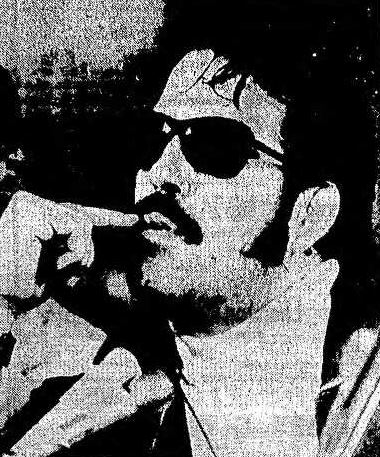
Joe Barboza: "A bum running off at the mouth."

Under questioning by committee chief counsel Joseph A. Phillips, Barboza testified that half the race horses in New England were owned by front men for syndicate mobsters. Then, like a man casually flipping a lit match into a puddle of gasoline, Barboza mentioned that Frank Sinatra, possibly the most famous entertainer of the century, had "fronted" for New England crime czar Patriarca.

Phillips would later say that Barboza's comments came so unexpectedly that they could not have been anticipated or cut off.

According to Barboza, Sinatra held Patriarca's concealed financial interest in The Sands, a Las Vegas hotel casino, and in the Fontainebleau Hotel in Miami. The Fontainebleau immediately filed an affidavit with the committee denying the story, but Barboza’s testimony stuck in the minds of the committee.

It made sense.
 
Sinatra, a shareholder in The Sands, had briefly been the vice president of Berkshire Downs racetrack in Hancock, Massachusetts. The committee had information that Patriarca held a hidden interest in the track at the same time Sinatra was involved. Berkshire Downs happened to be one of the tracks under investigation for rigged races.

Sinatra was soon subpoenaed to appear before the committee. Rep. Morgan Murphy, D-HL, a member of the committee, said Sinatra was called in to "give him an opportunity to clear himself.”

Barboza's naming of Sinatra could have been seen as a move born of desperation, a bit of last minute mud slinging at his enemies. But in fact, it was one of his most inspired bits of ratting.  Barboza felt the Italians of the Boston mob had not appreciated his years of loyalty. He’d killed for them, but when he needed their help, they left him to rot. He began naming names. For Italians in Boston, Sinatra was a beacon.

Barboza had probably been in some of the old North End men's clubs, those run-down storefronts that had been converted into headquarters for low ranking wiseguys. When the wiseguys were all imprisoned or dead, these meeting places were turned into dank little rooms where old Italians played cards and drank black coffee. The rooms, no matter how ramshackle, always had a few standby pieces of decoration: an old radio pumping in Italian-American love songs, an Italian flag on one wall, and a picture of Sinatra on the other.

Smiling down from the wall with his large teeth and shifty eyes, Sinatra provided smalltime wiseguys with not only a swinging soundtrack, but also a lifestyle to copy. A reporter gets in your face? Punch him. Your girlfriend talks too much? Dump the bitch. Some comedian makes a joke about you? Have some goons rough him up. That was Sinatra.  Don't just burn bridges; blow 'em up.
 
Sinatra had been accused of mob ties since his days with Tommy Dorsey's band. He had a well-known friendship with Chicago crime boss Sam Giancana, and the FBI had a Sinatra file that totaled more than 2,400 pages. Still, Sinatra denied any mob contacts; he blamed the FBI's suspicion on nothing but unfair ethnic stereotyping. Had he been Irish, Sinatra charged, there would never be any questions of him being linked to organized crime.

But when his name was mentioned by Barboza as a mob front, it brought him back into the headlines with a flourish. The Sinatra of 1972 was a "retired entertainer," having given a farewell performance in June 1971. Now, people anticipated his court appearance as an opportunity to see him once again. Some of the newspapers wrote it up as if he was simply making another of his many comebacks.
 
But first he had to be found.

US marshals approached Sinatra's California home but were not admitted. The fortress- like mansion was surrounded by a wall.

A few days later, the marshals tried to serve Sinatra with the subpoena in the Madison Hotel in Washington, but he'd gone to Baltimore to attend a gala honoring Vice President Spiro Agnew. One of Sinatra's aids implored the marshals to not embarrass Sinatra in front of Agnew, so the subpoena was not served in Baltimore.

 
By now, Sinatra's admirers were phoning in drunken death threats to Rep. Claude Pepper (D, Fla.), the chairman of the Committee on Crime. Pepper told Washington columnist Virgina Weldon Kelly that there were no plans to embarrass anyone, but that Sinatra "is an American citizen. It is the duty of a good citizen to help preserve the rights of all good citizens."

Sinatra finally responded, but it was through Senator Tunney of California. As a celebrity and constituent, Sinatra said, he didn't want to be subpoenaed and would rather testify in executive session.

A meeting was set for June 8, 1972. Sinatra remained missing.
 
Sinatra's attorney, Melton Rudin, excused Sinatra by saying he had not made an unequivocal promise to appear, and had taken his private plane to London. Rudin offered to appear before the committee and read a statement on behalf of Sinatra. Pepper was worried that Sinatra might remain in London for the duration of the hearings, but the committee wasn’t interested in Rudin. The committee wanted Sinatra.

The American Civil Liberties Union came to Sinatra's defense with a statement:

 "This is a classic example of trial by publicity. Mr. Sinatra's case is but one example of a congressional committee publicly hearing adverse testimony, un-proved, unchecked, and un-rebutted, which could cause irreparable damage to the reputation of the person discussed." Even if Sinatra cleared his name, the ACLU said, "too much damage already has been done by then."

Sinatra finally answered the committee's call in July. When he arrived in Washington, he was steaming. He barely acknowledged the spectators who had jammed the huge house caucus room or the massive crowd of people waiting outside. He wasn't in the mood to be charming.

With the kind of bluster one reporter compared to "Lear denouncing the weather," Sinatra accused the committee of irresponsibly letting a convicted felon "bandy my name about."

"It was character assassination, let's face it," Sinatra said. "This bum went running off at the mouth and I resent it and I won't have it. I'm not a second class citizen. Let's make that clear."
 
Sinatra asked why no one in the counsel had held a press conference to refute the story once the hotel had issued its own statement. It was a good point. Sinatra was then asked if he would refute the story.

"I don't have to refute it because there isn't any truth to it," Sinatra said. "How do you repair the damage that was printed in the newspapers?"
 
He held up a newspaper headline with Barboza's comments in bold print.
 
"Isn't that charming?" Sinatra said. "And it's all hearsay testimony, isn't it?"
 
"Yes, it is," said Phillips, in what many observors took to be an apology.

Aside from his strong opening volley, Sinatra's appearance before the committee was  muddled. He denied knowing Patriarca, although the committee had a 1968 FBI report from Caesars Palace that mentioned Sinatra having "a message he wanted carried to Raymond Patriarca," who was reportedly a secret owner of Caesars. (Patriarca, for his part, also denied knowing Sinatra. When asked if any of his associates had ever done business with Sinatra, Patriarca took the Fifth.)

As for his role at the Hancock track, Sinatra said he bought $55, 000 worth of Berkshire Downs stock as an investment in late August 1962, but did not know any of the track's other investors. Sinatra said he didn't know he had been named a track vice president and director until he read it on sports pages, and had resigned as soon as he realized he'd been appointed.

Rep. Sam Steiger had a quick response that should’ve rattled Sinatra. Steiger said a federal wiretap on Patriarca's phone revealed he had been informed August 24, 1962 that Sinatra was to be elected to the track's board. Upon hearing this, Sinatra simply stared at Steiger, as if to say, "What is your point?"

Sinatra eventually loosened up. He played to the spectators. He used the old courtroom standby of not recalling certain things.

Had he asked his old Rat Pack singing buddy Dean Martin to join him as a shareholder in Berkshire Downs?

Sinatra didn't remember.

When had he last seen Sam Rizzo, the man who'd sold him the stock?

Sinatra didn't remember.  (Rizzo would also deny ever meeting Sinatra, although they'd been childhood neighbors.)

Sinatra's apparent strategy was to deny everything and hold the committee to a stalemate. At one point he claimed he didn't know how to read. It was a joke, but the glare in his eyes betrayed him. He was outraged that anyone dare intrude on the great Frank Sinatra.
 
 
For his part in the Berkshire Downs track, the Crime Committee's eventual report deemed Sinatra "an unwitting front."  Instead of looking crooked, Sinatra came off looking stupid. 
 
A few years later, Barboza was gunned down in a supermarket parking lot in California. Many believed he was killed by a pair of hitmen sent from Boston.
 
One wonders what Old Blue Eyes thought when he heard the news…