Sunday, January 22, 2017

BOOKS: SPIDER FROM MARS (My Life With Bowie)


There's a starman waiting in the sky to bust your balls
 Bowie drummer recalls the highs and lows of touring with Ziggy Stardust
by Don Stradley
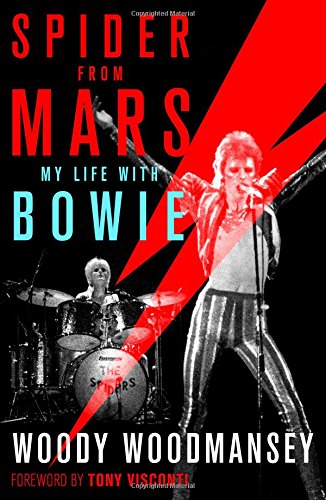

The title of Woody Woodmansey's amusing new memoir 'Spider From Mars: My Life With Bowie' is a bit misleading. Since Bowie always kept an icy distance between himself and his backing musicians, there really isn't much "life with Bowie" to speak of here. Still, as Bowie's drummer during the Ziggy Stardust years, Woodmansey was in the trenches during an incredible time in music history; as such, his story should be heard.

There's plenty of detail in Woodmansey's memoir, but the tone is surprisingly light and airy. Readers should be advised that Woodmansey is an earthy bloke from from the small agricultural town of Driffield, and if you're looking for grandiose statements about Bowie's art and lifestyle, you won't get them. He tells the story the way you'd expect a steady drummer would tell it; he's evenhanded, keeps it tight, and doesn't go in for wild solo spots. Perhaps you'd like to hear more about the debauchery that went on in those tour buses, or more about Bowie's alleged fling with Lulu, but you won't hear it from a working class gent like Woody.  Others who might tell the tale differently - Bowie, guitarist Mick Ronson, bassist Trevor Bolder - are no longer around.

Woodmansey was a typical rock 'n roll kid, coming of age in England as the rubble of World War II was being swept away. He listened to Elvis and other early rockers on the radio, and eventually took up the drums. Strangely, neighbors swore they could hear loud drumming coming from the Woodmansey home long before Woodmansey owned his own kit. Kismet?

He was just a boy when he was first struck by rock 'n roll lightning, venturing into an old warehouse where a local bunch of scruffs known as The Roadrunners were rehearsing. As they pounded away at a Bo Diddley song, Woodmansey stood by nervously and watched. "I was mesmerized," he writes. "It was the most exciting thing I'd ever experienced." As often happens in this sort of rock 'n' roll memoir, Woodmansey would later be asked to join the band. Again...kismet?

He tried other things; he was a pretty fair track runner in school, and even worked various factory jobs. When he wasn't at odds with his stern father over the length of his hair - the old man once sneaked into Woody's bedroom at night with scissors to give the kid a trim - they were butting heads over Woodmansey's future. Fortunately, Woodsmansey listened to his inner desires and went running in the direction of the music; he not only provided the rockin' beat for Bowie, but also worked with the likes of Art Garfunkel, Dexy's Midnight Runners, and others. Woodmansey's own band, the short-lived U-Boat, developed a cult following; he currently tours with the stellar Bowie tribute band, Holy Holy. As far as drumming careers, he's had a great one.

Writing with an assist from rock journalist Joel McIver, Woodmansey depicts himself as a genial lad who still can't believe the good fortune that came his way. He loves describing chance encounters with people like Elton John, or how the Spiders once stayed at the Beverly Hills Hotel on Sunset Boulevard. He doesn't shy away from his occasional blunders onstage, or how he seemed to chicken out of auditioning for Paul McCartney. Woody blows off the missed chance with a shrug: "To this day I don't know what I was thinking, but I didn't go."

Of course, people will read the book to learn more about the infamous time of the Spiders, and how Bowie dynamited the landscape of rock music during the early 1970s. The curious thing is that all of the Spiders were gritty, workmanlike geezers like Woodmansey. Ronson and Bolder, though brilliant at guitar and bass, were not cut from Bowie's artsy cloth, and the three might've been happy playing in an outfit like Blue Cheer or Foghat (Bolder, for that matter, later ended up playing bass for Uriah Heep).

The fascinating aspect of the story is that these three bluesbreakers from northern England gave Bowie what he'd needed at the right time. Prior to hiring them, Bowie was a weird folkie who'd had a modest hit with 'Space Oddity' and certainly wasn't on the fast track to anywhere. But Woodmansey recognized something in Bowie's songs that could be magnified with the proper hard rock background. He also observed that Bowie was disappointed in how his career had stalled. Bowie, Woodmansey reckoned, had "taken a knock and was struggling to find a new way to express himself." 

And so it went, with Woodmansey playing drums for four Bowie albums and, by his estimation, about 200 or so concerts, with Bowie leading the way in his Ziggy Stardust persona. But it wasn't a relaxed journey. Sure, there was a bit of rock 'n' roll excess, and the chance to play such powerful and innovative music was a dream come true for Woodmansey, but Bowie was prickly and detached. Bowie wanted the band to seem like a gang and to dress alike, but he made it clear that he was the star and they were his sidemen. Bowie was also in the beginning stages of a major drug phase; his paranoia often kept him from relating to the Spiders as anything but hired guns.

Backing band or not, the Spiders had to endure regular whiffs of danger, such as being warned to stay in their hotel because they'd come into a part of America where "hippies" might be shot. Then there was a concert in Japan that ended in a near riot when floors collapsed and kids were nearly crushed. It's as if Bowie and the Spiders were always one step ahead of total disaster.

At times Woodsmansey seems too admiring of Bowie. Granted, Bowie was one of the great ones. But Bowie was also a jerk. He treated the Spiders shabbily; some of the chapters may compel you to never spend another dime on Bowie music. Yet, he forgives Bowie, blaming the singer's erratic behavior on a growing cocaine addiction and the pressures of fame. Bowie and Woodmansey bumped into each other in Europe many years after the breakup of the Spiders. Though Bowie offered no apology, Woodmansey was quite happy to see him for dinner and a chat. "I felt the old wounds had been healed," Woodmansey says.

It's all very mature, you know. But no one would squawk if Woody had given his old boss a thump.

And Woodmansey also milks the idea of being the innocent yokel who keeps wandering into hostile territory wearing his glitter gear. By the third time he saunters into a redneck diner and says, Fuck me! I forgot how I was dressed! the gimmick has worn itself out. 

But he's very good at making quick, pointed observations, like his first impression of Angie Bowie flitting in and out of a room "like a mosquito on speed." Or when he samples her cooking and labels her a "shit cook; maybe that's why Bowie was so thin." Or when he discusses his interest in Scientology, writing that, "it has helped me find a life that I am very happy with, and I'm not bothered what other people think about it." It's interesting to get his input on various Bowie tunes, and how everyone from Neil Young to King Crimson was an influence during those years. He's also quite insightful when he suggests Bowie liked having three unpretentious fellows from northern England around as his test audience. "Maybe," he writes, "it was a case of 'I'll try my ideas on these northern lads, and if they can take it, maybe the audience will too.'"

There's a sense that Woodmansey hit the top early and never scaled those heights again, but it's OK.  He wasn't supposed to be Charlie Watts and play with the Rolling Stones for 50 years. He was Woody Woodmansey, a Spider for a while, and that seems to have been enough. "We experienced a lifetime in a few short years," he writes near the end. And the songs, which  have endured, enabled him to be part of some interesting projects, including the current Holy Holy gigs with old Bowie producer and occasional bassist, Tony Visconti.

It's tempting to read the book with the eye of a dime-store psychologist. Bowie, it seems, was a bit of a father figure to Woodmansey. Woody was accustomed to his own father's outbursts and unpredictability. And yes, even aloofness. From Bowie, he got the same treatment. This, I believe, is why Woodmansey was so quick to forgive Bowie. And why did Bowie kick the Spiders to the curb? Perhaps he harbored some kind of resentment towards them. He often said that he could've made it without them, and seemed determined to prove it. But maybe, deep down, he knew differently. Without their muscle behind him, he might've remained a floundering folksinger.

Bowie had to break up the band to prove something to himself. But he could've been nicer about it. 

Thursday, January 12, 2017

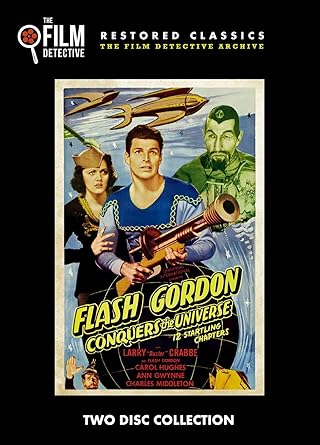
FLASH GORDON CONQUERS THE UNIVERSE (1940)


Flash Gordon had a very specific job description, which involved keeping Emperor Ming of planet Mongo from becoming too powerful. There were plenty of perks that came with the job, including some snazzy rocket ships, ray guns, and battles with space creatures, but the main task was to keep Ming in line. Considering Ming was usually out to destroy Earth, Flash was a busy guy.

He was a hero in the 1930s B-movie sense. He was true blue. He saved people from certain doom. But no matter how dangerous the assignment, he was always quick to thank the people around him for being his friends. When it came to movie heroes, Flash Gordon was without a doubt the friendliest. The Marvel and DC heroes on movie screens nowadays are too moody, while James Bond is just a horny guy with an accent. Tarzan? He's friendly with apes, I guess, but he seems surly. Han Solo? Too sarcastic. Besides, you couldn't trust him with your wife. But Flash, we know, would be sure to send you a postcard after returning from Mongo. He'd apologize for not keeping in touch, and he'd promise to see you soon.

This, I imagine, is why Flash Gordon hasn't really lasted into the modern era. He remains an icon of the Depression years, when friendliness was a desired personality trait. When Universal tried to cash in on the Star Wars craze in 1980 with Flash Gordon, audiences weren't buying it. There have been occasional efforts to bring the character back in both animated and TV series form, and there's been talk of a new movie in the works, but nothing sticks. In the 1930s, though, when Larry "Buster" Crabbe took on the title role in a trilogy of adventure serials, Flash was a moneymaker.

Flash Gordon Conquers The Universe: The Film Detective Restored VersionThe key reason Flash couldn't be a success now is that he lacks a dark side. The formula for today's hero involves putting a brooding misanthrope into a cape, giving him a sophomoric backstory with some feeble psychological underpinning, and letting him navigate his way through an apocalyptic cityscape. These movies make billions of dollars, which suggests modern audiences relate to these self-absorbed loners. But Flash could never be as miserable as Batman or Spiderman, because he was too busy saving the world.

Flash Gordon Conquers The Universe (1940) was the final Flash Gordon serial. It arrived in theaters as the Depression era was morphing into the World War II years, and Flash's brand of clean-cut bravery was on the way out. For that matter, villains from other planets seemed quaint, considering we had some shockingly evil villains right here on Earth. Still, it's fascinating to see this third Flash Gordon serial try to fit into the times. Ming, for instance, is not just a diabolical heel as he'd been in the first two serials; he's now described as a "dictator", and though he’s seen wearing the robe and high collar of the earlier films, he also wears a white military tunic and enough plumage to look like a German general on parade. Obviously, the Universal costume designers were watching the newsreels. 

The movie mines the war era in other ways: Ming's army of mechanical men lurch toward Flash and his friends like a mindless squadron of Hitler's goose-steppers; Ming's bombing of various Mongo nations, including the forest kingdom of Aboria, eerily mirrored the Nazi dismantling of Poland and Czechoslovakia. Ironically, the serial debuted on April 9, 1940,  the same day the Nazis invaded Denmark and Norway. 

There were clear signs that the series was at its end. Where Universal had once lavished money on the franchise - the first Flash Gordon serial was as costly as one of Universal's A-list pictures - it now scrimped, recycling costumes, sets and footage from both Flash Gordon (1936) and Flash Gordon's Trip to Mars(1938). In his 1975 memoir, Crabbe recalled Flash Gordon Conquers the Universe as "nothing more than a doctored up script from earlier days."

Another big change was the recasting of several characters, including Flash's female interest, Dale Arden. Jean Rogers had played the role in the first two serials, creating a large fanbase of teen boys thanks to her skimpy outfits. She was, to some degree, the Princess Leia of her time. When Rogers left Universal for MGM, Carol Hughes stepped in as Dale, but the role was diminished; Hughes wore more conservative costumes than her predecessor and seemed limited to only a few lines, the main one being, "Be careful, Flash!" 

Of course, there were still moments of innovation, such as the opening crawl to announce each episode (which would be borrowed by George Lucas for Star Wars) and a menacing tribe of Rock people who speak a strange language (achieved by human voice recordings played backwards, a trippy idea at the time). 

The third serial also introduces Captain Torch, played with a Leo Gorcey smirk by Don Owen; he's a burly Mongo thug who seems to be Göring to Ming's Hitler.  And Emperor Ming, played with sinister aplomb by Charles Middleton, remains one of the great movie heels of cinema history. If it's possible, he's more of a megalomaniac here than ever, especially in the climactic showdown when he hisses, "I am the universe!" 

The music, as is always the case in the Flash Gordon serials, is pure sonic uplift. As in the first two,  'Les Preludes' by the great Franz Liszt is heard soaring over the opening titles and throughout the chapters, interspersed with snatches from the Universal archives, everything from Heinz Roemheld's The Invisible Man, to Franz Waxman's The Bride of Frankenstein. Movie buffs can have fun just picking out the pieces they recognize.

But the film does seem to rehash many of the usual Flash Gordon tropes. Ming still wants to make Dale his bride, no matter who plays her, and Flash and his party encounter one menace after another. But one noticeable change in this installment is that, aside from a giant Gila monster who doesn't really figure into the plot, there are fewer strange creatures - no sharkmen, no horned gorillas - and the perils Flash must overcome are in the form of avalanches, fires, and Ming's bomber pilots. This change was likely a conscious attempt by Universal to present a more mature Flash. There's even a scene where Flash delays saving Dale and Dr. Zarkoff because he's in charge of a special antidote for Ming's "death dust" and must first drop it off atop Mount McKinley. Flash shows a steely hardness here, saying something to the effect of Dale and Zarkoff are only two people; I have many more to save! But a mature Flash wasn't what the public wanted; box office receipts were disappointing, and the series promptly ended.

Crabbe didn't spend much more time in space, spending the next leg of his career in cut-rate westerns and dramas. By the 1950s he’d left Hollywood for New York, and was hosting a kid's show on WOR-TV. Most of the time he showed his old Flash Gordon movies. Over the decades, the three serials were chopped and channeled into shortened versions, re-titled, and syndicated again for many years, well into the 1970s and '80s. There was something comforting about coming home after a late night and seeing one of the episodes on a UHF or PBS channel. (It didn't matter if I'd missed the previous week's chapter; all I needed was to hear the hum of the old rocket ships and I'd be strangely contented.)

Crabbe was born to play Flash Gordon. He hadn’t even wanted the role – as described in his memoir, Self Portrait, he’d stopped in at the auditions to see how things were going, and was offered the part on the spot – but not many other actors had the athletic ability as well as the All-American charisma needed to play Flash. At times, Crabbe has the same sort of presence as the young Ronald Reagan, but he's more coiled, more daring. You couldn't see Reagan as Flash, especially at the end of the final chapter, when Flash parachutes from his rocket and lets it sail directly into Ming's castle, 9/11 style. Flash Gordon may have been a boy scout, but he had the nerves of a suicide pilot. Still, he'd shake your hand before every mission, and tell you what an honor it was to know you. You almost didn't mind being punched in the face by such a nice guy.

Illustrator Alex Raymond created Flash Gordon to compete with the Buck Rogers cartoon strip. (Crabbe played Buck Rogers, too, in 1939, but was forever associated with Flash.) At first, Flash was seen as a Rogers knockoff, but Depression era kids embraced him. He took you into outer space and made you forget your worries for a while. The strip continued on in various forms for many decades, but Flash was never as beloved as he was in the 1930s.

At a time when America seemed on the brink of dissolution, Flash Gordon was perfectly positioned to make us look to the future, and to give us something to think about besides soup lines and shanty towns. When the Depression ended, so went Flash from our movie screens. But he was there when we needed him, and that counts for a lot.

*

Watch the fist six chapters of Flash Gordon Conquers The Universe on The Film Detective's movie app via Roku, Apple TV, or Amazon Fire TV. Collectors can enjoy the entire serial on our nicely restored two disc DVD.


Tuesday, December 27, 2016

THE EYES OF MY MOTHER...


Eyes of My Mother


Sometimes a screenplay is written from a standpoint of Wouldn't it be weird if we did this? , which is a kick for the screenwriter, even if what they're doing doesn't make sense. When Nicolas Pesce was writing The Eyes of my Mother, he had five or six moments where weirdness trumped common sense. It starts when Little Francisca stands by in shock while her mother is murdered by a stranger who has talked his way into their house. Francisca's father comes home and catches the man in the act, beats him nearly to death, and then locks him in a barn. Francisca, steered by Pesce's whimsy rather than anything realistic, removes the killer's eyes and cuts his vocal cords; Francisca's mother had been a surgeon, so apparently Francisca inherited some keenness with a scalpel. She makes a pet out of her mother's murderer, feeding him dead mice and stroking his back like a prize pig. 

Loneliness is the underlying theme here, and the film uses all sorts of lonely images; we see lonesome highways, lonesome farm houses, and lonely woods, plus many scenes of characters alone and shot from a distance,  all to amplify this sense of isolation and despair. When Francisca grows up, she ventures out to a lesbian bar and brings a woman home. Francisca's loneliness is palpable here. When your only friend is the guy who murdered your mother, and his tongue has been cut out, you'll probably have trouble playing with others. 

Pesce is the film's director, and he shoots this weird tale in a cold black and white. He has a great eye and an instinct for imagery. When Francisca's victim escapes and wanders blindly along the countryside, the shot recalls some hybrid of Night of the Living Dead and Eraserhead. And because Francisca's mother was Portuguese, we hear a lot of Portuguese music on the soundtrack, which is certainly unique for a horror movie. Then again, The Eyes of my Mother is another in the current wave of artsy horror movies. It's a bit like a strange post card you'd find in a roadside antique store, the sort where creepy children wear their Sunday best.

The Eyes of my Mother is being marketed as a sort of mini-masterpiece, with the ad quoting one wag hailing Francisca as a "movie monster for the ages." It's been praised for its lyric quality, and Variety went all gushy about how Pesce provides "complex psychological grounding even to the pic's grisliest setpieces to fend off accusations of exploitation or torture porn." It's been a favorite at film festivals too, which is feint praise; people sit through a lot of dreck at festivals, so anything that is half-way accomplished will stand out. But there's no drama in the movie. Francisca kills her victims, and then stares forlornly into the abyss. Granted, Kiki Magalhaes gives a very fine performance as Francisca; she's especially convincing in a scene where she talks to the corpse of her father, describing her loneliness. Yet, she too crazy to be entirely sympathetic.  Pesce, a very young director, may think he's on to something profound by showing a very disturbed and dangerous girl in a sympathetic light. But once a character cuts out someone's eyes, it's hard to turn her into Cinderella.

The movie has something of the sensibility of a Patrick McGrath novel, the sort where an isolated character ponders life on the outside. That is, before making an awkward attempt to join society. This isn't a bad place for a story to begin, and it gets reviewers all the time.

Pesce, by switching from Grand Guignol horror to melancholy, creates a kind of dirty gauze that viewers can stare into. It's not a dull movie, but it's a sleepy one, a mixture of "artistic" and vague. He creates one nicely executed moment after another, but the characters never seem like human beings; they may as well be mannequins arranged in a museum. 

The Eyes of My Mother makes it possible for reviewers to like a horror film, and for horror fans to say, indeed, there can be an artfulness to this stuff. Magalhaus is so good as Francisca that she's probably responsible for most of the film's success. And it's all so gorgeous that I'm convinced all movies should be shot in black and white by cinematographer Zach Kuperstein. But like too many recent horror movies, it's content to be weird, and wears it's artiness on its sleeve. For some, that will be enough.


Sunday, December 18, 2016

BOOKS: SOMETHING IN THE BLOOD...

WE ALL  KNOW DRACULA
But Bram Stoker Remains a Mystery
by Don Stradley


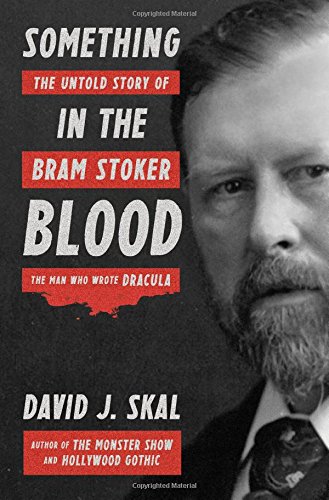
By creating Dracula, Bram Stoker gave us one of the most enduring characters in all of literature - the bloody Count stands alongside Ebenezer Scrooge, Sherlock Holmes, Huck Finn, Dr. Henry Jekyll and, for that matter, any Shakespearean character you'd care to mention, as an immortal icon, a figure who may be killed by a stake through the heart, but lives on and on in the pop culture - yet, Stoker is never mentioned alongside Charles Dickens or Robert Louis Stevenson. There are seasons for this, the most obvious being that he simply wasn't in their league as far as putting the words down - he was a ham-handed author, his writing more in line with the cheap melodramas of the day. Also, Stoker never came up with a worthy followup to his most famous creation. Finally, Stoker was a secretive, shadowy figure. If Stoker  was anything like the lonely, sexually conflicted ex-jock depicted in David J. Skal's Something In The Blood, a heroic and thoughtful attempt to uncover the man behind Dracula, it's no wonder we know so little about him. Even Dracula, a big seller in its day, was treated by Stoker as just another side project, a potboiler written to help pay some bills. As Skal suggests, Dracula probably meant less to Stoker than it has come to mean to us.

The young Stoker was a sickly boy who loved fairy tales and the macabre, but grew into a hulking athlete who played rugby at Trinity College. He would go on to became one of Dublin's most popular theater critics, no mean feat at a time when venturing out to a live performance was risky; in those days, customers were usually loaded to the gills and not above brawling in the cheap seats. Stoker once reported on a drunken reveler who got up to dance and immediately puked; the fellow used his own vomit as a kind of lubricant to slide across the floor.

But just as Stoker was establishing himself as a journalist, he chucked aside his blossoming career to become the business manager of actor Henry Irving. It was a peculiar arrangement - Stoker worked like a dog for this egocentric, domineering actor, sometimes writing short stories on the side - though it's believed that Irving's magnetic personality, plus his performances of Faust and Macbeth, provided Stoker with a model for Dracula. At the least, Irving provided Stoker with a charismatic daddy figure, which the aspiring author seemed to crave. Indeed, a fan letter written by Stoker to Walt Whitman bordered on a declaration of love:

"How sweet a thing it is for a strong, healthy man with a woman's eyes and a child's wishes to feel that he can speak to a man who can be if he wishes father, brother, and wife to his soul."

Strangely, Stoker is hardly the star of his own biography. He seems third billed behind Irving and Oscar Wilde. They may be essential to the story of Stoker - had Wilde not been scandalized and imprisoned for his gay lifestyle, Skal surmises, Stoker may have incorporated more homosexual themes into Dracula - but the result is that in comparison to Irving and Wilde, Stoker comes off as a dullard. Even Stoker's mother is of more interest - no wilting lily, she once took an ax to a cholera victim trying to break into her home. What Skal counts on is that we'll endure his narrative detours in hopes of learning more about the man who gave us "the greatest sex monster of all time." He teases us with Stoker's alleged secret life, but produces nothing.

Stoker, despite his sexual ambiguities, was a loyal husband and father. Though there's no concrete evidence that he ever acted on his apparent yearning for men, one almost wishes he did. Such a dalliance might have given Skal something to write about besides Wilde's bloated corpse, or Irving's bullish personality. Then again, even if Stoker had fully acknowledged his desires, he'd probably still have that vacant place in his soul that could only be filled by working, working, working.

Skal is a very fine writer and historian - an earlier book, The Monster Show, is a knockout - and he strikes some interesting notes when he speculates that Stoker, as many children do, may have absorbed his mother's anxieties about sex. But Stoker is too elusive, always wriggling out from Skal's grasp. Reading Something In The Blood  is akin to entering a large and ornate crypt, opening a coffin, and finding it empty. Of course, Skal is a good enough storyteller that readers may be satisfied just by his attempt to trace the origin of the vampire in fiction. You may not notice that the man you're supposed to be reading about, the one who never smiled in photographs, the one who may have died from a type of syphilis that brings on paralysis and madness, the one who wrote Dracula, remains unknowable. 


Thursday, November 24, 2016

FORGOTTEN GEM: SALESMAN (1968)


My first encounter with Salesman (1968) was in the late 1980s when it was briefly revived for its 20th anniversary.  After more than 25 years, it's still astonishing. Despite the fact that its male characters wear hats and smoke cigarettes, its not a time capsule; its message is still strong today. It is perhaps the best documentary about working stiffs you'll ever see.

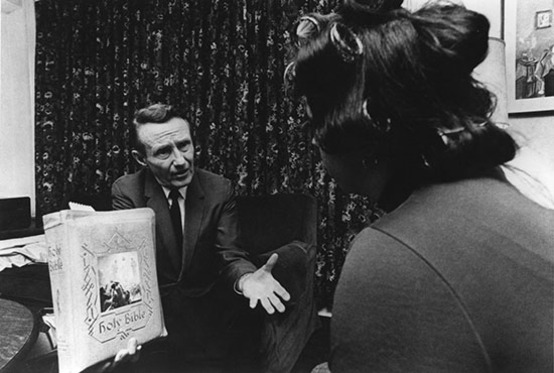
In 1968, Albert and David Maysles were at the beginning of their prime years, but already deep into the style they'd show in their more famous documentaries. For Salesman they focused on a quartet of bible salesmen trudging through a bleak New England winter, what one of the men calls "ball-busting territory." When they're lucky enough to have a customer open a door, it's usually a bored housewife who listens a bit before saying she can't do anything until her husband gets home.

It's obvious from the opening scene that this will be a different interpretation of the salesman's lot. It's not as tragic as Death of a Salesman, nor as full of itself as Glengarry Glen Ross. Paul Brennan, the film's lead character and the sort of Godsend prayed for by documentary makers, is stumbling through a sale. We can practically see the beads of sweat on his shiny little forehead. Critic Matt Zoller Seitz called Salesman "one of the great statements on America's can-do culture of capitalism, and how it tends to become a psychological cage that makes people feel like failures." Within 30 seconds we can tell Brennan stuck in that very cage.

Brennan is a feisty, pint-sized Irishman by way of Jamaica Plain, Massachusetts. He's in his mid-50s; he resembles old-time actors like Red Buttons or Burgess Meredith, and he plays on his elfin appearance. He's a charmer, but he's in a slump. He's mystified that his usual routine - which he refers to as "the Mickey stuff" - isn't working. He tries to discuss his problem with his fellow salesman, but they only offer company bromides. Don't ever blame the territory, they tell him.

The other members of the sales team are known as The Gipper, The Bull, and The Rabbit (Brennan is the Badger), and they wear the same basic uniform: black raincoat, fedora, a slight look of fatigue. But as the movie unfurls we notice their differences. The Rabbit (James Baker), tall and thin, is the youngest, but has already started to copy Brennan's banter (with more success on this trip). The Bull (Raymond Martos) is a friendly guy who appears to never get rattled. The Gipper  (Charles McDevitt) says the least, probably saving his energy for selling. There's a fifth man, but he's a boss of some kind; he smiles the phony, sadistic grin of mid-management types everywhere. He has no nickname.

When the group is sent to Miami, it's telling that The Bull and The Rabbit want to go for a late night splash in the hotel swimming pool, while Brennan and the Gipper stand around,  still wearing their shirts and ties, nervously smoking. They're the oldest, and they probably haven't been swimming in a long time.

Glad to be out of the cold Massachusetts winter, Brennan finds himself enjoying a win streak in Miami. When he returns to the hotel at night, he's a new man; we see a glimpse of the cocksure talker he must've been before. The next day, however, he's unable to move a single bible. It's all as simple as a De Sica plot: he fails, he succeeds, he fails.

Though the Maysles inspired a legion of admirers with their excellent work, few contemporary documentarians have the nerve to let their cameras remain as still as Albert Maysles' camera. He lingers on Brennan until he captures something resembling the soul's stillness. At other times Brennan stares into space, looking like a weathered figure in an Andrew Wyeth painting. At a dinner for the bible company in Chicago, where other sellers make grandiose plans for next year, he only stares at the speakers and says nothing. What's he thinking? Go fuck yourself? How did I end up here listening to this crap?  We don't know. And the Maysles don't intrude, as many new filmmakers would, by asking him how he feels. They let his tired face speak.

Prior to this the Maysles had spent years making celebrity documentaries, profiling the likes of Marlon Brando, Truman Capote, and The Beatles. It makes sense that they would dispense with the pop culture and focus on the tough existence of bible salesmen, and they seem liberated by these earthier subjects. You can almost feel the Maysles' giddiness when Brennan flirts with a cleaning lady at the hotel, or when he breaks into a song from Fiddler on the Roof. And the realness of the customers provides an unexpected poignancy; how broke and bored these people are, so fatigued by their lives that they are almost too weak to fend off the salesmen.

That stillness I'm trying to describe can be found in many Maysles' films. Think of Charlie Watts, the Rolling Stones' drummer, looking at the footage of a fan being killed in Gimme Shelter (1970). Think of the long, elegant pauses throughout Grey Gardens (1975), particularly when Little Edie walks tiredly up the stairs near the end of the film, sadly returning to her own sheltered life, or the pause given by Muhammad Ali before admitting that he likes Larry Holmes in Muhammad and Larry 1980).

There's a scene where a young woman tells the salesmen that she admires men who are out on their own, rather than tied to a dull corporate job. The Gipper pauses; he'll play along if it means selling a bible. The scene resonates because it plays into the myth that traveling salesmen are something close to cowboys or conmen, though the men in Salesman are as beaten down as any office clerk.

The style used in Salesman is so singular, so persuasive, that a clip from it is as easy to identify as a clip from The Godfather. A recent episode of IFC's Documentary Now presented a spoof of Salesman that was spot on in tone and detail, as if it were a daffy stepson of the original. That's a testament to the strength of the Maysles' style.

The movie is so expertly cut (by David Maysles and Charlotte Zwerin, who is given a director's credit) that it has the rhythm and pace of a long  ride down an empty highway in the dead of winter. The Maysles and Zwerin were also smart to give coverage to the customers. As the sellers grind away, the camera cuts to the targets, mostly housewives, who seem to be going through some sort of secret agony. They don't want the bible, but they don't want to be rude. When a sale agreement is signed, it's done solemnly, as if government secrets are being shared. (My favorite customer is the guy who puts on an album of orchestrated Beatles music, the only nod to the pop culture found in the entire movie.)

In a late scene, Brennan is relegated to sitting by while Gipper makes a sale. Then, the Gipper tells the customers that Brennan is hoping for some inspiration. Brennan shrugs, now so low on the totem poll that he willingly shleps along behind Gipper. Again, we don't know exactly what he's thinking. My guess is that he'd had enough and wants out.

There's a clip on YouTube of Albert Maysles talking about Brennan. He expresses a fondness for him, and said they remained friends after the project was completed. Maysles also described Brennan sitting at an early screening of Salesman, weeping and laughing. According to Maysles, Brennan soon quit selling bibles and moved on to selling aluminum siding. Brennan died in 1990, at age 77. The cause of death is listed as "severe rheumatoid arthritis." There are scenes in Salesman where Brennan flexes his fingers, which look slightly gnarled. It's strange; it's as if we're watching the grim reaper sidling next to Brennan, taking him by the hand.


Monday, November 14, 2016

BOOKS: THEY ALL LOVE JACK...

NEW BOOK ON JACK IS A JOLLY GOOD RIP
Victorian England's most famous murder case gets a good workout
by Don Stradley


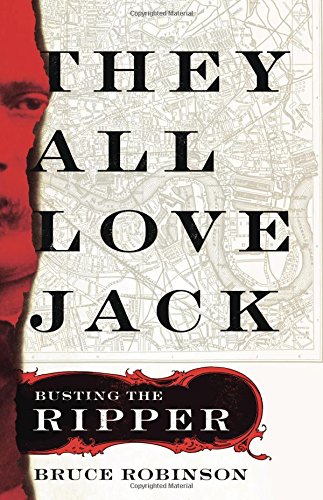
Despite Bruce Robinson's boast that he's busted Jack the Ripper, a few other authors have crowed about having done exactly that. Stephen Knight's The Final Solution pinned the Ripper crimes on a trio of men, including the artist Walter Sickert.  In 2002, Patricia Cornwell's Portrait of a Killer - Jack The Ripper: Case Closed, swung for the fences and put the whole thing on Sickert. Then there was the alleged "Ripper diary" that came along in the 1990s, which pointed to James Maybrick as the Ripper, the very Maybrick who was murdered by his wife in a rather sensational London case of 1889. Robinson leapfrogs over the others, and makes a strong case that England's Ripper was none other than Maybrick's brother Michael, a famous singer and song writer of the period. Like most Ripper suspects, there's a big pile of arrows pointing at this fellow; he deserves a look.

According to Robinson's They All Love Jack: Busting the Ripper,  Michael Maybrick was as diabolical as a Batman villain, and filled with such red raging hatred for his sister-in-law that he murdered a bunch of prostitutes - more than the five usually attributed to Jack - plus some children; then he poisoned his own brother, framed his sister-in-law for the death of James, and then forged the diary that would come to light more than a century later. It's a bit much to swallow, but it's compelling. I can't say if Robinson is any closer to solving the Ripper case than anyone else, and I'm not even certain that anyone really wants to know the Ripper's true identity. The Ripper is better off as a shadow man, a black hole of evil and cruelty. We can project whatever we want onto him.

In an early chapter of They All Love Jack, we're told that the Ripper was "a totally sane, highly intelligent psychopath whose sense of fun animated in some esoteric area of his thinking where humor and homicide collide." It's a mouthful, but in this whopping, 800-page monster of a book, Robinson will often interrupt his own narrative, as if he'd handed his keyboard over to Lester Bangs for a moment while he went to the toilet, with something sort of clever and angry. At times it appears Robinson takes the whole Ripper deal as a personal insult. (For instance: he bristles at the "perverse, almost heroic status that has evolved around this prick, as though he were someone special.") Robinson not only hates the Ripper, but despises the silly police force that mucked things up, and the hundreds of "Ripperologists" who have, through the decades since 1888, turned the case into a sort of cozy mystery. These Ripper fanboys, with their "constipated thinking," set Robinson off on regular tangents. (My favorite is when he depicts them as "a gang of shagged-out seagulls in the wake of a phantom steamer.") Of course, like anyone writing about the Ripper, Robinson doesn't shy from the grislier aspects of the case - he undoubtedly had fun writing that the remains of Mary Kelly were "carried out in a bucket" - but if you're as bloody serious as Robinson, you're allowed to rub a reader's nose into the gore.

When not bashing Ripperologists, Robinson puts the boot to Victorian England. It was a toweringly hypocritical and complex place; the age of consent was 12, the Royals kept up a pompous, untouchable front, and "the sub-British ate, slept, and wiped their arses in cellars full of vermin and promiscuous death." Wartime violence was in the air, with stories of British atrocities making their way home. Particularly riveting is Robinson's depiction of General Herbert Kitchener, who raided a temple near Khartoum, dug up the corpse of the Madhi, and bashed it to bits with a hammer. "With that hammer in his hand," writes Robinson, "Kitchener belonged to Satan." For sure, the first fifth of the book seems written so we understand that bloodletting and brutality was ingrained in England's character, equaled only by the Victorian love of money. "Wealth was a deity in Victorian England," says Robinson, "and everything was subservient to the maintenance of it."

Where Robinson's research differs from most Ripper investigations is in his treatment of the "Ripper letters," those sinister notes written in jagged scrawls and sent to Scotland Yard from various far-flung locations. Rather than dismiss them as hoaxes, as has usually been the rule, he makes a beautiful case for their authenticity and links them to his suspect. Michael Maybrick's ability to change his handwriting, plus his fiendish sense of humor and wordplay, fit into Robinson's theory, as does Maybrick's traveling schedule. And even if Maybrick wasn't the author, the letters contain facts that only the Ripper would've known. Maybrick or not, these letters, long thought fraudulent, indeed appear to have been written by the killer. If Robinson has done nothing else, he's convinced me that the Ripper was writing to the police, taunting them all the way.

The Ripper's connection to the Freemasons has been explored in the past, but with nothing like Robinson's pit bull ferocity. Through painstaking research, he's believable when he portrays the Ripper as a man very familiar with Freemason rituals, and that the Freemasons not only did their share to cover up anything having to do with the crimes, but divorced themselves from both Michael and James Maybrick (both, incidentally, involved with the Freemasons). That Robinson goes on rather obsessively (and for far too many pages) about the Freemasons nearly spoils what is otherwise a thought-provoking, occasionally brilliant book. And I was also put off by Robinson's one-note argument that Michael Maybrick was simply a psychopath, and that psychos do crazy things. That's it?

Ultimately, Robinson succeeds in what he sets out to do, which is to blow the dust from the old theories and expose them as claptrap. The rogues gallery of suspects that have taken root over the years don't stand a chance with Robinson, from the "insane surgeon", to the "vengeful homosexual", to the "womb collector". The same goes for the Duke of Clarence, described by Robinson as an ineffectual wimp who could barely cut his own meat, never mind obliterate a live woman, and the jittery foreigner Kosminski, "a 98-pound weakling, living off crusts in the gutter." They're all waylaid by Robinson, gutted like fish, the remains of their mythology ready to be taken out in buckets.


Tuesday, November 8, 2016

GIMME DANGER...


Gimme Danger Movie Review


It was back in the 1980s when I attended an Iggy Pop concert at the Orpheum theater in Boston. The sound mix was terrible - he sounded like he was singing from under a blanket - but I still have vivid memories of the night. Most have to do with him jumping around like an orangutan; at one point he used his microphone stand as a battering ram on some kids who were too close to the stage.

Iggy was still a young man at the time, but he didn't resemble any rock stars I'd seen. He looked like a fisherman who'd spent a long day hurling nets into the sea, perspiring and broken and gnarled. His band was unmemorable, faceless journeymen hired to provide background noise. It was hard to figure out what songs they were playing; I remember 'I Wanna Be Your Dog' was a highlight, and 'Lust For Life'. Near the end of the show Iggy unbuttoned his pants and threatened to expose his fabled hog. That brought the house down.

I'd brought a friend of mine who knew nothing of Iggy Pop. I'd said, "You'll love him. He's just like Ted Nugent." I don't know if my friend had a good time or not. But by the end of the show I'd made up my mind about Iggy. He was not a towering talent. He had a unique presence, but he was less a great artist than a sideshow attraction. He's always reminded me of some second-rate contortionist who had pushed aside the rat-eating geeks and fire eaters to become the main star on the midway.

Iggy rarely entered my mind after that, though his popularity climbed. (The IMDB lists more than 200 soundtracks that feature Iggy's music, which is rather astounding.)

When I listened to him at all, it was usually the first Stooges album, which to me was a beautiful mix of early Rolling Stones, late 1960s guitar fuzz, and something like Neanderthals pining from inside the cave. It saddened me to hear that Ron Asheton, and then his brother Scott - the Stooges' guitarist and drummer - had died. They'd been the pillars of an interesting sound. They didn't get enough credit.

And that's how I felt this weekend when I traveled several miles out of my way to see Gimme Danger, Jim Jarmusch's respectful, if strangely reserved, tribute to The Stooges.

There was the Iggy Pop of today, looking leathery but healthy, telling the story of his early years; his eyes are still frighteningly blue and mesmerizing, his teeth look suspiciously large and too white. He's no longer the Alfred E. Neuman of rock 'n roll; he's stately now, like an old gigolo who fell into some money. But it's still a shock
when he talks and that farmer's voice comes out.

The story of the Stooges is not a particularly fascinating one, and only proves that all bands have more or less the same origin: A few guys meet; they share an interest in music; they let it rip. Then they're taken down by drugs, or clashing egos. For The Stooges, it was the former. "We all started to look dirtier and thinner," says Iggy about the heroin days. He ended up living with his parents, while they supplied him with methadone.

Jarmusch is an avowed fan of Iggy's, and put him in one of his previous movies, Coffee and Cigarettes. Nobly, he felt The Stooges deserved some attention and spent years putting this documentary together. Fortunately, there was enough footage of Ron and Scott Asheton that their deaths didn't hamper production. James Williamson, who joined a later incarnation of the band, is still alive, having traded the rock lifestyle for a CEO gig in Silicon Valley.

Jarmusch also interviews Mike Watt, the great Minutemen bassist who once used Stooge music as a way to regain his bass chops after a serious illness had nearly destroyed his ability to play. He'd later be part of a Stooge reunion in the 2000s. And Danny Fields, the Stooges' manager, is interviewed here like an old sugar daddy.

The movie is watchable, and at times entertaining, but Jarmusch reveals little that is new or thought-provoking. Mostly, it's just the usual Stooges' story, which we've seen elsewhere, including a surprisingly good episode of VH1 Behind The Music. He doesn't dig up much dirt, and keeps the more sordid stuff vague. There are references to the fellows behaving badly, and Iggy admits to being a heroin user, but it's as if Jarmusch is too polite, or too reverent, to go all the way down the rabbit hole. Perhaps Jarmusch felt too much detail would distract from the mission at hand, namely, to pay respect to the Stooges.

There is a lot of music here, but it doesn't pound our heads in as I'd hoped it might. Much of it sounds tired, and watching old footage of Iggy prowling around a stage like a spider-monkey loses its charm after a while. Much better is the bit where Iggy talks about growing up in a trailer, and being picked on by local hoods. Iggy is near 70, and to call him a survivor is an understatement. But I think he's survived more than drugs and a heartless music industry. He's endured some sort of sadness and anger, feelings that show up in that scene where he talks about the hoods; Jarmusch only turns away from it, too polite to linger on the more painful memories of this aging rocker.