Monday, February 23, 2015

BOOKER T AT THE LARCOM


Booker T. Jones
Larcom Theatre
Beverly MA
February 21, 2015

by Don Stradley 

Booker T. Jones isn't bringing his show to every city in America, which is why many loyal fans braved the snowy New England weather to see him at the historic Larcom Theater in Beverly, MA.  Jones' performance was well paced and professional, not to mention fiery enough that the slightly less than 566 capacity crowd was often left breathless.
 
A clean cut opening act known as Cozy Covers had set the table reasonably well with some jazzy versions of 1960s tunes, but most in the audience were politely waiting for Booker T, a walking embodiment of the the 1960s, and a performer still vital long after his Lifetime Achievement Grammy.
 
The stage looked very much like it might have looked for a Booker T gig of 50 years ago, his aging Hammond B3 organ  propped up at stage right, with seemingly weathered Leslie speakers churning away on each side of the stage. His band, earthy looking men with several decades of experience between them, appeared first.   After a quick 'Showtime at the Apollo' type introduction by the drummer (“Are you ready for the living legend?"),  Booker sauntered out and took his place at the Hammond.  Dressed in a baggy dark suit, porkpie hat, his tie slightly askew, he looked like what we might call a "Gentleman Blues Brother."  There was beauty and power in his playing as he smashed through a selection of old hits recorded with the immortal MGs, including 'Green Onions', 'Hip Hugger', 'Soul Limbo', and a rousing 'Hang 'em High'.   His  hands moved across the keyboard like he was pushing the sounds out toward us;  when he laid down on a chord  the old Leslies would light up and whir, their innards spinning like the gears of an old steam engine. He spent most of the night playing his beloved Hammond, though he broke midway through the show to play guitar and sing.  He plays guitar the way most keyboard specialists play guitar, not attacking with authority, but letting his left hand shape the chords, gently thumbing the strings with his right.
 
Jones' voice is wide and deep, appropriate for his laconic rendition of ‘Hey Joe’ done up Jimi Hendrix style. The middle part of the set also included some Jimmy Reed tunes, 'Love the One You're With', and even that piece of moldy 1980s psychedelia, 'Purple Rain'.    In between songs he told stories, wiped his brow, thanked the audience for coming out during a snowstorm, and introduced his son Ted, who joined the band and showed himself to be a fine, tasteful guitarist.  The bulk of the guitar work was done by  Vernon "Ice" Black, a curious musician who seems to fumble his way into solos, hitting wrong notes, dealing with unplanned feedback noise, until somehow,  after about 38 bars, he hits a groove.  More than once on Saturday night Black appeared to be unsure of himself, only to eventually fall into a sort of zombie trance and create something remarkable.   The beauty of it was watching Jones be patient as Black wandered around the fretboard, trying to find his way into a song.
 
The show was rich, dense, and relentless, each song leisurely building up to a thick layer of sound that threatened to blow down the walls of the old Larcom.  The grand finale was ‘Time Is Tight’, which Jones started slowly, as if to make sure we heard every note, and for some it felt like we were hearing the song's loveliness for the first time.  Then came the crescendo, with Black knocking our heads in with more shrieking guitar sounds. The band returned for an encore of the MG's 1970's hit, ‘Melting Pot’, turning it into a lengthy jam that left the audience in a kind of merry stupor.

Many had come thinking they would see a nostalgia show. They left having seen a veteran contender who can still punch his weight.
 

Thursday, February 19, 2015

BOOK REVIEW: JOHN CLEESE: SO, ANYWAY...

JOHN CLEESE BARELY MENTIONS MONTY PYTHON, BUT HIS NEW AUTOBIOGRAPHY IS STILL GREAT...
 
by Don Stradley

With the possible exceptions of Steve Martin and Neal Simon, no comedy star is better qualified to write an autobiography than John Cleese. For one thing, he's always been primarily a writer, albeit one fortunate enough to look convincing in either an army uniform or a dress. I also recall a TV clip of Cleese and fellow Monty Python star Michael Palin squaring off against notorious sourpusses Malcolm Muggeridge and Mervyn Stockwood to debate the merits of Monty Python’s Life of Brian. Palin held his own, but Cleese was remarkably poised and shot the snobs down. An intelligent, thoughtful man, this Cleese.
 

But as Cleese emphasizes during the first half of So, Anyway…, a burly, tell-a-lot memoir, he wasn’t always so ready for a debate with the likes of Muggeridge and Stockwood.   Growing up in Weston-super-Mare, an old-fashioned seaside town in Somerset, England, Cleese was the awkward only child of an insurance salesman dad and an occasionally difficult mother (she was an unpredictable type we might now call  ‘neurotic’). Young Cleese was not only extraordinarily tall and thin, but he was timid, "a yellow-belly by inclination," and was part of an English middle class that was "terrified of embarrassment." Yet, this clumsy, shy, boy grew up to take part in arguably the two most popular shows in the history of British television.  He also spent a long period of his adult life in therapy, trying to understand his everlasting discomfort.

Such a memoir might include some uplifting moment where he battles through his awkwardness, but he just seemed to grow out of it. In short order he goes from studying law at Cambridge University, to appearing on Broadway in a sketch show developed at Cambridge, to working for David Frost. The strangest thing about Cleese's life is that wonderful opportunities just kept coming to him. While standing on a Manhattan street corner, for instance, he's approached by someone from Newsweek who'd seen Cleese in the Cambridge Circus show and felt compelled to offer Cleese a job as a columnist. These occurrences, which Cleese describes as "apples falling into my lap," happened frequently. No wonder he ended up in therapy. His mind was free to roam its darkest corridors, because it certainly wasn't taxed by a need to focus on his future.

Although Cleese is aware of the lofty position he holds as one of the creators of Monty Python's Flying Circus and Fawlty Towers, this isn't a book about how he created those shows. Instead, he focuses on his earlier TV work such as At Last...The 1948 Show. While those chapters are interesting, the more riveting stuff comes early on when Cleese takes us in hand for a tour of his boyhood. He creates vivid pictures of his grumpy old headmasters, giving them far more life and color than he does, say, Peter Sellers or Marty Feldman. The Python cast, with the exception of Graham Chapman, is barely mentioned. As for Chapman, who was Cleese's friend and writing partner for many years and died at age 48, he comes off as a strange one who "enjoyed only a tenuous relationship with reality."

Cleese takes a swipe at most of the usual targets: religion, Britain's class structure, pomposity of any sort, American movie producers, British journalists, autograph seekers, emotionally stunted intellectuals, and Germans. He's even suspicious of the people reading his book, accusing us of "just flipping through my heart-rending life story in the hope of getting a couple of good laughs, aren't you?” Yet, the book isn’t mean spirited. Its overriding effect is of someone you've always admired taking you aside, quite unexpectedly, to share some stories from his past.

If you've wondered about Cleese's romantic life, a strained relationship with his mother resulted in Cleese developing an overly polite persona, which he claims "rendered me utterly unsexy." He lost his virginity at 24, but didn't seem bothered by the delay. Yet, Cleese married Connie Booth, an interesting and attractive American actress. Oddly, there's little mention of their eventual divorce, or of Cleese's other marriages. Perhaps he feared soiling his memoir with anything unpleasant. The marriage to Booth, after all, seems rather sweet and idyllic: "I still remember how Connie looked just as the minister gave us his permission to kiss," he writes. "Everything felt very right."

What makes Cleese's memoir so different from most is that he never spent time wistfully dreaming of stardom. He doesn’t cop to such feelings, anyway. He didn't spend years honing an act, or going to auditions, or dealing with rejection, or stage fright. It's as if those are all hackneyed notions he couldn't be bothered about. What comes through with amazing force is his deep love of comedy. This goes back to when he was a kid listening to The Goon Show on the radio, a program he adored "with an intensity that almost defied analysis." Later, he underwent a kind of catharsis watching Peter Cook and Dudley Moore appear in Beyond the Fringe, a stage show that left Cleese in such a state of hysterical liberation that he actually started chewing his scarf, for "ordinary laughter could not on its own release the joyous energy that had taken over my body."

This love of comedy seems to have been the key to his life. Yet, he never stoops to that ages old bromide about wanting to please an audience, or gain their love. No, Cleese wanted to make himself laugh, and that's where the famous sketches came from, from the dead parrot, to the cheese shop, all the way to The Meaning of Life. Sure, he hoped the audience would laugh, but his own enjoyment came first, and we can still feel his joy as he writes about "busting a gut" over one of Chapman’s ideas. It seemed the idea for a sketch, rather than the specific details, was what would send him into a fit of laughter. Then, with incredible patience, he would set about constructing the sketch logically. Yes, the master of the silly walk approaches comedy with the seriousness of a lawyer building an argument.

Regrettably, if we're ever to know more about the Monty Python years, we'll have to wait for a second volume. Cleese skips over most of the Python history, and shares only fleeting mentions of Fawlty Towers, and A Fish Called Wanda. Sadly, I'm not certain he plans to write more. He ends this book with the Python reunion show in 2014, which certainly feels like a final bow, roger dodger, over and out. As much as I loved So, Anyway...and I loved every page of it, I keep thinking about the book Cleese didn't write. Of course, none of this would matter if Cleese wasn't such a fine writer and raconteur. His tales of seeing a spider so large that one could hear its footsteps, or of a friend’s hilarious struggle to put an injured rabbit out of its misery, are priceless, as is Cleese’s shock at seeing himself on film for the first time, fretting as “the lower half of me floated about like a hovercraft, while my top half swayed to and fro, giraffe-style.”

My favorite story, though, had to do with Cleese's brief stint as a teacher. He tells of one particular boy's struggle to associate the Niger River with Nigeria. The story is poignant, yet ridiculous, and Cleese tells it beautifully, with a hint of despair. This is why I’d love a second volume. Cleese is the rare show business veteran who actually can write. With another 40 more years to pull from, a continuation would be just as rich as this volume. Besides, I’d like to learn more about the silly walk.

Wednesday, February 18, 2015

NEW ON DVD: NIGHTCRAWLER

Nightcrawler Movie Review

NIGHTCRAWLER ISN'T THE NEO-NOIR MASTERPIECE YOU WERE EXPECTING; It's Just Another Muddled Movie With A Good Performance from Jake Gyllenhaal...

By Don Stradley


One little detail kept me from enjoying Dan Gilroy's Nightcrawler.  It happens when Lou Bloom (Jake Gyllenhaal), an aspiring news photographer, walks into a Los Angeles TV news station to make his first sale. He simply walks in, like he's walking into a grocery store, and makes his way to the editing room to meet with the news producer. No one stops him. 
 
A few years ago, I was in New York to visit a friend who works at channel 13.  I was stopped in the lobby by security. I was asked to show my ID, and sign a ledger.  The security guard acted as if he couldn't make out my signature, which created more delays.  When he was finally convinced, he issued me a temporary building pass. Then I had to wait in the lobby while my friend came down to get me.  Watching Gyllenhaal stroll into a TV station unmolested made me distrust the entire premise of the movie, for it was clearly being made by someone who was clueless.  I can't imagine that anyone in the movie business has never had to enter a major metropolitan building.  Granted, the news station in the movie is supposed to be the worst one in LA, but still, I'll bet you they'd have security.
 
This gaffe was unfortunate, because prior to this the movie had some potential.  The first time we see Lou Bloom, he's scuffling with a security guard at a junkyard.  (This is a world apparently where  junkyards have security, but not news stations).  Lew is a hustler. He steals stuff and sells it.  We also see him selling a bike at a pawn shop, claiming he once used it in a Spanish bike marathon.  He has a pretty good gift of gab. He smiles a lot and has an impish laugh.  But we sense he's trying too hard to impress people.  Gyllenhaal plays Lew like a cross between Anthony Perkins in Psycho, and Eric Roberts in Star 80. Nervous laughter gives way to fearless posturing. He spouts a lot of verbiage he picked up on the internet. He likes on-line courses.  He wants to be a businessman, or the head of a company. A 'can-do' attitude is all it takes.
 
One night Lou happens across a car wreck.  He notices photographers are shooting the carnage. When he learns they're going to sell their footage to the highest bidder, he thinks he's found his calling.  Soon, he's on the street like the other nightcrawlers, filming as much blood as possible. We get the message - the news industry treats life like garbage, or stolen property, and a sociopath like Lou is going to be a success in such a cold-blooded business.  How do we know he's a sociopath? Because we endure a hackneyed scene where he stares into a mirror and screams at himself.  There's also a scene where another photographer is badly injured and hauled away in an ambulance. We see Lou filming him, his own face looking skeletal and inhuman; he's become the Nosferatu of night time ambulance chasers.
 
There's not much else to report. The movie wants to say something about the news media, and about how the internet is leaving us soulless, but these ideas were trite 10 years ago.  Lou does some bad things. He gets in trouble. He's confronted by some cops who pose and scowl like the cops we see on TV. Lou weasels out of his predicament with the sort of shit luck that often blesses movie psychopaths. The pat ending may leave impressionable viewers with a chill. Or maybe not.  The shame of it all is how hard Gyllenhaal works in the role. At times it seems he's just bugging his eyes out and grinning like a crazy puppet, but he's a good actor.  He can almost fool you into thinking that the rest of the movie is as good as he is.


Friday, February 13, 2015

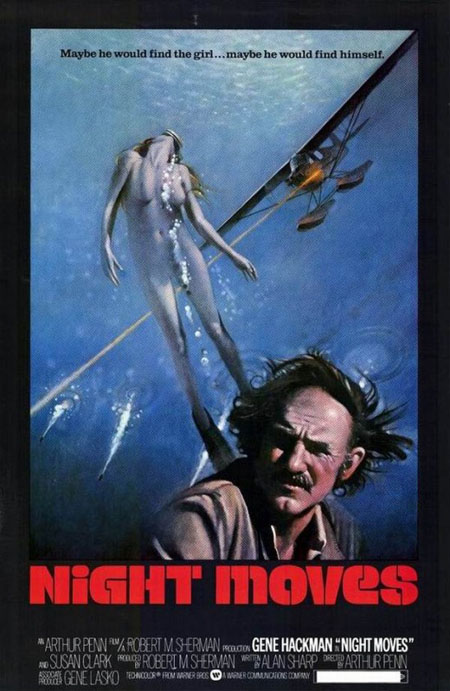
NIGHT MOVES (1975)...

CRIME CLASSIC FROM 1975 FEATURES GENE HACKMAN AT HIS BEST...

by Don Stradley


 The final image of Arthur Penn’s “Night Moves” certainly gets the movie pundits in a lather. The scene consists of Gene Hackman as private eye Harry Moseby, shot to pieces but still trying to steer his motor boat to shore. Bleeding badly from his wounds, he’s unable to reach the gears; he ends up setting the boat in a circling motion. From above, we see Harry’s boat circling aimlessly in the Gulf Stream. This scene, which brings the film to a finish, has been described as a metaphor for many things, including America’s lost identity after the Watergate era, to Moseby’s own fruitless search for the truth, to Penn’s own floundering career. To me, it always looks like the boat is going down a drain (or a toilet). It’s the sort of ending that leaves a viewer wondering if you’ve missed something, and leaves critics tripping over their tongues trying to explain it. It’s a bummer, that’s for sure.

But don’t let your aversion to despair prevent you from watching “Night Moves”. I think it actually trumps the self-conscious “Chinatown” as an example of neo-noir, mostly because it doesn’t dress itself up in period garb; instead, it settles into its own time period, 1975, with Moseby being as much a man of the ‘70s as he is of the noir tradition. Moseby isn’t above roughing a guy up for some information, and he certainly beds down his share of women, but he also deals with such modern ‘70s elements as a cheating wife, an estranged father, and his share of shattered dreams. Poor Harry is not only a failed football player, but he’s even failing in his second career, that of a private investigator. What actor from noir’s golden era could play Moseby? Bogart was too self-assured. Alan Ladd was too much the tortured angel figure. Widmark? Maybe. Mitchum? Never. Hackman, raw-boned but intelligent and slightly melancholy, was born to play Moseby. He’s just about in his prime here, on the heels of those great performances in “The French Connection”, “The Conversation”, and “Scarecrow”. As Moseby, he’s the private eye as working class mug. He’s too good for the work he’s in, but not too good to mingle with the people he’s investigating.

The screenplay, by Brit novelist turned Hollywood writer Alan Sharp, borrows all of the right elements from the noir cannon: A faded actress hires Moseby to locate her missing daughter, Delly. The search brings Moseby to Florida where he finds Delly with her step-father Tom, a charter pilot who seems to be part of a smuggling operation. It’s all a bit vague and confusing, but it’s so beautifully played by Hackman and company that you won’t mind not getting it all. When you get to the end, don’t try to figure out what just happened, because the movie wasn’t designed to be understood. Just absorb it and walk away.

The supporting cast is up to the challenge of keeping up with Hackman, especially a young James Woods as a slippery mechanic who knows more than he lets on, and a 17-year-old Melanie Griffith as the sinfully attractive Delly (short for Delilah). John Crawford plays Tom as a blubbery middle-aged doofus, but his climactic fight scene with Hackman is splendid, one of the unsung fight scenes of the ‘70s, right up there with Ernest Borgnine attacking Lee Marvin with a hammer in “Emperor of the North”. Jennifer Warren is Tom’s girlfriend Paula, a slightly faded hippie chick whose resume includes such varied jobs as teaching, stripping, and hooking. Warren is one of those actresses who didn’t act in many movies, but looks familiar because she did so much TV work. Either that, or it’s because she resembles that other faded hippie chick, Susan Anspach.

The shoot took place during the second half of 1973 in Los Angeles as well as at Sanibel and Captiva Islands in Florida. It was a troubled production. Hackman, a sullen sort to begin with, was enduring some personal problems; Sharp was unhappy with the handling of his script, and later complained about Penn’s “indecisiveness”; and Penn was in a dark mood due to the darkness of the material, which he described as being about “a country gone boundless.” The director cut scenes that slowed the action, assuming the audience could figure out what was happening. This is what gives the film its quick pace, but may also add to the sense that we’re losing something. Penn also admitted that halfway through the shoot he stopped caring so much about creating a detective story, and became more interested in revealing Harry Moseby’s inner-self. 

“We didn’t pay that much attention to plot,” Penn said at the time of the movie’s premiere in 1975. “We thought that plot was not going to be achievable, that there was never going to be way of saying ‘Ah-ha!’ in the last reel when you find out that so-and-so did so-and-so. And my only excuse or explanation for that is that we’re part of a generation which knows there are no solutions.”

Ironically, nine days after the release of “Night Moves” came the release of “Jaws”, a movie that set records at the box office and forever changed the way movies were made and distributed. Steven Spielberg’s shark may as well have eaten every print of “Night Moves”, for the arrival of “Jaws” more or less marked the end of contemplative stories like the one about Harry Moseby. There was nothing vague about the ending of “Jaws”, that’s for sure. The good guys killed the shark, and that was that. There were certainly no conversations as you left the theater about whether the shark really died or not. The era of introspective characters and vague endings was over. No solutions? Just blow it up, Jack.

In the years since “Night Moves” first hit theaters, its supporters have praised it as an underappreciated gem, and I agree. There are some great lines here, like when Moseby’s wife walks in as he’s watching a football game. She asks, “Whose winning?”

“Nobody,” he says. “One team is just losing more slowly.” 

Little nuggets like that one keep the movie afloat, even as the story becomes harder to follow.

“Night Moves” is available on Warner Home Video, and on the Amazon streaming service.

Tuesday, February 10, 2015

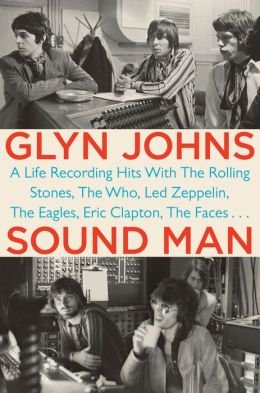
BOOK REVIEW: SOUND MAN by Glyn Johns


VETERAN RECORDING ENGINEER WRITES ABOUT WORKING WITH THE WORLD'S GREATEST BANDS...

By Don Stradley


The title of Glyn Johns autobiography, Sound Man, can be taken two ways. In his career as a recording engineer and producer, he worked for bands including the Rolling Stones, the Beatles, and the Who; he made a life of studying sound. Yet, we could also look at the other definition of “sound,” as in “sturdy,” or “solid.” For in order to survive the unpredictable music business of the 1960s and ‘70s, Glyn Johns had to be sound as a pound.

That solid quality comes through in Johns’ retelling of his long, often fascinating career. He lived a clean life, staying sober while many around him frittered their careers (and lives) away on drugs or alcohol. He tried to remain a gentleman, holding his temper while dealing with musicians who often acted like spoiled, unreasonable children. He enjoyed becoming friends with the people he recorded, yet he knew they’d betray him if it would further their career. Granted, being the voice of reason may not provide quite enough drama for a memoir, but Johns gives it hell.


Johns was musical from the start, going from singing in a boys’ choir, to becoming one of the many teen rockers in England during the late 1950s.  By the 1960s he was trying to sell himself as a singer. Despite his inability to remember lyrics, Johns  managed to have a hit single in Spain with a cover of the Stones’ ‘Lady Jane’.  Otherwise, his singing attempts were futile. He certainly looked like a rocker, though, which  created problems.  While traveling with the Stones, he was often interrogated  and harassed beyond reason, just because he maintained the same stylish scruff as the band.  


Kismet is the book’s main theme, for Johns was in the right place at the right time with a frequency that would impress Forrest Gump. Not yet 20, a failure at school and not sure what to do with his life, Johns landed an assistant engineer job at IBC, one of the top recording studios in Europe. The job came about because his older sister happened to meet someone who knew of an opening. Johns admits that that he doesn’t know if he would have had a career in music if not for his sister and several "extreme quirks of fate." Destiny plays a part in other ways – Johns was approximately the same age and living in approximately the same area as most of the key figures in 1960s British rock. “There must have been something in the water locally,” he writes, “as you could have thrown a net over the small area where Jimmy Page, Jeff Beck, Eric Clapton, and (Ian Stewart)all came from.”

If the thrilling UK scene wasn’t enough, he also recorded such American powerhouses as the Eagles, and Steve Miller. The American artists could be troublesome. The Eagles were convinced they were rockers instead of a harmony group. Randy Meisner once complained that Johns’ recording of their music didn’t sound good when a radio signal was weak. “I thought he was joking,” Johns writes. “But he was deadly serious.” Miller seemed pompous from the start, wasting time with his ideas for a concept album before he’d even had a hit single. Jimi Hendrix boldly refused to turn his guitar down when Johns asked him to do so for a live recording at Albert Hall. Johns walked out of the gig, knowing that Hendrix’s supersonic playing wouldn’t record well. Bob Dylan was inscrutable, surrounded by "self-important arseholes." The American managers and lawyers Johns encountered were mostly a belligerent, ego-driven bunch. Yet, Johns grew so comfortable in the states that he eventually preferred it to the UK.

Johns hits all of the legendary moments, both high and low, and it’s astonishing that he was privy to so much. He witnessed the bickering Beatles at the 'Let it Be' sessions, and the triumph of the first Led Zeppelin album. There was the night he helped Ron Wood break into his own house. Then there was the parade of hippie charlatans hoping to impress the Beatles, including Magic Alex, a screwball who created a recording console that looked like "something out of a 1930s Buck Rodgers science fiction movie.”

Mostly, there’s his relationship with the Stones, who treated him like a pal until money issues got in the way. Unlike most who write about the Stones, Johns hails Mick Jagger as the group’s heart and soul. The coolest moment in the book is when Jagger shrewdly convinces a pair of nosy cops who'd interrupted a recording session to hand over their truncheons to be used as percussion instruments. Meanwhile Keith Richards is described as combative, unprofessional, and prone to falling asleep while tuning his guitar. Brian Jones, for whom Johns felt “instant dislike,” turned out to be a sort of bumbling savant, with an ability to make music with any instrument that was lying around. 

Johns paints in small, easy strokes, never going on too long about a particular incident. The chapters are quick and tidy. There’s a Britishness in his writing, too, which drops in unexpectedly but delightfully, such as when he manages to escape some bullying airport guards “like a rat up a pipe," or when he describes an American he meets as "a regular bloody James Dean." Johns is guilty, however, of abusing the word "extraordinary". There was the "extraordinary talent" of Joan Armatrading, and the "extraordinary sound" of Pete Townshend's acoustic guitar, and the "extraordinary behavior" of Keith Moon. There are dozens of other examples. Even Yoko Ono's voice was an "extraordinary noise that sounded like someone stepping on the cat."

Then again, Johns was living in extraordinary times, and there aren't many other words that suffice. 

Johns, who still works in the business with such artists as Band of Horses and Ryan Adams, never reveals too much of himself or the people he knew. He's too much of gentleman. He doesn't give many details about his legendary recording sessions, either. He talks more about masking a bum note on a Joe Cocker vocal, or his technique for recording drums, than he does, say, the work he did with Led Zeppelin. Surely, he had more to say about them than to say their music "blew me off my feet."

There are some moments of blunt observation, though. Most show up when Johns isn't marveling about the "the vinyl age." The Eagles, he writes, were "at each other's throats, disappearing up their own arses." Johns credits John Lennon for having "the quickest wit of anyone I have ever met," but the overall impression we get of Lennon is that he was a temperamental bully, angry for having to rerecord the vocals for 'Across the Universe' and then leaving the studio "in a huff."

The general vibe of these recording artists is that they were like arrogant older brothers, and Johns was like the younger sibling trying to get on their good sides. When he confronts them about their shitty behavior, they shrug. Some send him a nice note. In the case of Lennon, who once disparaged Johns for no reason in an interview, Johns gets "not exactly an apology, more like an explanation." 

The book includes some highly moving moments, such as when Eric Clapton kicks heroin and asks Johns to produce the album that would become 'Slowhand', and Johns' heroic effort to organize the ARMS concerts to help raise money for an ailing Ronnie Lane. But Johns' story wraps up too quickly as he skips through the 2000s, and gently laments a music industry "seriously under threat, barely surviving on it past glories." The corporate structure currently in place is scarily reminiscent of the dreary 1950s era when he started, which makes Johns wonder if a new generation can take the industry "by the scruff of the neck and revitalize it." He's not the only one hoping.

But Johns also suspects that as far as the music industry goes, the glory days of 1965-75 may have been an anomaly, and that he "may have had the best of it." That makes his Gump-like journey from choir boy to top engineer all the more fascinating. Extraordinary, in fact.


Thursday, February 5, 2015

WARNER ARCHIVES: ST. IVES (1976)

FORGOTTEN BRONSON FLICK SHOWS TOUGH GUY IN NEW LIGHT...

by Don Stradley


Charles Bronson was 55 at the time of “St Ives” (1976). He was just a couple years past his star-making turn in “Death Wish”, and was enjoying a surprising run of success. I say surprising because Bronson had, after all, been little more than a craggy second banana for most of his career. Now, inexplicably, he had box office clout as a leading man. In fact, Bronson reigned unchallenged for a few years as the most popular male actor in international markets. Yes, even bigger than Eastwood, Newman, Reynolds, Redford, or any other 1970s star you can name. Many of Bronson’s movies were partly financed by foreign investors, for even if his movies didn’t score stateside, they still drew buckets of money in Prague or Madrid. Some have suggested that his popularity on foreign screens was due to how little he said in his movies (there was never much dubbing required in a Bronson flick). I tend to think international audiences simply liked what Bronson was selling: straight forward toughness. Because he was much older than his peers, he didn’t play up the counter cultural smugness or cynicism. No, Bronson was a shear, undiluted bad-ass. And that sells anywhere.

So what, I wonder, did the global movie goer think of “St. Ives”? It was a change of pace for old Charlie, for he talks more here than in “Mr. Majestyk,” “The Stone Killer” and “Hard Times” combined. He’s also not blowing his enemies away, or beating them senseless in an alley fight. Even the veins in his neck seem relatively docile in this movie. He plays Raymond St. Ives, a former L.A. newspaper columnist who lives in a fleabag hotel. He sleeps late, gambles what little money he makes on football, and is supposedly working on a novel. We never see him writing, but every time someone greets him they say, “Hey, how’s the novel going?” That’s how we know. (The adverts for the movie also showed Bronson smoking a pipe, yet he doesn’t smoke a pipe in the movie. Since he spends a lot of time at a deli, a more accurate poster would have shown him eating a pastrami sandwich.)

When he’s not being a lovable slacker, St. Ives occasionally “helps” people, ala Travis McGee. The connections he made during his years as an ambulance chaser now assist him when he needs help tracking down a shady character. When he’s hired by a wealthy old windbag to retrieve some stolen documents, he soon finds himself knee deep in dead bodies, and crooked cops. John Houseman plays Abner Procane, the aforementioned windbag. Procane sits in his mansion, weeping over old King Vidor movies, while a mysterious coterie of people bustles around him, including a personal psychiatrist who massages his back. He’s mum about the contents of the documents, but he’s willing to pay a lot of dough to get them back. Since St. Ives is not close to finishing his novel, he takes the gig. As the movie’s tagline read: “He's clean. He's mean. He's the go-between.”

The screenplay by Barry Beckerman was based on a novel by Ross Thomas, and it tries hard to ape the old Raymond Chandler style. Unfortunately, it’s neither tough enough to be “hard-boiled,” nor dark enough to be “noir.” It’s simply the sort of convoluted “who done it” that was rampant as the mid-1970s went nutty with detectives. Not only was every TV network saturated with investigators of every ilk, but the big screen was hit with dozens of features, including “The Long Goodbye” (1973), “Chinatown” (1974) remakes of “Farewell My Lovely” (1975), and “The Big Sleep” (1978), plus lighter versions of the genre such as “The Late Show” (1977) and “The Big Fix” (1978). “St. Ives” fits into the list somewhere, if only because it was probably made to catch the wave created by “Chinatown.” It’s not nearly as good, but it has many fine moments and is more watchable than you might think.

First of all, the film looks great. Cinematographer Lucian Ballard, who worked with the likes of Stanley Kubrick and Sam Peckinpah, finds the right tone for an LA where it’s always just past sundown, a low rent LA of crowded diners, crappy motels, and garages where cars are outfitted with armor plating. Also, J. Lee Thompson, a versatile and underrated director (“Guns of Navarone” “Cape Fear”) moves the story along at a brisk step. There’s a great scene early on where Bronson is thrown down a freight elevator shaft and has to scramble his way to safety before he’s crushed; it’s as intense as anything Thompson directed in his long career.

The cast features a pleasing collection of journeymen and fringe contenders, including the likes of Houseman, Maximillian Schell, Elisha Cook Jr., Michael Lerner, Harris Yulan, Harry Guardino, Daniel J. Travanti, and Dana Elcar. You’ll even see Jeff Goldbloom and Robert Englund as hoodlums who learn that one shouldn’t mess with Charles Bronson, even when he’s not in vigilante mode. Jacqueline Bisset is here, too, for movies of this sort require a femme fatale. She doesn’t quite cut it – she’s too urbane - but her wet t-shirt scene in “The Deep” was coming up soon and all would be forgiven.

“St. Ives” loses steam during a second half mired in car chases and dreary detective work. Lalo Shifrin’s scratchy guitar and bongo soundtrack fails, too, sounding more appropriate for an episode of ‘Baretta’. There’s a decent shootout at the end, and a couple of twists that we don’t see coming, but nothing in the film’s second half lives up to the promise of the first, when Bronson was discovering bodies stuffed into dryers, and Houseman was huffing and puffing like Sidney Greenstreet.

The movie flopped when it was originally released in the late summer of 1976. Audiences and critics alike couldn’t quite accept Bronson as a thinking, methodical character. One newspaper headline roared, “Is Bronson Going Soft?” Bronson couldn’t win. His violent movies were criticized for playing to the rabble, but when he tried to change, reviewers seemed indifferent, or in some cases, downright disappointed. “Bronson,” wrote a Pittsfield MA critic, “should be ashamed of himself.”

Bronson appeared in a few movies during this period that seemed to be a conscious break from his usual fare. There was “Breakheart Pass”, an interesting murder mystery set aboard a train in the 1800s, and a comedy western called “From Noon Till Three.” But as usually happens when a well-known star tries something different, these movies were a hard sell. LA critic Charles Champlin called “St. Ives” “competent but uninspired,” and said that Bronson, “continues to be a strong and attractive figure, even when he has as little to do as stroll through this charade.”

Was Bronson disillusioned by the cold reception given to “St. Ives”? If the movie had been a success, would he have considered playing more characters like Ray St. Ives, a fellow described in The New York Times as “….the kind of private-eye role that Humphrey Bogart used to do." I’d like to think that if this film had been a success, Bronson might have continued to evolve as an actor, rather than spending his later years grinding out the “Death Wish” sequels.

What I like best about “St. Ives” is that Bronson seems to be having fun. And he’s not half-bad. He was certainly not a Neanderthal who couldn’t handle dialog. He speaks the one liners and wisecracks with a surprising dryness, such as when some thugs rob him of 50 bucks and complain that he doesn’t have more money on him. "It only took you five minutes to get it," Bronson says. "That's $600 an hour..." Good stuff. Bronson may not deliver it the way Richard Dreyfuss would have, but Dreyfuss probably couldn’t climb out of an elevator shaft.

Still, there’s a telling moment late in the movie when Bronson pulls a gun. His eyes turn black and the gun seems an extension of his arm. While watching this scene I was reminded of something I once read about Buffalo Bill Cody – that his popularity was largely due to his looking better on horseback than any other man. And Bronson, too, I could argue, simply looked better with a gun in his hand than any other actor. And he didn’t need the comically huge hardware of Eastwood’s Dirty Harry, either. Bronson looked dangerous even with a small pistol. Perhaps it was inevitable that he would resume making violent pictures and leave the more subtle characters behind. But in “St. Ives”, he was compelling without leaving the streets awash in blood. Bronson was better than anyone knew.
 
“St. Ives” is available as part of the Warner Archives streaming service.

Tuesday, February 3, 2015

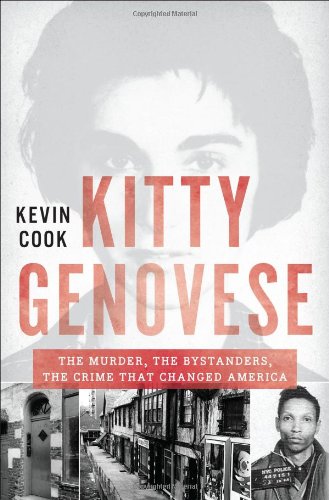
BOOK REVIEW: KITTY GENOVESE: The Murder, The Bystanders, The Crime that Changed America

What would you do if you watched a murder taking place outside your window? Interesting new book covers the shocking case that raised that very question...

by Don Stradley


The 1964 murder of Kitty Genovese may not have changed America as much as author Kevin Cook wants us to believe, but it certainly left a huge, spreading stain on the country's psyche. The murder took place in Queens' Kew Gardens neighborhood in front of an alleged 38 witnesses. They stayed in their apartments, unmoved to help, even as they heard Kitty Genovese cry out that she was being stabbed.  The event became legendary as a symbol of urban America's apathy.  The Kennedy assassination was more earth shattering; the Manson murders were more headline-grabbing; but the killing of this young woman on a New York sidewalk in view of her neighbors may have been the saddest and most sickening. Kevin Cook's Kitty Genovese: The Murder, The Bystanders, The Crime that Changed America revisits the incident, and it's no easier to read about it five decades later.
 
Cook digs deep into the story, coming up with rich details and plot twists worthy of a good crime novel, but seems torn between diving into the muck and staying above it. Horrible things happened to Kitty Genovese,  but Cook treats the particulars gingerly, perhaps out of respect for the dead, or to keep his intelligent reportage from descending into luridness. The jury is out as to whether an author can write about horrific incidents without sticking our faces into it, even a little bit.
 
 Kitty Genovese was a charismatic young Italian-American woman. She managed a bar and was apt to stay out late and travel home alone. Though she didn't loudly advertise her lesbian lifestyle in the conservative early 1960s, she was living with her beloved in a small Kew Gardens apartment.  Kitty was feisty and fun-loving; she'd grab your hand and spontaneously start dancing with you, even on a crowded sidewalk. The Kitty described in Cook's book was a petite little smart-ass, and absolutely lovable.
 
Meanwhile, Winston Moseley was a troubled African-American man. He worked a steady job out in Mount Vernon to support his family. He liked baseball, and dogs, and seemed like a regular, though aloof guy.  But he was prone to dark moods. He had some strange ideas about sex, and would occasionally disappear from his home in the middle of the night.  His wife knew Moseley was troubled by recurring impotence, but she'd never dreamed that her husband was a budding serial killer. He claimed three victims, including Kitty Genovese. He set fire to one of the women, making sure that her genitalia would go up in flames. When Moseley was  caught,  his confession was so nauseating that  a member of his defense team left the room to vomit.
 
Kitty crossed Moseley's path one night  in a parking lot near her own building. He did unspeakable things. She screamed for help.  Lights flickered on up and down the block, people peeked from barely opened doors, yet no one came to help. A man yelled from his window.  Moseley ran away. Kitty dragged herself away from the scene, her lungs filling up with blood.  Moseley reappeared and finished what he'd started.  His predator's instinct told him that no one was coming to help this woman, so he stuck his knife into her over and over again.  Later, when he was confessing, he claimed to feel nothing about Kitty,  just that he had killed a couple of black women and wanted to see how it felt to kill a white woman. Moseley added that he felt bad about his family finding out, for it was "a shameful thing."
 
Cook, who has written for The New York Times and Vogue, spends a lot of time setting the table before he gets to the real story. He describes a bustling New York, the kids still zonked by the Beatles’ appearance on the Ed Sullivan Show. Cook goes on about Lenny Bruce, the 1964 World's Fair, and the blossoming folk music scene in the Village. He even comes up with a coy way of telling us that Rodney Dangerfield grew up in Kew Gardens. But he tells us so many fun facts about Queens that it begins to feel like an affectation, as if he didn't have enough information to fill  the book and padded it out with nostalgia. He has better luck when he's describing the underground lesbian scene of the time, for that was the world Kitty knew, a world of makeshift dildos, campy novels,  and dark lesbian bars where the weary dancers "looked younger before the lights came up."
 
Cook also creates a few 'you are there' scenes. He provides quotes for Kitty as she goes about her day, or imagining what she made for dinner. One can see why an author might try such a technique, but even a talented writer like Cook can’t keep it from feeling  like a cheap crime show reenactment.  Cook does the same for Moseley, imagining Moseley feeding his dogs; during a description of the trial, Cook writes that Moseley "returned his daddy's gaze with a look that may have been love." It's hard to figure how Cook knew what was going on in the courtroom.
 
Yet, these bits of contrived color are part of Cook's ultimate goal, which is to pull the crime out of the legal or psychological text books and remind us that  all involved, from Kitty to Moseley to the reluctant neighbors, were human beings.  He succeeds at this, but not by recreating "what might have been," but in the concrete details he turns up, such as Moseley's owning an ant farm, or Kitty's yearning to visit Italy.   He's also helped by  actual interviews with people, such as Kitty's girlfriend, Mary Ann Zeilonko, who endured endless heartbreak after Kitty's death.
 
Cook is especially good when he dispels some of the old myths about the case, namely, that there were 38 people who saw the murder and did nothing.  He grinds the idea down until we're sure there that the number 38 was a major exaggeration.  Even though Cook calls out former Times editor   Abraham  Rosenthal for reporting that number until it took on a life of its own, Cook is respectful of Rosenthal for keeping the story alive.  Rosenthal comes off as a grandstander and a blowhard, as do many of the judges and journalists working on the case, but had Rosenthal not sensationalized the story, Kitty Genovese’s name would be relegated to a dusty old police file, just like Moseley’s other victims.
 
Kitty Genovese may be the subject of the book, but Moseley is the crazy engine that drives the thing.  Cook seems too enamored of Kitty, as if he’s one of the 12-year-olds in the neighborhood who harbored a secret crush on her. Hence, his writing about Genovese is too precious. When writing about Moseley, however, Cook finds a hopped up rhythm and the chapters start to rip and snort. Of course, it helps to have a sleazy psychopath as your antagonist. A few years into his life sentence, Moseley escaped from prison. Within a couple of days he'd  taken two women hostage and raped them at gun point. Later, when he’s before a parole board, Moseley said the rapes proved  he had changed as a person. "I could have killed them," he said, adding that he deserved credit for "demonstrating restraint.”
 
Even so, it’s still Kitty who stays in our memory.  She remains mysterious, tragic. Cook’s final chapter, which I won’t spoil for you, is about as elegant as anything I’ve read lately, and dispels another myth about her murder. She didn’t, as we’ve heard for 50 years, die alone.
 
I remember when I was a new arrival in Boston, hearing the scream of a woman outside my apartment.  It was one of my neighbors, a middle aged woman whose name I’ve long since forgotten, standing in the alley.  Her face was bloody, and she was clutching her right arm to her chest. She was crying for help. I rushed to the lobby and buzzed her in.  It turned out she’d been walking her Great Dane and the brute bit her. In her panic, she’d smeared her bleeding hand across her face, making her look like Carrie at the prom. “Puppy got mad,” she said, and then swayed drunkenly to her unit.  It was an unsettling experience. Blood and screams will unnerve the best of us. But I helped my neighbor.  Cook’s book suggests that people are more likely to help if they’re alone; had there been a crowd, I might have waited for someone else to act.  Maybe there’s something about being in a crowd that makes you feel like part of an audience. Audiences aren’t supposed to interfere.
 
I think I would have helped Kitty Genovese.  But I just don’t know.